From discoveries to mines: Newfoundland’s growing gold industry
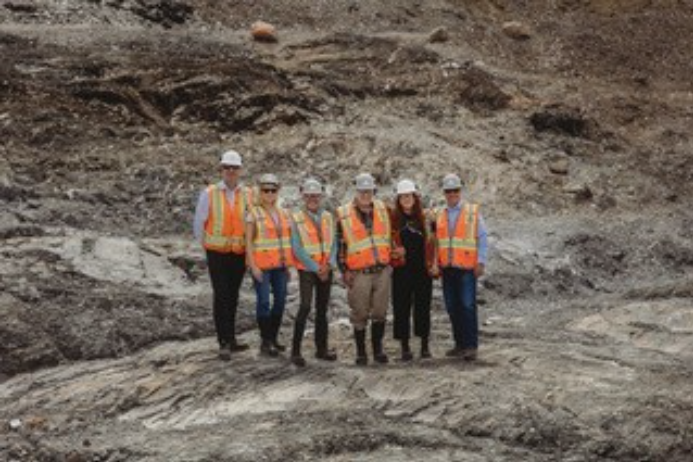
For years, Newfoundland’s modern gold story was measured mainly in metres drilled, claims staked and high-grade discoveries. Today that narrative is shifting, gold is now being poured, new projects are moving from exploration toward mining, and the province is establishing itself as a premier Canadian gold jurisdiction.
Equinox Gold’s Valentine Mine reached commercial production in Nov. 2025. That same month, New Found Gold’s Hammerdown Mine poured its first gold and is now ramping up toward commercial production in the second half of this year. Riding right behind these milestones is New Found Gold’s flagship Queensway Project, advancing steadily toward development.
Amanda McCallum, executive director of Mining Industry NL, calls gold “a significant and compelling part” of the province’s changing mineral sector. She says mineral resources are now the second-largest contributor to Newfoundland’s GDP.
The catalyst for a modern gold rush
Newfoundland is not new to mining. The province has a 160-year mining history and established mining districts but much of its land remains underexplored. That combination of mining experience and discovery potential is attracting new investment.
The modern exploration surge accelerated after New Found Gold began drilling at Queensway in 2020, uncovering high-grade gold along a 22-kilometre stretch. In 2021, more than 100,000 mineral claims were staked on the island, the second-highest total in provincial history. Much of that activity was concentrated in central Newfoundland’s Gander-Appleton corridor.
Exploration spending across Newfoundland and Labrador since 2021, including a record forecast of $283 million in 2026, totals approximately $1.4 billion. That money supports drilling companies, laboratories, equipment providers, transportation businesses and other suppliers, often in rural areas.
The island also offers infrastructure that not all remote Canadian projects have. Prospective areas can be reached by road and are close to communities, hydroelectric power and airports.
“Newfoundland has highly prospective geology, excellent access and infrastructure, a mining-positive government and a transparent and straightforward permitting regime, all combined with being underexplored,” said Fiona Childe, vice-president of communications and corporate development at New Found Gold. “There are few locations in the world today with all these attributes,” Childe added.
Valentine proves the model
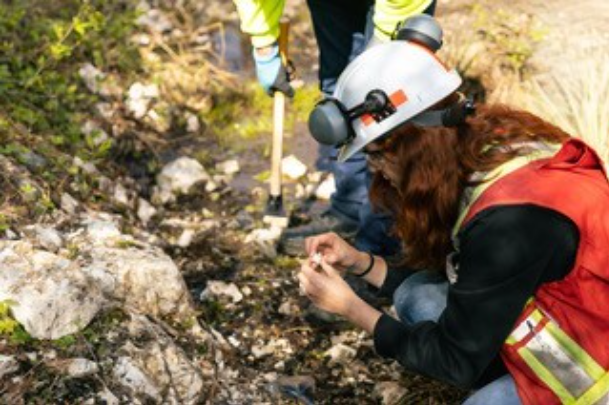
If exploration ignited Newfoundland’s modern gold rush, Valentine shows that a major discovery can become an operating mine.
Originally developed by Marathon Gold and later acquired by Calibre Mining, Valentine is now owned by Equinox Gold. It was the first greenfield mine permitted in Atlantic Canada in more than 15 years. Valentine poured its first gold in September 2025 and reached commercial production two months later.
The mine is expected to produce between 150,000 and 200,000 oz. of gold this year. Once operating at capacity, it will be the largest gold mine in Atlantic Canada. According to the provincial government, Valentine created the equivalent of 854 full-time jobs in 2025, up 38.6% from 2024.
Valentine’s move into production matters beyond its own output. It shows that a large new mine can move through permitting, construction and start-up in Newfoundland while building supplier experience and a skilled workforce for the projects following behind it.
From explorer to producer
New Found Gold is one of the companies trying to build on that momentum. The company began 2025 known primarily for its high-grade Queensway discovery. By the end of the year, it had acquired Maritime Resources, adding Hammerdown and the permitted Pine Cove mill and tailings facility.
“This is a fundamental change in the company,” Childe said. “With the new board and management, New Found Gold has rapidly evolved from an early-stage exploration company to an emerging Canadian gold producer,” she added.
Hammerdown was acquired just as it poured its first gold. New Found Gold has since been building its operating team, installing the remaining infrastructure and learning how the deposit behaves as mining advances.
The mine’s narrow, high-grade veins require careful control of dilution. Dilution occurs when waste rock is mixed with ore, lowering the grade sent to the mill. Childe said learning the deposit and maintaining tight control over dilution have been the largest challenges during the ramp-up.
Recruitment, however, has been less difficult than expected. Hammerdown, Pine Cove and Queensway are all close to established communities and operate without camps, allowing many employees to drive home after their shifts.
One mill, two mines
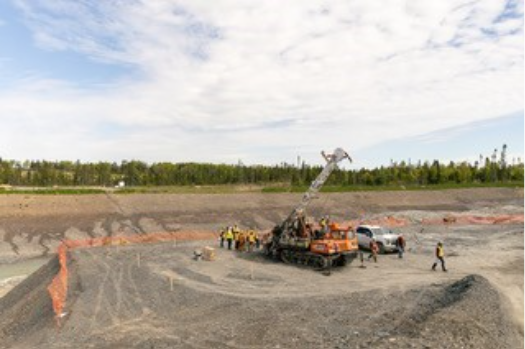
The Pine Cove mill is central to New Found Gold’s plan. Gold-bearing material from Hammerdown is transported approximately 95 km by road to Pine Cove for processing. The company plans to convert and expand the mill from 700 to 1,400 t/d, so it can eventually process material from both Hammerdown and Queensway.
The approach is known as a hub-and-spoke model. Instead of immediately building a separate processing plant at each mine, several deposits feed one central mill. In simple terms, the mine sites are the spokes and Pine Cove is the hub.
For Queensway, this could provide a faster and less costly route into initial production. New Found Gold plans to send the first material from Queensway Phase 1 to Pine Cove in late 2027 and reach commercial production in 2028. It ultimately plans to build a stand-alone mill at Queensway as the project grows.
Why Queensway matters
Queensway’s scale makes that growth plan important. Its 2025 preliminary economic assessment, an early study of how a mine could operate, outlined 1.5 million oz. of gold production over a 15-year mine life.
The deposit also offers an unusual advantage: parts of its high-grade core are exposed at surface. New Found Gold can see, sample and map the gold-bearing zones before mining them, helping the company better understand the geology and reduce development risk.
“We view our flagship Queensway Gold Project as a generational asset which will only continue to grow,” Childe said.
Most exploration has focused on less than 4.5 km of New Found Gold’s 110-km exploration trend. The company has also made a high-grade discovery at Dropkick, 11 km north of the main Queensway area. It has intersected gold-bearing structures more than a kilometre below surface. New Found Gold says those results point to further potential both along the trend and at depth.
Related Posts
B2Gold enters cash-flow phase as Goose ramps up in Nunavut
September 2, 2026
B2Gold enters cash-flow phase as Goose ramps up in Nunavut

Canada Strong Fund should be a resource sovereignty strategy, not a financing tool
Tungsten surge transforms Northcliff’s Sisson economics
September 2, 2026
Tungsten surge transforms Northcliff’s Sisson economics
Diablillos drilling reveals encouraging near-surface mineralization
September 2, 2026
Diablillos drilling reveals encouraging near-surface mineralization
Sponsored video: Gold miner Erdene outlines Mongolia exploration
September 2, 2026
Comments