The overlooked criticals: Why rare earth elements, lithium and graphite matter more than ever
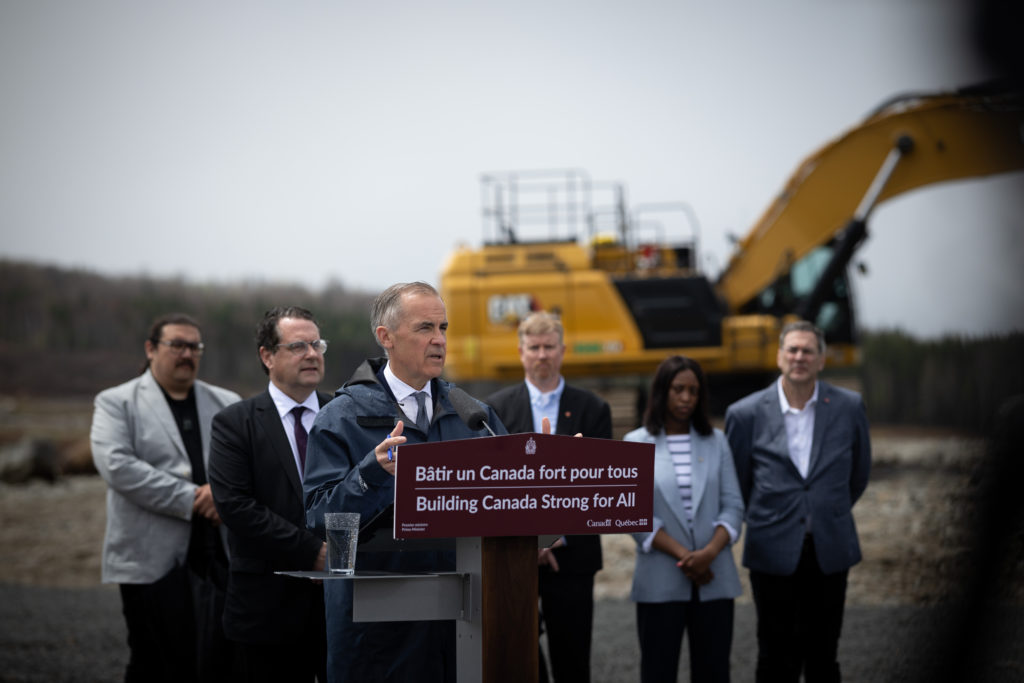
Three critical minerals give a whole new meaning to the term “critical:” Rare earth elements (REEs), lithium, and graphite. How can these possibly compete for our attention when so much ink is spilled on the critical minerals nickel and copper? In fact, everything from electric vehicle (EV) batteries to nuclear reactors, semiconductors, aerospace and defence systems, even steel, might not exist at all but for this admittedly small but vital sector in the critical minerals industry. We decided to discover why.
The global picture on rare earth elements (REEs)
Not nearly as rare as REEs, our knowledge about how vital they are to our economies could stand expansion. REEs are vital enough, in fact, for the U.S. president to press last year for a roll back of China’s plans curb exports on five additional REEs to seven announced earlier in April 2025 in response to U.S. tariffs and limits on semiconductors.
Instead of rolling back, Trump got a one-year delay on expansion of export controls for REEs. “This came rather inconveniently,” said the Council on Foreign Relations (CFR) in the midst of his administration’s “rapid expenditure of advanced weapons systems in the Middle East and Ukraine,” and the REEs making up those systems.
CFR senior fellow Heidi E. Crebo-Rediker added to our understanding, “Replenishing missile systems, precision-guided munitions, interceptors, and advanced electronics now depends on even greater access to materials processed or produced almost entirely within China’s critical minerals ecosystem.”
Unfortunately for Trump, he was still no closer to drawing on that much needed source of RREs during his two-day summit last May with Chinese president Xi Jinping.
Why is a fuller understanding of REEs important closer to home? Not because Canada is anywhere near to meeting the global appetite for REEs that China is embarked on, says Mike Crabtree, president and CEO of the Saskatchewan Research Council (SRC).
“Somebody said to me the other day that the REEs supply chain from extraction through processing through OEM utilization to route everything from wind turbines to mobile phones to EV motors is broken, and I responded that it is not broken; it does not exist,” Crabtree said.
Crabtree hopes to change that through construction in Saskatoon of a first-of-its-kind, fully integrated REEs processing facility designed to lay the foundation for a North American REEs’ supply chain. Solely a commercial demonstration facility, admitted Crabtree, and added, “by the end of 2027, we will be fully ramped up to produce 400 to 600 tonnes of neodymium-praseodymium (NdPr) metal essential to EV motors and wind turbine generators.”
“This will rely in turn upon about 40 tonnes of the heavier REEs dysprosium and terbium (Dy and Tb oxides),” Crabtree added, to maintain strength at high temperatures and thermal stability respectively.
“That is to be incredibly significant quantities in terms of the outside China supply. And so that perhaps answers why a small plant like ours is having a big impact and leverage,” he explained.
Last December, the SRC announced the signing of contracts with REalloys (REA) which will purchase most of the annual production of NdPr metal and Dy and Tb oxides from the facility. REA manufactures high-performance magnets essential for U.S. defence and advanced technology industries.
REEs alone will not be enough
Of all the critical minerals highlighted by the Canadian government for future development, none has taken centre stage more than lithium. Along with most western economies, Canada has seen enormous potential for EVs as a replacement for our reliance on fossil fuels — and for lithium, a crucial component in battery technologies alongside that much-vaunted growth of EV adoption.
“REEs and lithium will be the most important commodities Canada is going to produce in the coming decades,” said Scott Monteith, CEO of Avalon Advanced Materials in Thunder Bay. “Much more important than all the regular suspects, such as copper and nickel,” Monteith added.
Moneith was hired three years ago to guide the initial production capacity of 20,000 t/y of lithium hydroxide for LG Energy Solutions (LGES). It accounts for more than 20% of the global electric vehicle battery market and has supplied automotive companies including Tesla, General Motors and Volkswagen.
Under a 2022 MOU, Avalon had committed to the construction of a hydroxide processing refinery in Thunder Bay, supported by lithium concentrator production at the site of its Separation Rapids petalite-lithium deposit 70 km north of Kenora, Ont.
However, a quick update with Monteith in April revealed its supply of lithium hydroxide has been delayed until 2029 when it is hoped the Thunder Bay lithium refinery will become operational. Meantime, the company has shifted its focus to another lithium asset, Lake Superior Lithium on a 1.6-Km2 heavy industrial brown field site on the north shore of Lake Superior.
“It is got everything you need,” said Monteith. “A deep-water facility to load and unload cargo ships, three rail links, all the utilities. It is on the TransCanada Highway with access to housing and labour.”
In 2024, Arcadium Lithium was forced to delay critical mining and extraction projects because of the capital constraints in a challenging market. Not a problem for Rio Tinto which fanned its robust balance sheet in front of Arcadium shareholders (and a cash payment of $5.85 per share) following a more than 80% crash in lithium spot prices because of the Chinese oversupply of lithium and slower EV adoption.
Rio Tinto’s US$6.7-billion all-cash acquisition of Arcadium Lithium resulted in the company’s delisting from the NYSE and ASX.
More significant than closure of that acquisition in March 2025 was Rio Tinto’s acquisition through that deal of a 50% stake in Nemaska Lithium, which comprises the lithium hydroxide plant in Bécancour, Que. and the Whabouchi spodumene mine in the Eeyou Istchee James Bay region of Quebec.
The mine and concentrator at the Whabouchi complex in Northern Quebec are driven by the primary hard-rock source for a lithium-rich pyroxene mineral and crucial to a succcesful spodumene mine. Rio Tinto’s stake subsequently increased to 53.9%, with the Government of Quebec holding the remaining 46.1% through through Investissement Québec.
A potential hitch?
Lithium hydroxide is, of course, a key ingredient in EV batteries. Yet, slower-than-expected growth in EV demand and a sharp downturn in lithium prices helped reshape the sector, culminating in Rio Tinto’s acquisition of Arcadium Lithium in 2025. The deal reflected broader uncertainty that had weighed on EV and battery-material markets throughout 2024. It was driven by a precipitous drop in the price of lithium carbonate and resulted in a dampening of investment in lithium development. Nor was any of this aided this year when Trump gave a hard thumbs down to EV production in favour of an oil and gas industry dependent on traditional combustion engine driven vehicles.
For these reasons, EV adoption — is it a permanent fact of life real or ephemeral? — continues to be a question for those whose job it is to supply lithium hydroxide and lithium carbonate so vital to EV batteries. The answer from Barbara Fochtman, managing director of Rio Tinto Lithium: it is not all about EV battery manufacture.
“While EVs remain the primary driver of lithium demand growth globally, we are also seeing increasing demand from battery energy storage systems, driven by the expansion of AI data centres and the need for greater energy grid resilience,” Fochtman explained.
“Lithium hydroxide and lithium carbonate are two examples of product optionality within Rio Tinto’s portfolio from Argentina to Canada both for our strategic OEM customers and those in energy storage,” Fochtman added.
Graphite feeling the pinch
Graphite producers have been equally critical of China’s enormous industrial subsidization and the dumping of products to keep world prices artificially low. One company that has insulated itself over the years is junior miner Northern Graphite, through carefully sized properties and nimble operations, notably at Lac-des-Îles, Que.
Quebec and Ottawa also jumped into the fray by investing $50 million in Nouveau Monde Graphite to support the Matawinnie surface mine and a battery material plant in Bécancour. It was envisioned as the largest fully integrated natural graphite facility in North America.
This was hardly going to ensure an adequate supply of reasonably priced material essential to the production of rechargeable battery anodes, EV fuel cells and brake linings. Vianode CEO Burkhard Straube said, “It was time to address the pinch point in the global supply chain of graphite.”
Accordingly, last November, he announced plans to invest $3.2 billion in North America’s first synthetic anode graphite plant in St. Thomas, Ont. Located on 0.56 km2 in Yarmouth Yards, St. Thomas’s 6-km2 industrial park, the Vianode facility will work alongside the PowerCo battery plant now well into construction.
Very much like its synthetic anode graphite plant at home in Norway, the Ontario plant will, according to Vianode Canada managing director Emanuele Tricca, help offset the current deficit in graphite production for miners and synthetic producers alike. He also agrees with Fochtman about an increasing trend towards both electrification of transportation and energy storage.
“In North America, based on different projections, we are looking at about one million tonnes of graphite for lithium-ion batteries in both EV and ES applications by about 2030/2035. As of today, all the regional project announcements in Canada and the U.S. will require about 150,000 tonnes of projected capacity, obtained locally for these graphite applications,” Tricca added.
“So, obviously there is a huge gap in general between 150,000 tonnes of graphite and one million tonnes of both natural and synthetic graphite. These sectors of graphic production are complementary; neither excludes the other but work alongside one another,” Tricca stressed.
Three critical minerals vital to national security
All three critical minerals — REEs, lithium and graphite — have been designated by Natural Resources Canada as priorities under the Defence Production Act. Once again, the largest threat to national security it said is posed by China.
Meeting China head on became more than aspirational last October when 25 federal initiatives included the Nouveau Monde Graphite’s Matawinie mine near Montreal and the Vianode synthetic graphite plant In St. Thomas, Ont.
But conditional approval was also given for up to $36 million in federal money to help scale up processing of two REEs at a Ucore Rare Metals facility in Kingston, Ont.: Samarium is used to make heat-resistant magnets in nuclear reactors, and gadolinium is a component of both nuclear reactors and MRIs.
Related Posts

Mining Forum: AI begins paying off, McKinsey says
September 29, 2026
Mining Forum: AI begins paying off, McKinsey says
Montage pours first gold at Koné ahead of schedule
September 29, 2026
Montage pours first gold at Koné ahead of schedule
Mining Forum: Miners have cash but lack the crews
September 29, 2026
Mining Forum: Miners have cash but lack the crews
Troilus nails down US$850 million for gold-copper mine redevelopment
September 28, 2026
Troilus nails down US$850 million for gold-copper mine redevelopment
Ore sorting tests slice CAPEX for EDM’s Scotia lead-zinc mine by 57%
September 28, 2026
Comments