The Springhill bump
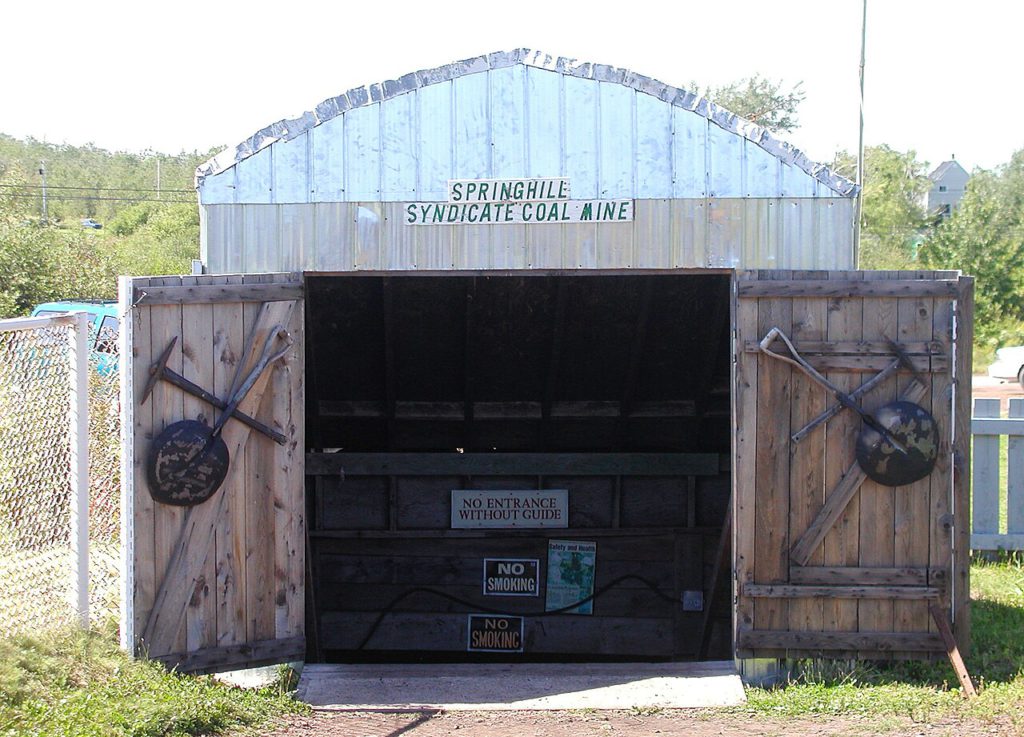
On Oct. 23, 1958, a bump at the Springhill coal mines in N.S. caused one of the worst seismic coal mining disasters in Canadian history, killing 74 miners. Springhill was no stranger to disaster: a major coal mine explosion in 1891 killed 125 miners while a dust explosion in 1956 killed 39 workers. The bump of 1958 has stood out, however, capturing public attention through unprecedented media coverage (including the first live television news coverage from the CBC), and later a large collection of retrospective media, including three historical books, a National Film Board documentary, a TV movie, and a famous folk song by Peggy Seeger. The ongoing fascination stems in part from the awe at the bump’s sheer destructive force. It was, however, the extraordinary rescue of 12 miners trapped for six days and seven more for nine days, at depths of more than 3,962 metre, that most thoroughly captured the public imagination.
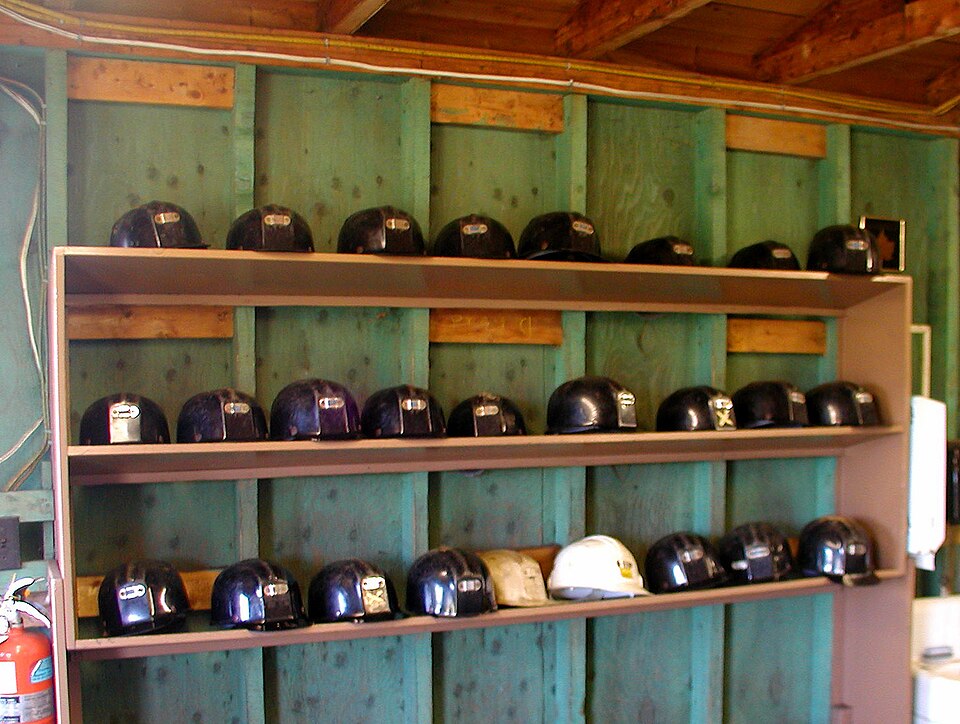
Journalist Ken Cuthbertson’s recent book, “Blood on the Coal,” provides one of the most painstaking reconstructions actions and experiences of the imprisoned survivors. By his account, the surviving miners were disoriented and afraid in the immediate aftermath of the disaster, but some had the wherewithal to search the remaining cramped spaces for survivors. Among the group at the 4,084-metre level, Harold Brine, an experienced draegerman, clicked on his head lamp, shocked to discover the bodies of his friends and co-workers. The cries of the living roused him action. Brine soon freed Joe Holloway from a pile of rubble; the two men then found what they thought was a severed head, but in fact it was the buried, very much alive body of Hugh Guthro. By the time they freed Guthro and searched for other survivors, just twelve men had gathered in a 4.6 by 6.1 metre chamber. Two of them had sustained serious injuries: Joe McDonald had broken his leg in three places, his suffering compounded by his fear of the underground; and Ted Michniak had suffered a broken shoulder and wrist. Realizing they could not escape on their own, the miners had little to do but hope for the arrival of a rescue crew, fearful of the moment their safety lamps would die out, leaving them confined to pure darkness.
A mere 122 metre above, the smaller group of miners faced a much more agonizing predicament. Among them was an eighth survivor, Percy Rector, whose arm had been crushed and pinned beneath unmovable timbers. Through unimaginable pain, Rector begged the other men to amputate his arm. Though the trapped miners had found a saw, they could not bring themselves to do the deed, afraid they might kill Rector only to be rescued by those with proper medical equipment a short time later. Although they fed Rector the few aspirins they possessed, his cries for mercy permeated the five days until he tragically succumbed to his injuries.
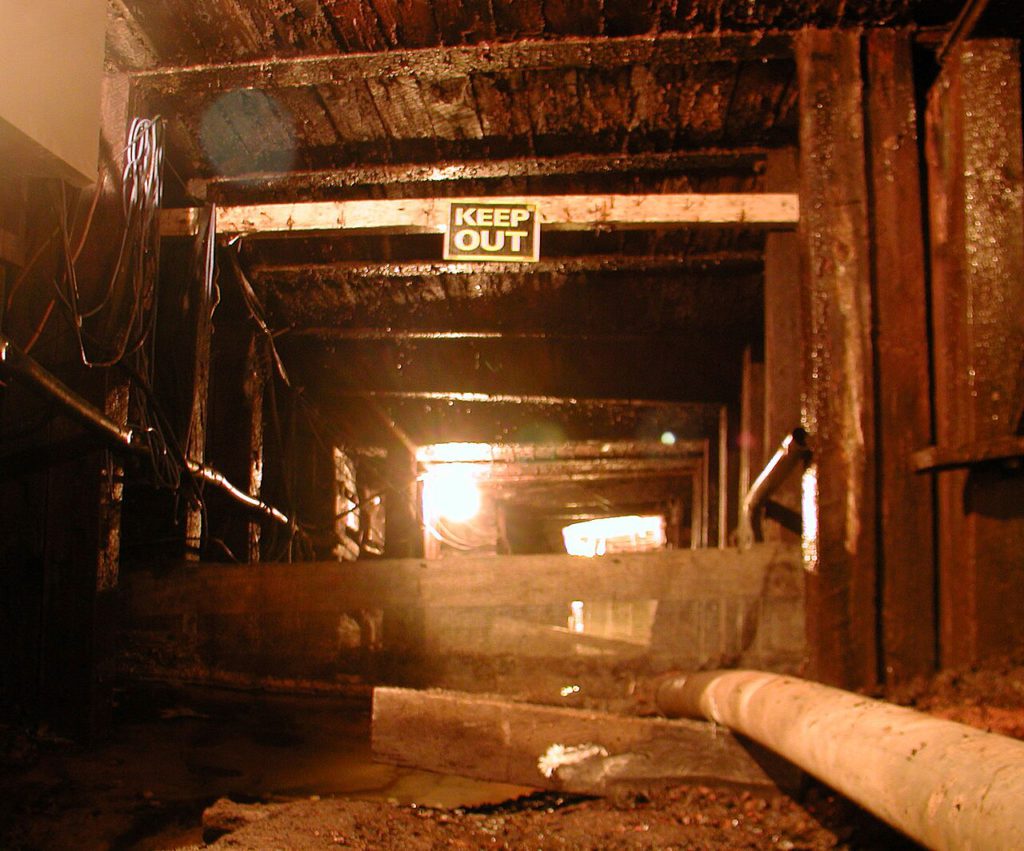
Both groups of miners survived on carefully divided scraps of sandwiches and water they found in the lunch buckets and flasks that had belonged to the dead. When that meagre supply ran out, some resorted to eating remnants of tree bark harvested from the mine timbers, while others drank their own urine, unaware that consuming salty liquid waste only compounds the problem of dehydration. They slept in cramped spaces on bare rock, unable to see even the man who was next to them but forced to endure the pervasive smell of human waste and decaying bodies. While mostly cool heads prevailed, any expression of doubt about an eventual rescue could provoke a heated exchange. In general, the men passed the time by singing or quietly contemplating the joys and regrets of lives they quietly knew could be coming to an end.
The salvation of the larger group of 12 miners came when Blair Philips, the chief surveyor, tested a broken air pipe for noxious gas. At the other end of the pipe, Harold Brine and Gorley Kempt saw a flash of light from Philips’ lamp, prompting a chorus of yelling that travelled toward the astonished rescue team. It took 10 hours to break through the rock surrounding the pipe, but the shock and joy in the town at finding unexpected survivors was broadcast globally as the assembled media declared a miracle had occurred at Springhill.
Three days later, a rescue crew heard a sound they initially thought was rats but soon realized it was of human origin; as it turned out, the desperate sound of the nearly deceased miner Barney Martin trying desperately to scratch his way through the rock. The crew only needed to dig for another hour to find Martin, and a little further on, the rest of the seven missing miners — another miracle for the town of Springhill.
Credit: RobNS/Wikipedia/Public Domain
In the wake of the rescue, some miners achieved minor celebrity through media stories and appearances. Prince Phillip visited the rescued men in their hospital beds. Gorley Kempt and Caleb Rushton appeared on “The Ed Sullivan Show,” with the host issuing a successful pitch for donations to the Springhill disaster relief fund. In news articles, Maurice Ruddick was portrayed as leader among the group of seven miners, singing to them to lift spirits and generally coaxing them to grit their way through their ordeal. As discussed in a previous article (Canadian Mining Journal, volume 144, issue no. 8), a scandal ensued when Marvin Griffin, the Governor of Georgia, invited survivors for a gratis vacation at a seaside resort, but excluded Ruddick on racial grounds as a Black man. Ruddick travelled to Georgia but was forced to stay with his family in a nearby Black community, his heroic actions not enough to transcend the state’s segregation laws.
In the aftermath of the disaster, the Dominion Steel and Coal Corporation (DOSCO) closed the Springhill mines, leaving over 200 men without jobs and a declining population in the town of Springhill. In 1959, the Royal Commission, unable to isolate the cause of the Springhill bump, recommended further research on rock mechanics. Citing a retrospective doctoral thesis from Queen’s University, Cuthbertson suggests that the decision to mine at depths below 3,048 metre, combined with the relatively weak rock of the mine, was the likely cause of the disaster. In the years since the Springhill disaster, safety practices at Canadian mines (combined with the dominance of less risky surface coal mining) have greatly reduced the dangers facing coal miners. But the Springhill coal disaster is one of the most powerful historical reminders of dangers miners have faced underground and the need for ongoing vigilance on the safety front. 
John Sandlos is a professor in the History Department at Memorial University of Newfoundland. His new book, “The Price of Gold: Mining, Pollution and Resistance in Yellowknife” (co-authored with Arn Keeling and published by McGill Queen’s University Press), was recently short-listed for the Canadian Historical Association’s prize for best English-language scholarly book in Canadian history.
Related Posts
Troilus nails down US$850 million for gold-copper mine redevelopment
September 28, 2026
Troilus nails down US$850 million for gold-copper mine redevelopment
Ore sorting tests slice CAPEX for EDM’s Scotia lead-zinc mine by 57%
September 28, 2026
Ore sorting tests slice CAPEX for EDM’s Scotia lead-zinc mine by 57%

Sponsored video: Isometrix says shared data can flag mine risks early
September 28, 2026
Sponsored video: Isometrix says shared data can flag mine risks early

Team TS^2 wins AI4SafeMines student competition
September 28, 2026
Team TS^2 wins AI4SafeMines student competition
Hudbay lifts Snow Lake gold output estimate by 60%
September 28, 2026
Comments