When minutes become millions: The hidden cost of traditional blast-clearance practices in underground mining
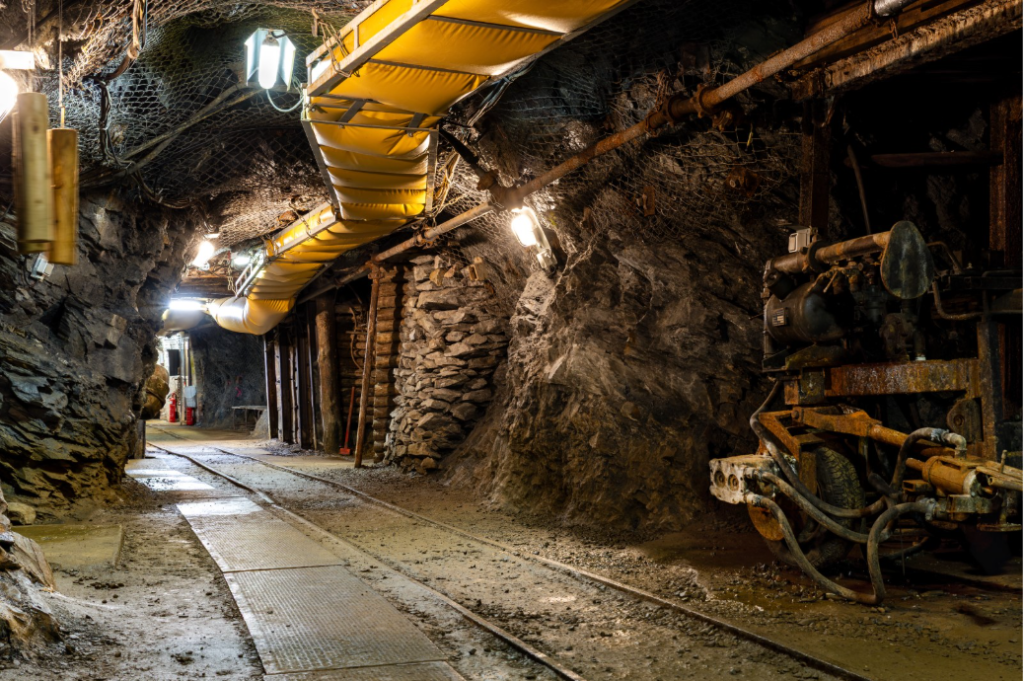
Mining is a business measured in tonnes, targets and time. Across the globe, many underground mines operate 24 hours a day, seven days a week. Every hour of every shift represents an opportunity to extract more ore, advance development and meet production goals. Every productive hour carries a financial value. And so does every hour of downtime.
Mine operators dedicate considerable resources to reducing this downtime. Equipment failures are investigated, maintenance schedules refined and production bottlenecks scrutinized. Continuous-improvement teams examine every stage of the mining cycle, identifying opportunities to improve efficiency and productivity.
Yet, one recurring interruption is so firmly embedded in the underground production cycle that the time allocated to it often goes unquestioned.
Blast clearance
Depending on the operation and underground conditions, blast clearance can take anywhere from 30 minutes to several hours. That is a significant amount of time in an industry where every minute of production counts.
Of course, that time serves an essential purpose. Following a blast, crews must remain clear of affected workings while ventilation systems dilute and remove hazardous gases. Atmospheric conditions must be verified and re-entry authorized before production can safely resume.
But while the need for blast clearance is indisputable, the traditional approach to determining how long it takes deserves closer examination.
At many underground mines, clearance is still managed through predetermined waiting periods established using engineering calculations, operating experience and historical observations. These periods provide an important safety framework, but they are ultimately estimates of a process governed by constantly changing atmospheric conditions. And therein lies the problem.
Air does not follow a schedule
Blasting produces hazardous gases, including carbon monoxide and oxides of nitrogen. Their removal depends on air quantity, auxiliary fan performance, duct placement and leakage and the configuration of the ventilation circuit. These variables change as headings advance and infrastructure is extended or repositioned.
Two headings operating under the same clearance period can therefore behave very differently. One heading may reach acceptable gas concentrations well before the window expires. Another may still contain hazardous contaminants after the allotted time has passed. A clock can measure elapsed time. What it cannot measure is atmospheric clearance.
Research makes that variation difficult to dismiss. In “Evaluation of post-blast re-entry times based on gas monitoring of return air (2019),” D. Bahrami and colleagues at the U.S. National Institute for Occupational Safety and Health (NIOSH) analyzed monitoring data from 265 days of blasting at an underground limestone mine. Their carbon monoxide-based re-entry estimate averaged approximately 1.3 hours. At one standard deviation above the mean, it reached roughly 2.7 hours, and on some occasions exceeded three hours.
That spread exposes the weakness of governing clearance by a fixed window. A period set conservatively enough to accommodate the slow days can leave crews waiting on days when monitored conditions improve sooner. An interval based on typical conditions, meanwhile, cannot guarantee that contaminants have cleared on a slower day.
That delay does not stay confined to the clearance period
The activities that follow a blast in the mining cycle — mucking, scaling, ground support and drilling — all depend on access to the affected areas. When that access is held up, equipment sits idle, crews lose working time and activities can spill into the following shift.
Because blast clearance is planned, those delays can be easy to accept as part of the cycle. But an interruption appearing on every shift is still an interruption, and even small improvements can accumulate.
Take a hypothetical mine conducting one blast per shift, with two shifts a day over 300 operating days. If monitoring and approved clearance procedures safely recover just 15 productive minutes per shift: 0.25 hours × 2 shifts × 300 days = 150 productive hours annually. At an illustrative gross production value of $20,000 per hour: 150 hours × $20,000 = $3 million in potential annual production value. Note that the $3 million is an illustrative opportunity, not guaranteed revenue: it assumes those recovered hours can be converted into additional production. Idle crews, equipment and contractor standby can increase the cost of waiting. Fifteen minutes sounds modest. Repeated through a year of blasting, it is anything but.
For an industry so focused on operational efficiency, continuing to rely primarily on predetermined clearance windows when real-time environmental intelligence is available deserves serious reconsideration. By measuring gas concentrations and airflow throughout the clearance cycle, mines can move beyond time-based assumptions, identify unnecessary delays and make evidence-based improvements to their clearance procedures.
Continuous environmental monitoring provides more than a reading taken at the end of a waiting period
It creates a record of how conditions change throughout the clearance cycle: how quickly gas concentrations decline, whether airflow remains steady and which areas take longer to clear.
Comparing those measurements across successive blasts allows ventilation teams to establish typical clearance patterns and identify deviations that might otherwise go unnoticed.
This becomes particularly important as mine development advances. Ventilation circuits evolve, ducting is extended or repositioned and airflow distribution changes. Conditions that produced consistent clearance times a month earlier may no longer exist, making historical comparisons an important tool for understanding current performance.
Consider a hypothetical development heading where carbon monoxide concentrations begin declining more slowly than usual. Historical trends reveal that airflow started dropping two weeks earlier. A ventilation survey identifies damaged auxiliary ducting. Following repairs, measurements from the next blast confirm restored airflow and faster contaminant clearance.
Without that history, the mine knows it has a delay. With it, the ventilation team can identify a potential cause, take corrective action and measure the improvement.
The same monitoring can reveal headings where gas concentrations consistently return to acceptable levels before scheduled clearance windows expire. That evidence supports reviewing established procedures, while maintaining required atmospheric examinations, re-entry authorization and applicable minimum waiting periods.
Putting this information to work requires gas and airflow measurements to be examined together, compared across blasting cycles and supported by reliable instruments.
Maestro Digital Mine’s environmental intelligence ecosystem brings these capabilities together through its Vigilante AQS air quality stations and Duetto Analytics platform. Vigilante continuously measures underground gas concentrations and airflow, while Duetto consolidates readings from connected stations, allowing ventilation teams to examine simultaneous sensor trends, compare historical conditions and monitor instrument health.
Together, these technologies provide a more complete picture of blast clearance performance, helping engineers identify abnormal patterns, investigate recurring ventilation problems and evaluate the effectiveness of corrective measures.
This shared visibility also supports better coordination between ventilation, operations and safety teams. Rather than relying on historical assumptions about how long clearance should take, teams can examine recorded conditions, investigate deviations and use the findings to support improvements to established procedures.
Over time, blast clearance becomes a measurable part of the production cycle, subject to the same scrutiny mines already apply to equipment availability, maintenance and operational downtime. In underground mining, minutes have a price. With better ventilation intelligence, that price could be worth millions.
Related Posts
Komatsu puts safety conversations to work
November 9, 2026
Komatsu puts safety conversations to work
Barrick targets November filing for North American IPO
November 9, 2026
Barrick targets November filing for North American IPO
St Barbara to restart Touquoy amid federal review hurdle
November 5, 2026
St Barbara to restart Touquoy amid federal review hurdle

CMI adds mining innovation leader to board
November 5, 2026
CMI adds mining innovation leader to board
Sask. Research Council, Hitachi partner on mineral analysis tech
November 5, 2026
Comments