

Emesent, an autonomous mapping company, has won a US$2 million grant from the Australian government’s Cooperative Research Centres Projects (CRC-P) program to develop and commercialize its Cortex AI platform.
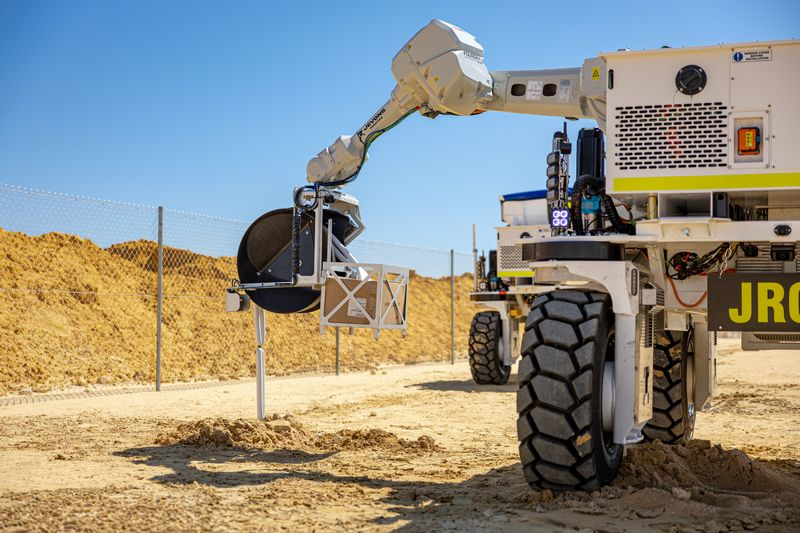
Cortex AI is the company’s autonomous intelligence system to map GPS-denied and hazardous environments, like underground mines and tunnels. Emesent plans to deploy the system on a wider range of vehicles. Valued at US$5.1 million, the development and commercialization project is also supported by Queensland University of Technology (QUT) and EPE Corporation.
“Emesent’s vision is to be world leaders in autonomous digitization of the most challenging and unreachable places on earth. That starts with robots that can navigate and sense autonomously, without GPS, on any platform,” said Farid Kendoul, Emesent’s chief technology officer and co-founder.
The news follows a recent US$17 million funding package to increase production capacity for the company’s Hovermap ST-X, an autonomous drone designed to operate on Cortex AI.
“Our team estimates that the GPS-denied autonomous mapping and navigation industry will reach $9B by 2030. Cortex AI is the engine that makes this scale possible,” Kendoul added.
Emesent’s Hovermap systems have been deployed by several major mining companies including Rio Tinto, BHP and Glencore.

Comments