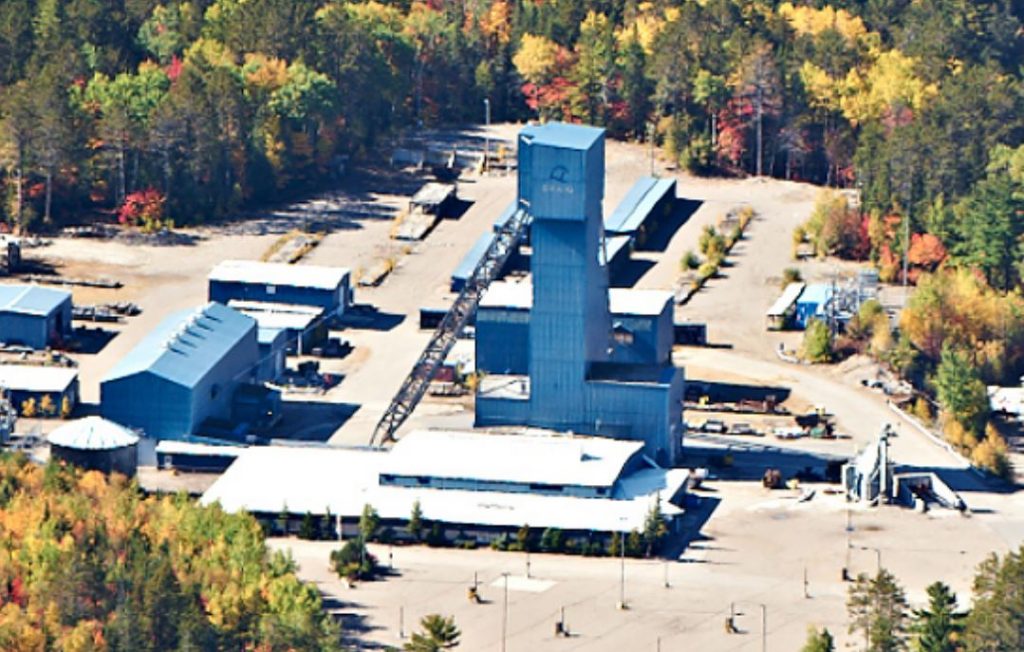
Glencore (LON: GLEN) has completed its Onaping Depth Project shaft at the Craig Mine in Greater Sudbury. This milestone marks first access to nickel ore on site and a step toward full production by 2027.
The 2.6-km extension is the first major development in the Sudbury Basin in over a decade. The project is expected to be in operation through 2040, producing 1.4 million tonnes of ore annually and about 280 kilotonnes of nickel and 145 kilotonnes of copper over its lifetime.
The federal government says the project expands Canada’s ability to produce nickel, improving its stainless steel and battery supply-chains.
Onaping Depth has a measured and indicated resource of 14.5 million tonnes grading 1.67% nickel, 1.25% copper, 0.06% cobalt, 0.45 g/t platinum, and 0.52 g/t palladium.
Canada-US tariff war
Ontario Premier Doug Ford was in Onaping on Thursday to celebrate the project’s completion. Ford called it “historic progress” on his plan to “protect workers from President Trump’s tariffs by creating thousands of good-paying jobs in Ontario’s mining sector.”
The province says construction created about 7,000 jobs and Onaping Depth will generate an additional 400 new jobs once it is at full production in 2027.
Stephen Lecce, Ontario’s minister of energy and mines, added, “Ontario is working to disrupt supply chain dominance of adversarial regimes, by moving with unrelenting speed to open mines faster.”
These statements follow Prime Minister Mark Carney's decision to walk away from U.S. trade negotiations on Aug, 21. In response, Trump imposed 50% tariffs on about $20 billion worth of Canadian goods. Ford has since threatened cutting off nickel exports to the U.S.
Environmental investment
Onaping Depth is located within the Craig Mine, which is part of Glencore's Sudbury Integrated Nickel Operations (Sudbury INO). The mine, which was shut down in 2009, represents a nearly $2-billion dollar private sector investment by Glencore since construction began in 2019.
The federal government also awarded Glencore $11 million through the Environment and Climate Change Canada’s Decarbonization Incentive Program (DIP) to implement underground mining fleets in production and reduce diesel emissions.
Comments