Japan has launched the world’s first test to extract rare earth elements from deep-sea mud, aiming to reduce its reliance on Chinese supplies amid rising geopolitical and trade tensions.
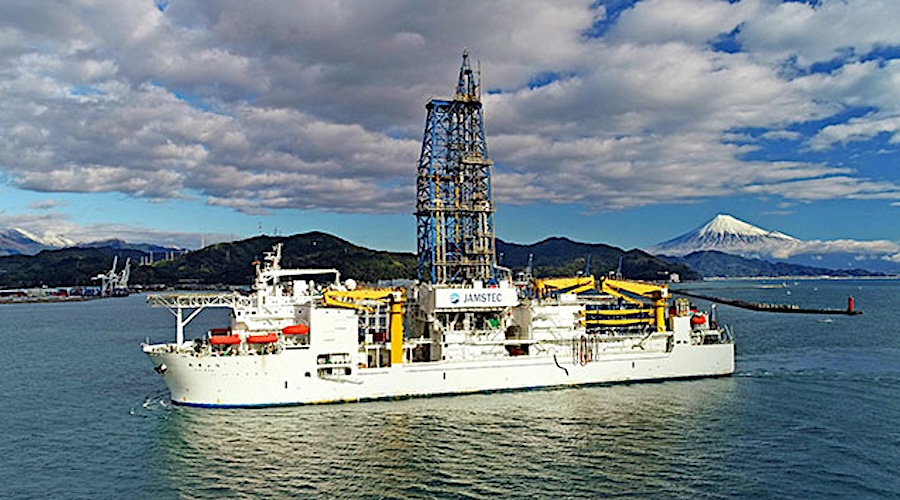
Chikyu, a government-backed Japanese mining vessel set sail on Monday for waters near Minamitori Island, a remote coral atoll in the Pacific, to study seabed mud rich in rare earth elements at a depth of about four miles. If successful, the project would mark the first sustained attempt globally to lift rare-earth-bearing sludge from the ocean floor directly onto a ship.
The initiative comes as Tokyo seeks to strengthen supply security after China moved to tighten controls on critical minerals. Last week, Beijing banned exports of dual-use items, including certain minerals, to Japan’s military and began broadly restricting rare earth shipments to Japan, according to reports Beijing has neither confirmed nor denied. Chinese state media have said the government is weighing further measures.
Japan has faced similar pressure before. In 2010, China curtailed rare earth exports following a maritime incident near disputed islands in the East China Sea. Since then, Japan has reduced its dependence on China to about 60% from roughly 90% by investing in overseas projects, including trading house Sojitz’s partnership with Australia’s Lynas Rare Earths (ASX: LYC), and by promoting recycling and manufacturing processes that use fewer rare earths.
Bold beginning
The Minamitori Island initiative is the first attempt by Japan to source rare earths domestically rather than overseas.
“The fundamental solution is to be able to produce rare earths inside Japan,” said Takahide Kiuchi, executive economist at Nomura Research Institute. “If this new round of export controls ends up covering a lot of rare earths, Japanese companies will again try to move away from China, but it won’t be easy.”
No production target has been set. If the test proves viable, the government plans a full-scale demonstration by February 2027 to recover the same daily volume of seabed material. Because the mud cannot be processed offshore, it would be shipped to Minamitorishima, where seawater would be removed using equipment similar to an industrial spin dryer, reducing volume by about 80%. The material would then be transported to mainland Japan for separation and refining.
The government-funded project has spent about ¥40 billion ($256 million) since 2018, according to Shoichi Ishii, a program director at the Strategic Innovation Promotion Program, though estimated reserves have not been disclosed.
Ishii also said a Chinese naval fleet entered waters near Minamitorishima in June while a Japanese research vessel was conducting seabed surveys within Japan’s exclusive economic zone. “We feel a strong sense of crisis that such intimidating actions were taken,” he said last month.


Comments