Recent report argues equity partnerships offer better wealth creation and project stability than conventional benefit deals
Indigenous communities across Canada are increasingly moving away from traditional impact benefit agreements (IBAs) toward direct equity ownership in mining and energy projects, fundamentally reshaping how First Nations participate in resource development on their territories.
A strategic report released last month by Thunder Bay-based Waawoono Consultancy challenges the mining industry's reliance on fixed-payment structures, arguing that these conventional approaches fail to capture the true value and long-term potential of major resource projects. The renewed focus on large mining projects, especially involving critical minerals, has made this report even more relevant now.
The study, titled "Beyond the IBA: The Evolution of Indigenous Equity Ownership and Sovereign Wealth Generation," presents equity ownership as both a wealth-building tool and a risk management strategy that benefits communities and investors alike.
Waawoono Consultancy operates as an Indigenous-owned firm specializing in regulatory processes, complex negotiations, and economic strategy. The Thunder Bay-based company describes its methodology as "two-eyed seeing," which bridges Indigenous sovereignty principles with corporate finance practices.
Rasevych maintains connections with the Anishnawbe Business Professional Association, a member-based organization that supports First Nation business communities across Northern Ontario's treaty territories, including Treaty #3, Treaty #5, Treaty #9, and the Robinson Superior and Robinson Huron regions.
Jason Rasevych of Ginoogaming First Nation, who authored the report, contends that traditional agreements create structural disconnects between project performance and community returns. His analysis demonstrates how fixed payments lose purchasing power during commodity super-cycles, when project revenues surge but community benefits remain static.
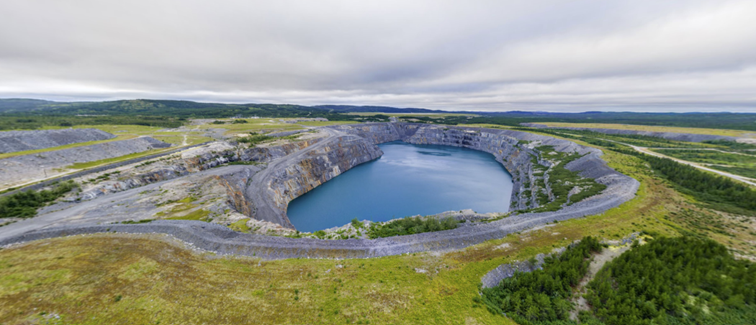
The Musselwhite Mine serves as a key example in the report, illustrating how fixed-payment structures can erode in real value while commodity prices climb. Communities find themselves receiving returns that bear no relationship to the scale of extraction occurring on or near their traditional territories.
Rasevych argues that emerging Indigenous financing tools, including the Canada Indigenous Loan Guarantee Corporation, are accelerating this transformation from consultation to ownership. Nations are shifting from being stakeholders who receive payments to partners who exercise boardroom-level influence over project decisions.
Equity as risk management
The report positions Indigenous equity ownership as more than a fairness issue, describing it as a fundamental change to project risk profiles that capital markets can quantify and value. Waawoono outlines what it terms a "certainty premium" that occurs when First Nations hold substantial ownership stakes.
When an Indigenous community holds a large ownership position, the report suggests the likelihood of prolonged conflict, litigation, and permitting instability drops significantly. This improved stability enhances investor confidence and reduces borrowing costs, creating benefits that extend beyond the community to project proponents and their financial backers.
The analysis frames equity partnerships as a sophisticated form of de-risking that addresses one of the mining industry's most persistent challenges: social license and regulatory certainty.
Strategic negotiating tools
The Waawoono report reads as both analysis and tactical guide, offering specific strategies for Nations preparing to negotiate equity deals. The document outlines several key concepts that communities can leverage in negotiations with mining companies.
The "Golden Share" concept represents one innovative approach, involving negotiations for a specific class of shares that carries veto rights over critical environmental decisions. This structure preserves land-based sovereignty even when a Nation holds a minority equity position, ensuring communities retain decision-making power over activities that could affect traditional territories.
The report also examines what it calls the "Ring of Fire Utility Model," contrasting traditional mining deal structures with arrangements where Nations own enabling infrastructure, particularly transmission systems. This approach functions like a toll road to development, delivering steadier revenue streams that remain less exposed to volatile mineral prices compared to production-based payments.
Another strategy involves leveraging federal loan guarantees to create what the report describes as "the spread." Nations may be able to borrow at lower, near-sovereign rates and invest in assets generating higher returns, using the difference to fund community priorities without drawing from existing program budgets.
Quantifying social impact
The report urges communities to frame social pressures as quantifiable balance-sheet risks rather than intangible concerns. Housing shortages, road deterioration, increased policing needs, and health system strain linked to major projects represent measurable liabilities that should be addressed through ownership and revenue tools rather than ad hoc community investments.
This approach transforms the conversation from mitigation to investment, positioning communities as sophisticated financial partners capable of evaluating and managing complex risk profiles.
Taking the message national
Rasevych plans to present the report's findings at two major forums this week, addressing leadership, industry, and policy audiences across the country.
At the Assembly of First Nations National Natural Resources Forum in Calgary on Tuesday, February 10, Rasevych will participate in a plenary panel titled "Investing in Prosperity: Activating First Nations Equity for Nation-Building." The 11:30 a.m. session at the Calgary TELUS Convention Centre will focus on closing the capital gap and examining how Indigenous equity is reshaping investment decisions in major projects.
The following day in Montreal, Waawoono's team, including Maite Fink, CPA, EMBA, and Landen Jourdain, will lead a workshop at the AFOA Canada 24th National Conference. The session, titled "Wealth Generation — Beyond IBAs: Equity Ownership for Community Wealth," will provide deeper technical guidance on structuring equity deals and building the internal capacity required to manage them.
Rasevych describes the report as a playbook for Nations who want to move beyond being treated as creditors waiting for payments and instead operate as invested partners with real influence over project outcomes.
Implications for Northwestern Ontario
For communities across Northern Ontario, where mining expansion, transmission corridors, and long-term resource development projects continue to reshape the economic landscape, the equity discussion carries immediate practical implications. The region's First Nations face decisions about whether major projects will deliver stable own-source revenue, improved housing and infrastructure, long-term employment and procurement opportunities, and governance power that matches the scale of development occurring on their territories.
The Waawoono analysis suggests that equity ownership and Indigenous-led investment vehicles represent a path toward intergenerational wealth creation rather than simply harm mitigation. This approach aims to build lasting economic sovereignty that extends far beyond individual project lifecycles.
Mining companies operating in the region may find themselves adjusting to a new reality where traditional benefit agreements no longer satisfy community expectations or investor requirements for social license. The shift toward equity partnerships could fundamentally alter how projects are financed, structured, and governed.
Building financial sophistication
The report acknowledges that equity ownership requires communities to develop new levels of financial sophistication and governance capacity. Unlike traditional agreements that involve receiving predetermined payments, equity partnerships demand active participation in complex business decisions, risk management, and strategic planning.
Waawoono positions this challenge as an opportunity for Nations to build institutional capacity that serves multiple purposes beyond individual mining projects. The skills and systems required to manage equity investments can support broader economic development initiatives and strengthen overall governance capabilities.
Industry response and future outlook
While the report presents equity ownership as beneficial for all parties, the mining industry's response to this shift remains mixed. Some companies have embraced partnership models, recognizing that Indigenous ownership can provide valuable social license and risk mitigation. Others continue to prefer traditional benefit agreements that offer more predictable cost structures and simpler negotiations.
The availability of federal loan guarantees and other Indigenous financing tools appears to be accelerating the transition regardless of industry preferences. Communities now have access to capital that enables them to participate as equity partners rather than simply benefit recipients.
Rasevych and his colleagues at Waawoono argue that this transformation represents a natural evolution rather than a revolutionary change. As Indigenous communities develop greater financial capacity and legal recognition of rights strengthens, the shift toward ownership becomes both inevitable and economically logical.
The report concludes that Nations have moved beyond seeking consultation and compensation toward demanding participation and partnership. Mining companies that adapt to this new reality may find themselves with more stable, profitable projects, while those that resist could face increased regulatory and financial risks.
More information is available at www.Waawoono.ca




Comments