From data silos to decision systems: What digital integration really means for mining
Mining’s digital transformation is often framed in terms of software adoption, cloud migration, or artificial intelligence (AI). But the more immediate shift, as recent industry developments suggest, is structural: how data is connected, shared, and ultimately used to make decisions.
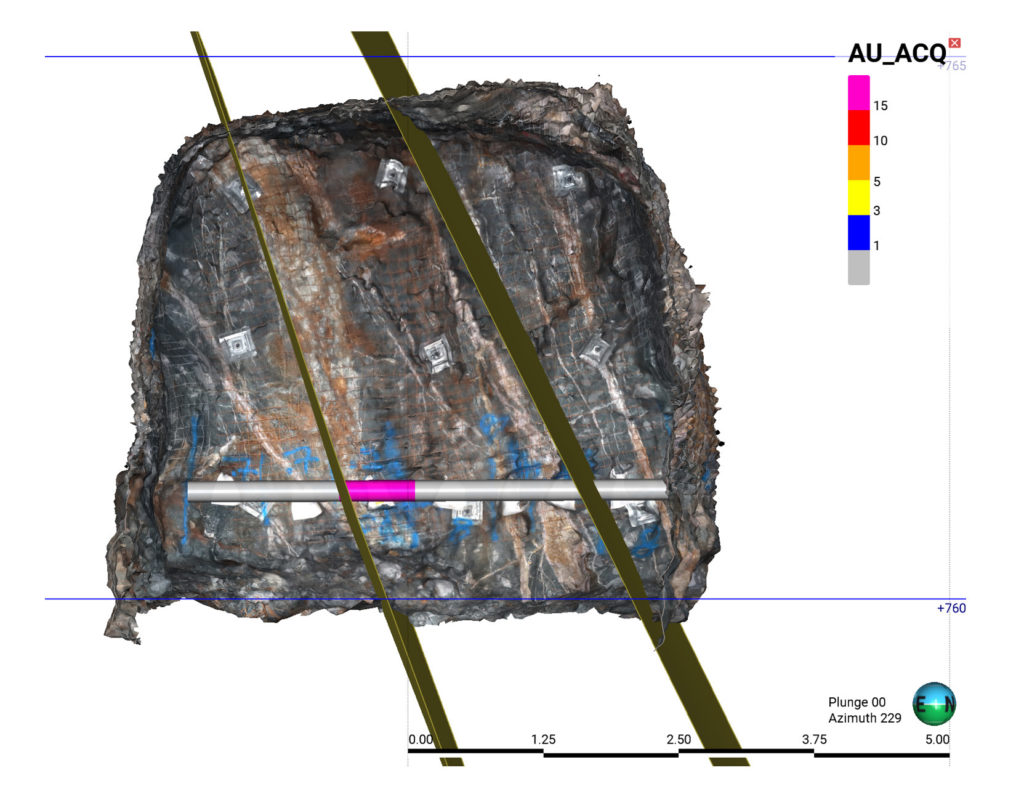
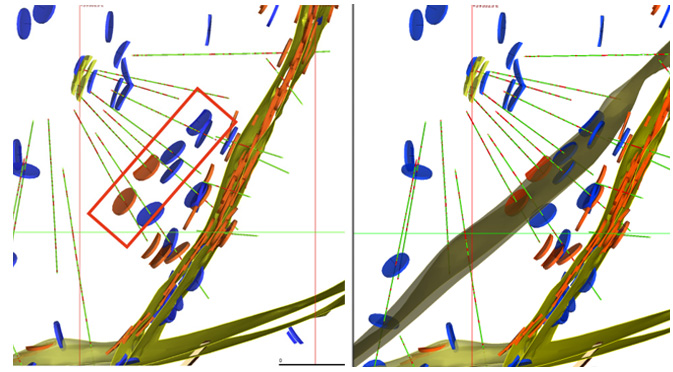
That shift is no longer theoretical. Recent applications of Seequent’s AI-driven technology platform Evo platform — combined with its machine learning structural intelligence tool Driver — have demonstrated measurable outcomes in operating environments. At OceanaGold’s Waihi operation in New Zealand, integrating geological and mine planning workflows enabled the identification of more than 2,000 additional ounces of gold, recovered from a previously unmodelled vein splay.
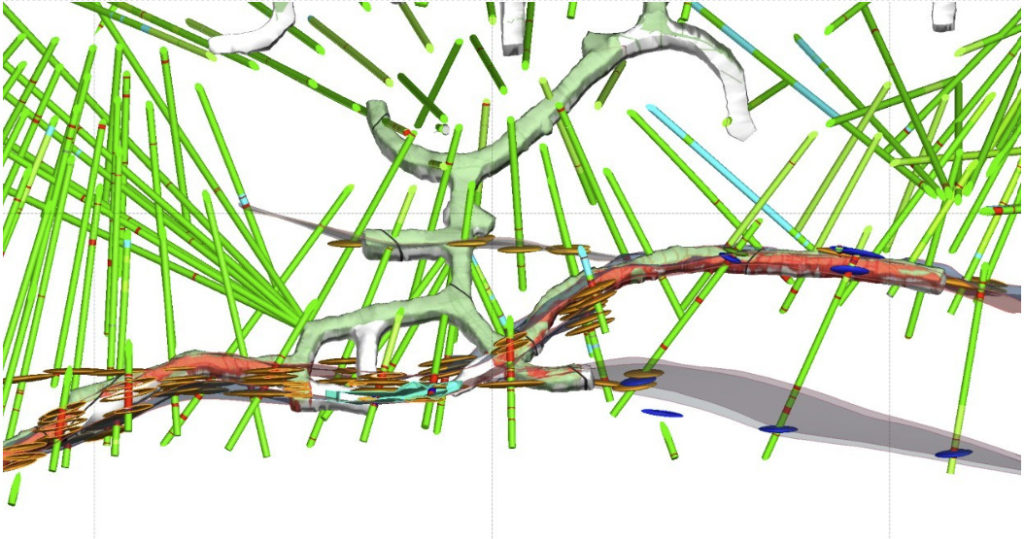
In parallel, a collaboration with SRK Consulting showed how AI-assisted reinterpretation of a legacy gold deposit revealed structural complexities — including folds and local variations in grade continuity — that had not been captured in earlier models, opening the door to improved resource understanding and future drilling strategies. The hybrid AI and implicit modelling workflow delivered by Evo, Driver, and the 3D modelling and visualization tool Leapfrog Geo offered a practical way to enhance the structural relevance of models with little manual effort while remaining fast, objective, and fully dynamic.
Taken together, these examples point to a consistent theme: the next phase of digital transformation in mining is less about generating new data and more about unlocking the value of existing datasets. That also points to a broader industry question: if value already exists within datasets, what is preventing it from being realized consistently?
Platforms that enable connectivity, standardization, and collaboration are central to that process, but their impact will depend on how effectively organizations adapt workflows and integrate new approaches into decision-making.
During the annual conference of the Prospectors and Developers Association of Canada (PDAC 2026), the Canadian Mining Journal spoke with Graham Grant (GG), CEO of Seequent, about how platforms like Evo are attempting to address that gap — and what it means for exploration, development, and workforce dynamics.
CMJ: Seequent recently introduced Seequent Evo, a cloud-based geoscience platform designed to unite data and workflows and help mining companies make faster, better decisions. Can you explain how Evo is transforming the way mining organizations work with subsurface data and what impact that could have on exploration and project development?
GG: Evo is helping connect data that was traditionally boxed up, siloed, and inaccessible.
If we are going to embrace the challenges we face in the world today, we need far greater levels of innovation and agility. To do that, we need access to information — and new ways of working with that information — that traditional methods have not allowed.
What Evo is really doing is providing that connectivity. It is enabling people to access and use data in ways that support faster, more informed decisions across exploration and development.
CMJ: Mining today is deeply influenced by global demand for critical minerals and the need for efficient, cost-effective discovery. In your view, how does modern digital subsurface data and modelling — enabled by Seequent technology — give mining companies an edge in identifying and developing high-value deposits?
GG: We must take a different approach. We cannot keep doing things the way we have always done them. Mines are getting deeper, grades are declining, and it is becoming harder to find Tier 1 discoveries. At the same time, demand is increasing. So, we need new approaches. We need to unlock innovation and new ways of working.
Connectivity and cloud are really the infrastructure that enable that. They allow us to bring data together and create new workflows that support better discovery and development decisions.
CMJ: Do these digital capabilities also help companies respond to investor and stakeholder expectations about sustainability and transparency?
GG:: Absolutely. The mining industry is at the intersection of multiple pressures right now. These are capital availability, geopolitical trade dynamics, commodity price volatility, and very high expectations from communities and stakeholders. To navigate that, professionals in the industry need to be information-rich and insight-rich. They cannot operate with limited or fragmented data.
Technology becomes a force multiplier in that context. It helps people access the information they need to make better decisions and respond to those combined pressures more effectively.
CMJ: Seequent has highlighted that successful digital adoption in mining also depends on people — talent, skills, and workflows. What do you see as the biggest talent or skills challenges for mining companies today? And how can technology, alongside training and upskilling, help address those needs?
GG: We are facing three human capital pressures at the same time. First, we have a retiring workforce. When people leave, they do not just take a role with them — they take knowledge. That creates a gap.
Credit: OceanaGold/Seequent
Second, the number of students entering geoscience professions is declining. So, the replacement rate is not keeping up. And third, we have low levels of female participation in the industry. Even in leading jurisdictions, participation rates are still relatively low compared to where they need to be. So, we must address all three of those issues.
Technology can help by lowering the barrier to entry. It can make the industry more accessible and allow different types of talent to contribute. It also supports knowledge capture and sharing, which is critical as experienced professionals retire.
CMJ: Are miners now thinking differently about the balance between geoscientists and data science professionals?
GG:: I think it is still early days. Mining is an industry that generates a huge amount of data, but much of that data is locked up and not easily accessible.
If I use an analogy, it is like trying to cook a meal in a kitchen where you cannot clearly see the ingredients. You do not know what is in each container, whether it is still usable, or whether it has been properly labelled.
In mining, we face similar questions about data — where it comes from, how reliable it is, whether definitions are consistent, and whether different teams are interpreting it the same way.
There is a lack of standardization and connectivity, which makes it difficult to fully leverage that data. What we are trying to do is build an infrastructure layer that allows data to flow more freely and consistently. Once that is in place, it becomes much easier to bring together geoscience expertise and data science capabilities in a meaningful way.
Final words
This discussion reflects a broader shift in mining toward integrated, data-driven decision-making. While the industry generates vast amounts of subsurface data, much of its value remains unrealized owing to fragmentation, inconsistent workflows and limited accessibility. The transition is underway, but as Grant suggests, it remains in its early stages. 
Watch a video of the full interview here
https://youtu.be/TxyVHGCIFsc?si=0Ab5MwXcZVJ–MpU
Related Posts
Troilus nails down US$850 million for gold-copper mine redevelopment
September 28, 2026
Troilus nails down US$850 million for gold-copper mine redevelopment
Ore sorting tests slice CAPEX for EDM’s Scotia lead-zinc mine by 57%
September 28, 2026
Ore sorting tests slice CAPEX for EDM’s Scotia lead-zinc mine by 57%
Sponsored video: Isometrix says shared data can flag mine risks early
September 28, 2026
Sponsored video: Isometrix says shared data can flag mine risks early

Team TS^2 wins AI4SafeMines student competition
September 28, 2026
Team TS^2 wins AI4SafeMines student competition
Hudbay lifts Snow Lake gold output estimate by 60%
September 28, 2026
Comments