Canada’s bid for global leadership and what it means for the mining industry
Critical minerals are Canada’s 21st century gold rush
Last January, during a speech heard around the world at the World Economic Forum in Davos, Switzerland, Prime Minister Mark Carney laid out the strength of middle powers such as Canada. Three times in his 16-minute speech Carney referenced critical minerals — as one of the key areas where he is hoping other nations will invest in Canada.
“Canada has what the world wants,” Carney said, adding, “we are an energy superpower. We hold vast reserves of critical minerals.”
Carney went on to tell government and business leaders from around the world gathered there that Canada is forming a buyers’ club for critical minerals anchored in the G7. He told them the abundance of these key minerals is one of the reasons his government is fast tracking more than a trillion dollars of investment in these minerals along with energy and other resources.
Critical mineral projects from coast to coast to coast
If you look at a map of Canada, you will see major critical minerals projects all over. In Quebec: rare earth elements (REEs), lithium, and graphite; in the Ring of Fire in Ontario: nickel, cobalt, chromium, and REEs; in British Columbia: copper, nickel, and REEs; in Saskatchewan: uranium, potash, and REEs; in Alberta: lithium; in the Yukon: copper, zinc, and REEs; in the Northwest Territories: REEs and cobalt; in Nunavut: nickel, copper, graphite, and REEs; and finally in Newfoundland and Labrador: REEs, nickel, and cobalt.
With both federal and provincial governments looking to develop these minerals and a whole new industry around them over the next decade, Stephen Mackie, senior director of metallurgy and consulting at SGS Lakefield, says, “Critical minerals including REEs are Canada’s 21st century gold rush.”
SGS is the world’s largest testing, inspection, and certification company, based in Switzerland. It has labs all over the globe with several in Canada, including the one in Lakefield near Peterborough, Ont., where Mackie is located.
SGS Lakefield, celebrating its 85th year of operation in 2026, has been at the forefront of the mining industry providing technical innovation, independent verification, and full life-cycle project support so clients can make the best business decisions. From pioneering flowsheet development and scale-up methodologies to playing a critical role in exposing the Bre-X scandal, the lab has consistently aimed to strengthen industry standards and investor confidence. SGS has also evolved over time to meet changing commodity demand and client needs as demonstrated by its work on technologies such as cyanide recovery (SART), advanced refractory gold processing, and modern hydrometallurgical solutions for critical minerals and battery materials. As ore bodies grow more complex and capital discipline intensifies, SGS Lakefield’s role as an independent, objective technical partner — providing rigorous testing, interpretation, and consulting — has positioned it not just as a laboratory, but as a global centre of excellence helping shape the future of mining.
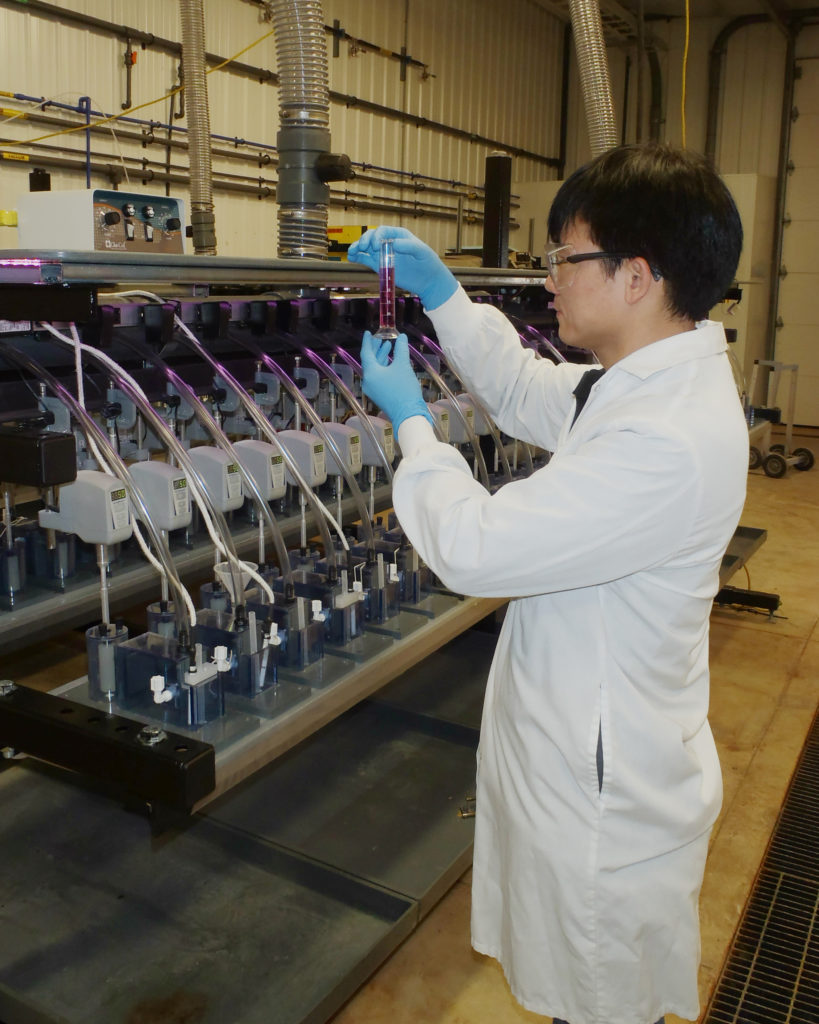
“We basically touch the majority of the critical mineral projects that are being developed globally,” says Mackie, who has been an industry insider for years and witnessed more than one client take a lithium project from the beaker to a working mine, a process that can take up to two decades.
SGS Lakefield in action
By helping demonstrate a viable pathway from Quebec spodumene to high-purity lithium chemicals, SGS has played a role in advancing one of Canada’s most ambitious efforts to date to build an integrated, domestic battery materials supply chain.
SGS supported Nemaska Lithium’s Whabouchi project and downstream Shawinigan hydromet plant through metallurgical testing, process development, and analytical services aimed at producing battery-grade lithium chemicals from spodumene ore.
This project, based in James Bay, is one of the largest high-purity lithium deposits in North America. Work conducted at SGS Lakefield helped characterize ore mineralogy; optimized spodumene concentration through crushing, dense media separation, and flotation; and supported the development and validation of the hydrometallurgical conversion process used to produce lithium hydroxide and carbonate. The company’s independent testing and flowsheet verification contributed to de-risking scale-up decisions, confirmed product quality requirements for battery markets, and supported engineering design and feasibility work.
Mackie says, “This experience demonstrates that there is something fundamentally different taking place now in the industry. The federal and provincial governments have realized we cannot just dig it up and ship it out to upgraders based in China and other global centres as we have done until now. The focus now is building up our own processing capacity which really requires disruptive change and creating the right strategy so Canada can become a global leader.”
He adds, “because of the work we do, we are being consulted by government and a number of agencies now who are looking to develop a critical mineral strategy and the best projects where Canada should invest.”
Before we learn more about that, it is good to go back and look at why critical minerals including REEs have become all the rage.
Critical minerals history
The world’s first critical minerals list dates to WWI when the U.S. military created a list of strategic minerals that were required to support the war effort. In more recent times, critical minerals have become essential with the world transitioning to renewable energy and because these minerals are the foundation on which modern technology is built. In 2021, Canada highlighted 31 critical minerals as part of its first ever critical minerals’ strategy and added three more (high-purity iron, phosphorus, and silicon metal) in 2024.
“It touches everything Canadians use daily. These minerals are essential ingredients for everything from your mobile phones to your EV car batteries, solar panels, and medical devices. There are multiple applications as well for military use, for defence and aerospace,” Mackie says.
In fact, it seems not a day goes by now without critical minerals being in the news. That started about a year ago when the U.S. government linked critical minerals, including REEs to defence, economic, and national security.
What are rare earth elements
There are 17 REEs in all, consisting of the 15 lanthanides (lanthanum through lutetium) plus scandium and yttrium. These REEs are key ingredients for green energy, consumer electronics, medical diagnostic equipment, and the defence and aerospace industries.
Large REEs deposits are not easy to find. Normally, if we are talking about a mine, it is 1% copper or nickel in the ground. Rare earth elements are much less than that. Often, they are in what the industry calls “parts per million.”
David Anonychuk is the global vice-president of metallurgy and consulting at SGS and is one of the leading experts in Canada when it comes to critical minerals strategy. He was part of an advisory group invited to the White House in 2024 to help the U.S. government strengthen its domestic EV battery supply chain.
“The reason rare earths are so important now is that they are the most vulnerable minerals to supply chain disruptions. China does 90% of REEs’ refining and they have been putting export controls on them. Any major consuming countries like the European Union and the U.S. are very vulnerable to supply chain shocks, and that is a huge issue right now for Canada and its allies too,” Anonychuk said.
It is not just issues with supply chains, but also geopolitical risks and NATO commitments that are leading to big changes.
Defence driving policy
Anonychuk says, “There is a long-term shift taking place in Canada and other G7 nations where critical mineral strategy is now centered around defence, industrial security, and military readiness. From all the conversations I have been part of, defence is a key driver for policy, capital, and procurement for the Canadian government when it comes to rare earths.”
He points to the fact that in the federal budget last November, critical minerals fell under the “Canadian Defence Production Act.” The federal government laid out an ambitious plan that aligns with what they call their critical minerals sovereign fund — investing in projects that they see as key to nation building.
“The use of the word sovereign is very telling —- they see critical minerals including REEs playing a huge role over the next decade for Canadian sovereignty,” Anonychuk adds.
Stephen Mackie confirms that when it comes to critical minerals, the race is on and that is why most of the work SGS is seeing on the metallurgy side now revolves around critical minerals. This shift signals a structural realignment of mineral supply chains, where Canadian miners and processors are no longer competing solely on cost, but on security, traceability, and alignment with allied defence priorities.
Projects that can demonstrate transparent ESG performance, domestic or allied processing pathways, and compliance with critical minerals security frameworks will be best positioned to attract capital and secure long-term offtake agreements. For investors, this creates a premium opportunity to back assets that meet allied supply chain requirements, as strategic demand and government support increasingly converge.
Niels Verbaan is the senior technical director at SGS Lakefield and one of the leading REEs experts. He says, “If you want to make a product out of these types of minerals, you need to understand what these minerals are. We have a multidisciplinary team that focus on these minerals; our experts have probably looked at most of the REEs’ projects globally. We have got experts focused on separating these minerals away from the stuff that we do not want. It is neat how many aspects of the REEs supply chain we touch.”
SGS Lakefield in action: REEs
A prominent REEs’ project that SGS Lakefield has been involved in is the Defense Metals’ Wicheeda REEs’ project in British Columbia, where SGS conducted pilot-scale mineral processing and hydrometallurgical testing and flowsheet development to demonstrate the recovery and production of magnet REEs.
The hydrometallurgical work included acid bake processing, impurity removal, and rare earth precipitation, that generated a mixed rare earth carbonate suitable for downstream separation and operational data to support feasibility study design. This program illustrates SGS Lakefield’s role in advancing technically viable REEs’ supply chains in North America while helping developers de-risk processing, validate product quality, and move toward commercial production.
SGS Lakefield also played a central role in advancing Scandium Canada’s Crater Lake project in Quebec through flowsheet optimization, pilot-scale processing, and hydrometallurgical testwork aimed at recovering scandium and other REEs. Using bulk samples, SGS validated a processing route capable of producing scandium oxide at a purity of ~99.5% and rare earth oxides exceeding 99% purity while improving recovery and reducing logistics and processing costs. The work confirmed a viable pathway toward commercial production and supported pre-feasibility planning, helping de-risk one of the world’s few potential primary scandium sources — it is an example of how to enhance REEs recovery while strengthening Canada’s critical minerals supply chain.
New trends in the industry
James Brown, director of consulting at SGS, says, “With some of the new trends in the mining industry, the company has recognized the need to evolve beyond being a laboratory that simply runs tests and now consults and works side by side with clients who lack in-house technical expertise. A lot of these people who are investing and own these companies are not the traditional majors. A lot of them are hedge funds or entrepreneurs and they need help. So, they call people like Niels to come in to review their plans to see if they make sense.”
Mackie says, “Another new area tied to critical minerals is around recycling and the circular economy. We are getting a new type of client. They are not miners. They bring scrap and end of life material and want processes to recover the metals. That is a growing sector for us that speaks to ESG and one of our pillars within our Strategy 27.”
Verbaan adds, “We see quite a few projects come in the door that are related to generating carbon credits. These are tech start-up companies that have an idea on a certain processing technology. We have seen interesting ideas like one that was trying to produce a carbon negative cement.”
Disruptive change needed
Any strategy to build up Canada’s critical minerals must go well beyond innovation and the initial phase of mining the raw materials. The bigger challenge comes from developing a downstream processing industry. Commodity expertise does not always transfer. For instance, somebody with a background in gold may not have the skills needed to develop lithium or REEs. The goals may be the same but the steps to get there are different. Not to mention, people in the industry are aging out and retiring which comes back to the disruptive change Mackie referenced earlier.
“We cannot have multiple REEs’ plants all doing the same thing. We simply do not have the materials to build them or the people to run them,” Mackie says. “What is needed is a coordinated, cooperative strategy that makes the best use of our limited resources and ensures the value created from critical minerals remains in Canada. That strategy still needs to be clearly defined, and we are actively part of that conversation with the government. Being able to not only mine critical minerals but also process them into viable products within Canada is what will ultimately move the country across the finish line,” Mackie says.
He adds, “All this is not going to be easy and will take time. It may also mean some of the many junior companies may have to join forces and become bigger entities to tackle the problems together. We need to get a place where commercialization makes sense. I am optimistic that there will be a radical change in terms of what a commercial operation looks like. At SGS, we have been making investments in the critical minerals space for years and are planning on continuing to invest to help our clients. We are expanding our Quebec City footprint with capital investment that will support business continuity and accelerate growth across the entire project life cycle including downstream requirements.”
By working alongside industry, investors, and policymakers, SGS is supporting Canada’s ambitious plan to become a global leader in critical minerals and helping shape the technical foundation that will make that international leadership possible now and for decades to come.
Related Posts
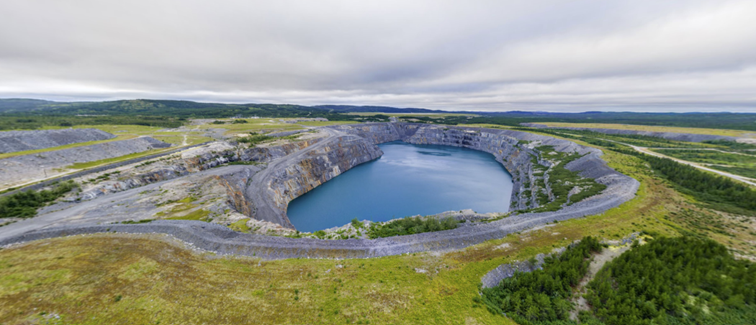
Troilus nails down US$850 million for gold-copper mine redevelopment
September 28, 2026
Troilus nails down US$850 million for gold-copper mine redevelopment
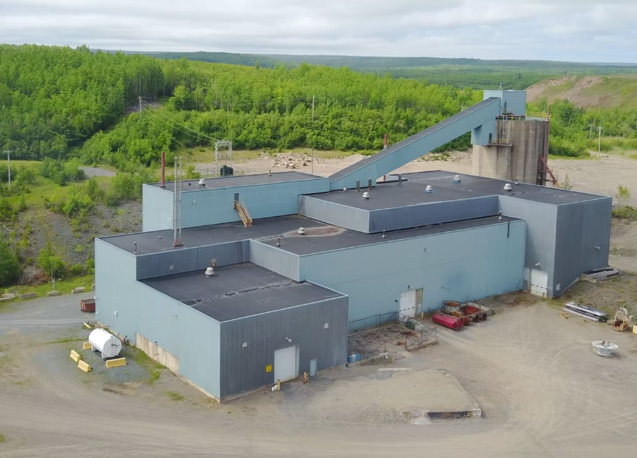
Ore sorting tests slice CAPEX for EDM’s Scotia lead-zinc mine by 57%
September 28, 2026
Ore sorting tests slice CAPEX for EDM’s Scotia lead-zinc mine by 57%
Sponsored video: Isometrix says shared data can flag mine risks early
September 28, 2026
Sponsored video: Isometrix says shared data can flag mine risks early
Team TS^2 wins AI4SafeMines student competition
September 28, 2026
Team TS^2 wins AI4SafeMines student competition
Hudbay lifts Snow Lake gold output estimate by 60%
September 28, 2026
Comments