A potential critical strategic minerals hub in Alberta
Canada is ramping up its mineral processing hubs to strengthen North America’s critical strategic minerals (CSM) supply chain, which is of great importance for the energy transition, new technologies including battery electric vehicles (BEVs), aerospace, and defence industries.
With an existing CSM hub in the East in Sudbury, Ont., the West is building up its CSM hub in Alberta’s Industrial Heartland (AIH), which is a region measured at 582 km2, that has existed since the 1950s and is home to chemical, petrochemical, oil, gas, and emerging low-carbon industrial projects. Sherritt International, Umicore Canada, and most recently, Fortune Minerals have sites in AIH.
AIH is well-positioned to become a CSM hub. The Government of Alberta, the AIH Association, and mining companies are working together to help build a CSM hub within the AIH. Existing infrastructure and resources as well as generous government incentives make the region an attractive option for mineral processing companies.
Alberta’s Industrial Heartland Association
Alberta’s Industrial Heartland Association, founded in 1999, is comprised of five municipal members and three associate municipal members.
Mark Plamondon, executive director of AIH Association, says, “AIH offers developers a rare combination of abundant low-cost energy, world-class infrastructure, integrated logistics, and a stable, pro-investment regulatory environment, making it one of the most competitive locations in North America to build and scale mineral processing projects.”
There are more than 40 companies that have operations in AIH, three of which are mining companies. Since 1954, Sherritt has been refining nickel and cobalt using hydrometallurgical processes at its refinery. Sherritt’s refinery is recognized as the only significant cobalt refinery and one of just three nickel refineries in North America. Since 2009, Umicore has processed battery-grade cobalt sulfate and nickel sulfate at its refinery, which is used to make nickel cobalt aluminum (NCA) oxides and nickel manganese cobalt (NMC) oxides. The most recent mining company to enter the region is Fortune Minerals, which has plans to start construction on its NICO project which will process cobalt, bismuth, and copper.
“AIH is currently Canada’s largest hydrocarbon processing region, with over $50 billion in operating assets that produce chemicals, fuels, and fertilizers that the world needs. It is this globally recognized industrial cluster that provides the competitive advantages that underpin new mineral processing facilities,” says Plamondon.
Key advantages of mineral processing in AIH include pre-zoning for heavy industrial use; access to hard rock and oil and gas by-product feedstocks for processing and available chemical reagents; and access to North American and global product markets.
Plamondon says, “Western provinces and northern territories in Canada have partnered to accelerate the development of minerals which opens up the potential for new supply sources for processing with the potential to building a CSM hub in AIH.”
Government of Alberta support
Announced in Jan. 2026, the “Western Canadian Critical Minerals Strategy” is a memorandum of understanding (MoU) between B.C., Alberta, Saskatchewan, Manitoba, the Yukon, and the Northwest Territories, whereby they have jointly agreed to work together to accelerate development, enhance supply-chain resilience, diversify export markets, and strengthen the position of Canada’s West as a preferred global supplier of responsibly sourced critical strategic minerals.
Jagrup Brar, B.C.’s Minister of Mining and Critical Minerals, says, “Western Canada is rich in critical minerals like lithium, cobalt, nickel, copper, and rare earth elements (REEs), which are crucial for clean energy, advanced technology, and defence applications. Together, we can advance a robust critical mineral value chain in Western and Northern Canada that accesses new export markets, increases trade opportunities, creates jobs, and brings in investment across the region.”
The framework for co-operation toward a “Western Canadian Critical Minerals Strategy” will promote Western Canada as a global hub for critical minerals innovation and sustainable development; prioritize regional critical mineral hubs; and identify the infrastructure planning and investment needed to maximize mineral extraction, processing, and export capacity. The final strategy is expected to be published in line with the “2026 Energy and Mining Ministers Conference” in June.
Brian Jean, Alberta Minister of Energy and Minerals, says, “Alberta is ready to lead. With our world-class geology, our strength in processing and refining, and our commitment to responsible resource development, we are well-positioned to help build secure and resilient critical minerals supply chains for Western Canada. This MoU builds on the western premiers’ work to advance economic corridors, and it sets a clear direction for how we will work together to strengthen Canada’s role as a reliable global partner in critical minerals.”
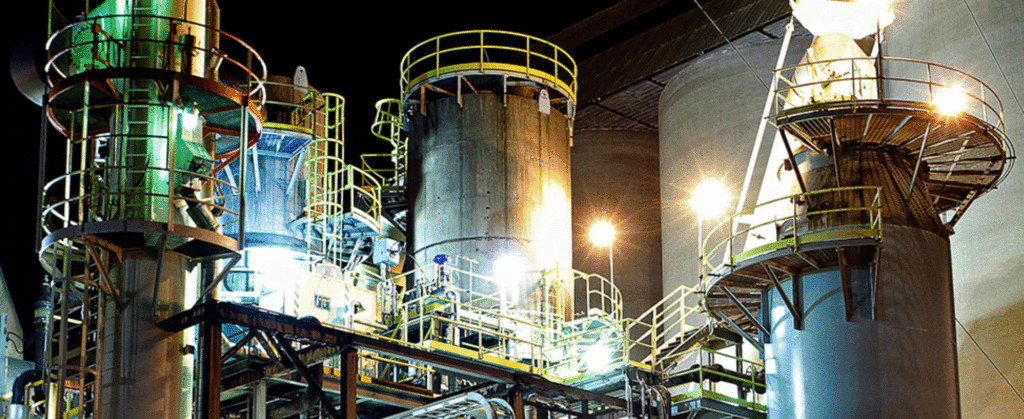
Credit: Sherritt International
At The Prospectors and Developers Association of Canada (PDAC) Convention held in March 2026, during his remarks at the “Powering the Future: SMRs, Critical Minerals, and Energy Security session,” Minister Jean announced the development of a new critical minerals’ incentive program.
Targeted for launch in 2027, the new incentive program is a key part of the Government of Alberta’s “Minerals Strategy and Action Plan.” The plan is designed to unlock the province’s mineral potential, support job creation, and strengthen Alberta’s position as a destination for mineral development and processing.
Minister Jean says, “Minerals are essential to our economic future, energy security, and global competitiveness. Alberta has an important role to play as a leading North American processor and refiner of critical minerals. These incentives will attract the needed jobs and investment to meet this demand.”
Fortune Minerals
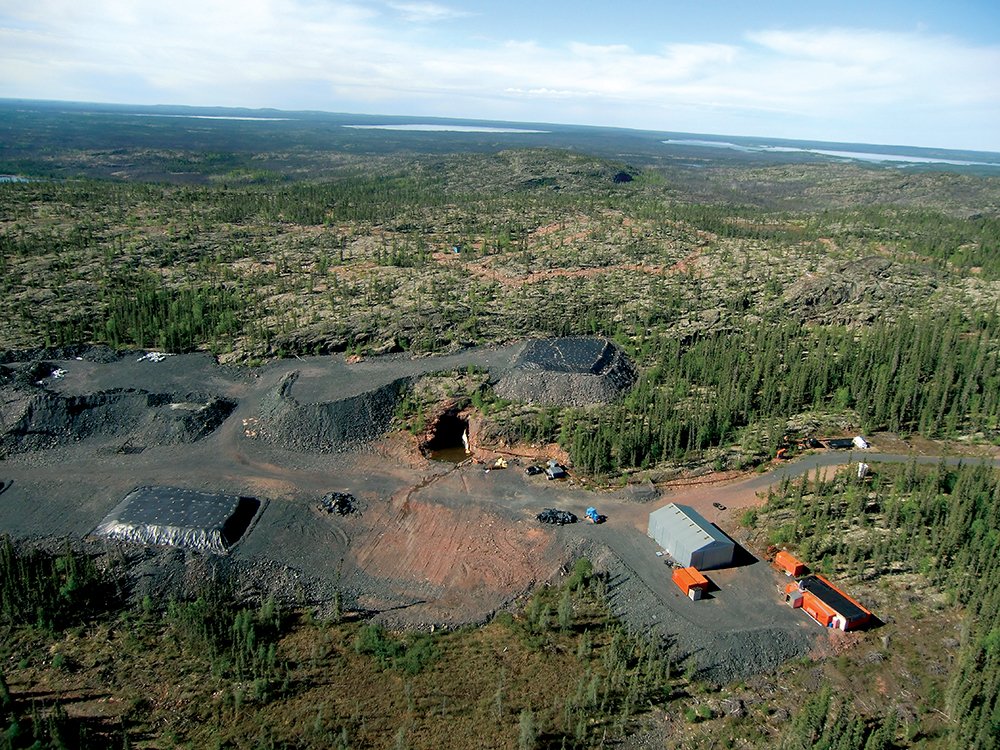
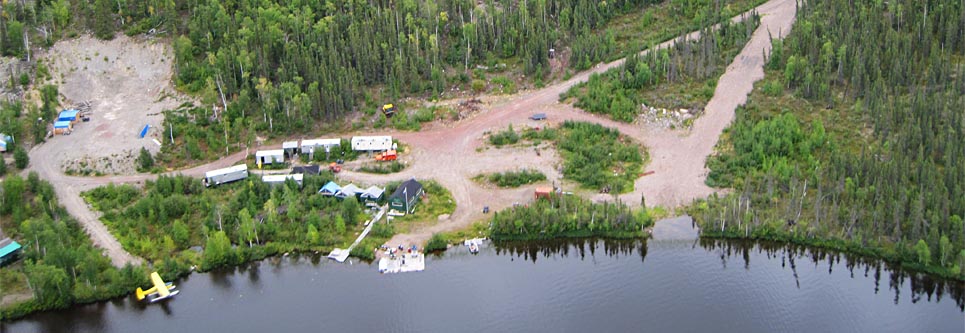
Fortune Minerals, a Canadian mining and mineral processing company headquartered in London, Ont., is advancing its vertically integrated NICO cobalt-gold-bismuth-copper project in Canada to a construction decision. The NICO project is comprised of a planned open pit and underground mine and concentrator in the Northwest Territories and a hydrometallurgical refinery in AIH.
Fortune Minerals recently completed the purchase of its brownfield industrial site in Lamont County, located within AIH, to construct its metal refinery. Consisting of 0.31 km2 of land and 3902 m2 of serviced shops and buildings, the site is within a 30-minute drive northeast of Edmonton, in an existing world-class petrochemicals cluster, with the requisite infrastructure and the human resources, reagents, and services needed for metal refining.
The NICO project is an advanced development-stage project that has received environmental assessment approval and the major mine permits for the Northwest Territories facilities and has been assessed in positive feasibility and front-end engineering and design studies. Fortune Minerals plans to reach its final investment decision in 2027. Subject to the arrangement of project financing, construction can commence, with commercial production anticipated in early to mid-2029.
The NICO project is projected to have an average annual production of 1,800 tonnes of cobalt (in ~8,780 tonnes of cobalt sulfate), 1,700 tonnes of bismuth (in ingots), 500 tonnes of copper, and 47,000 oz. of gold. While the NICO project was historically primarily a cobalt-gold asset by projected revenues, it is also the largest bismuth deposit in the world with 12% of global reserves. The 1.1 million oz. of in-situ gold provides a countercyclical highly liquid hedge to mitigate critical mineral price volatility, and copper will be a minor by-product.
The Alberta refinery’s cobalt production is targeting the rapidly expanding lithium-ion rechargeable battery industry to store energy in electric vehicles, portable electronics, and stationary storage cells.
Traditional bismuth use includes automotive glass and anti-corrosion coatings, paints and pigments, low temperature and dimensionally stable alloys for castings, and pharmaceuticals. Bismuth has growing consumption as an “eco-metal” and environmentally safe and non-toxic replacement for lead in solders, brass, steel, and ammunition.
Also, there is a growing demand for bismuth in decommissioning and remediating abandoned oil and gas wells as an environmentally safe, permanent plug that prevents greenhouse gas leakage, blowouts, and groundwater migration that can contaminate aquifers. Manganese-bismuth magnets are a superior, lower cost, and environmentally safer alternative to REEs.
Geopolitical mineral landscape
Robin Goad, president and CEO of Fortune Minerals, says, “The inclusion of midstream processing for the NICO Project development was initially considered to be a risk that would result in higher capital costs. However, recent trade conflicts have exposed vulnerabilities with the globalization of critical minerals supply. Domestic processing is now recognized as essential to supply chain security for the key materials needed for the energy transition, new technologies, and defence.”
China controls 90% of global bismuth supply and is restricting its export to Western countries as a counter to recent trade conflicts. Difficulties sourcing bismuth metal exposed other important bismuth uses in high speed-low heat electrical connects for artificial intelligence data centres, fuses, and weapons systems, including rocket propellants and nuclear industry applications.
The Democratic Republic of Congo produces approximately 70% of cobalt; 66% of platinum reserves are from South Africa; 50% of lithium reserves are found in the “lithium triangle” of Chile, Argentina, and Bolivia; and China controls approximately 70% of REEs’ mining — such as neodymium and dysprosium — and 90% of processing.
Because of the current unstable geopolitical mineral landscape, Western governments recognize that they need to reduce their dependence on foreign entities of concern and strengthen North America’s critical mineral supply chain to ensure that it is safe, secure, and reliable.
The recently announced “Western Canadian Critical Minerals Strategy,” Alberta’s as-yet-to-be-announced new CSM incentive program, and the addition of Fortune Minerals in AIH, will all contribute to a potential CSM hub in Alberta. 
Diane L.M. Cook is a freelance mining writer.
Related Posts
Troilus nails down US$850 million for gold-copper mine redevelopment
September 28, 2026
Troilus nails down US$850 million for gold-copper mine redevelopment
Ore sorting tests slice CAPEX for EDM’s Scotia lead-zinc mine by 57%
September 28, 2026
Ore sorting tests slice CAPEX for EDM’s Scotia lead-zinc mine by 57%
Sponsored video: Isometrix says shared data can flag mine risks early
September 28, 2026
Sponsored video: Isometrix says shared data can flag mine risks early

Team TS^2 wins AI4SafeMines student competition
September 28, 2026
Team TS^2 wins AI4SafeMines student competition
Hudbay lifts Snow Lake gold output estimate by 60%
September 28, 2026
Comments