Power is the missing link in Canada’s critical minerals strategy
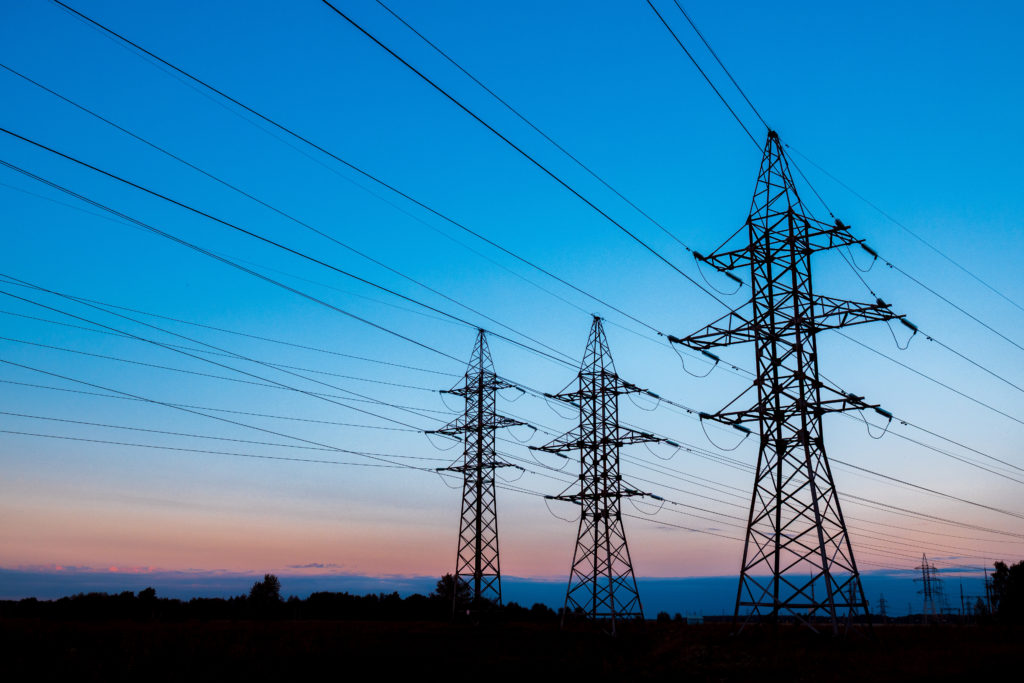
In some northern grids, developers say utilities must occasionally curtail industrial power use during peak demand periods to maintain reliability for local communities.
Conversations with developers, infrastructure planners, and utilities at the Prospectors and Developers Association of Canada (PDAC) 2026 conference this year repeatedly reached the same conclusion: geology is not the bottleneck — power is.
Canada has spent the past several years identifying the minerals that will underpin the global energy transition. Copper, lithium, nickel, cobalt, and rare earth elements (REEs) are now firmly embedded in federal strategy and international partnerships. But identifying minerals is only the first step. The real constraint lies elsewhere: power infrastructure.
As Prime Minister Mark Carney recently stated when outlining Canada’s strategic partnerships, “By working closely together in energy, critical minerals, investment, defence, and AI to move faster in these endeavours, we will create more opportunities for our people.”
The challenge is that many of Canada’s most strategically important mineral deposits sit in regions where electricity systems were never designed to support industrial development. In Canada’s North and remote regions, the power grid often does not exist in the way developers in more populated areas expect.
According to federal energy analysis, approximately 280 remote communities and commercial sites in Canada are not connected to the North American electricity grid, relying instead on isolated diesel micro-grids for electricity. These systems were built to power small populations — not large industrial operations.
Consider Yukon. The territory’s entire electricity system generated 559.2 GWh of power in 2023, with 104 MW of installed renewable capacity. That is roughly the output of a single medium-sized hydro station.
Large copper or nickel operations typically require 50 to 200 MW of continuous power, depending on the scale of mining and processing. In systems such as the one in the Yukon, a single new project could consume a substantial share of the entire territorial grid.
Even within this limited system, reliability remains fragile. While hydro provides most of Yukon’s electricity, diesel and natural gas generation are still required to meet winter demand and support isolated communities. This creates a structural constraint for northern mining development.
The issue is not theoretical. Major northern projects such as the Ring of Fire in northern Ontario, as well as Arctic operations in Nunavut, must often plan energy infrastructure alongside the mine itself, adding years to development timelines and significantly increasing capital requirements. The result is a fundamental mismatch between Canada’s mineral ambitions and its energy infrastructure.
Renewable integration can help, but it does not eliminate the challenge. Solar and wind projects can reduce diesel consumption in remote systems, but reliability requirements still mean conventional generation must remain available. Even where renewable capacity is added, diesel generators must remain in place to meet peak demand or seasonal variability.
In northern environments, this seasonal imbalance becomes even more pronounced. Solar generation, for example, varies dramatically across seasons. In Arctic regions such as Resolute, Nunavut, solar output in December can fall to effectively zero, while summer production peaks months later. Energy storage and hybrid systems are improving system flexibility, but they do not yet remove the need for dispatchable generation in isolated grids.
Other jurisdictions have approached this challenge differently. In Brazil, mining regions in states such as Bahia have developed integrated infrastructure models where energy development and mineral development advance together. Mining companies anchor electricity demand, allowing governments and utilities to justify large-scale grid expansion and energy investment.
Canada faces a similar opportunity. Northern mineral deposits represent not only a mining opportunity, but also an infrastructure opportunity. Strategic transmission corridors, hydro expansion, and grid interconnections could unlock entire regions of mineral potential while simultaneously improving energy security for northern communities.
Some early steps are already underway. Studies are examining potential grid interconnections between Yukon and B.C., aimed at improving reliability and expanding electricity access in the territory. But if Canada wants to live up to its immense potential and compete globally in critical minerals, these projects cannot remain isolated studies. That likely means treating northern transmission corridors, hydro expansion, and interprovincial grid connections as strategic infrastructure — on the same level as ports, railways, and pipelines.
The global race for critical minerals will not be won solely by those with the richest deposits. It will be won by those who can build the energy systems required to extract them. And in Canada, that race is only beginning. 
Isaac Ashton is a political science and communications student at the University of Ottawa.
Related Posts
Montage pours first gold at Koné ahead of schedule
September 29, 2026
Montage pours first gold at Koné ahead of schedule
Mining Forum: Miners have cash but lack the crews
September 29, 2026
Mining Forum: Miners have cash but lack the crews
Troilus nails down US$850 million for gold-copper mine redevelopment
September 28, 2026
Troilus nails down US$850 million for gold-copper mine redevelopment
Ore sorting tests slice CAPEX for EDM’s Scotia lead-zinc mine by 57%
September 28, 2026
Ore sorting tests slice CAPEX for EDM’s Scotia lead-zinc mine by 57%

Sponsored video: Isometrix says shared data can flag mine risks early
September 28, 2026
Comments