Policy momentum meets structural reality in British Columbia mining

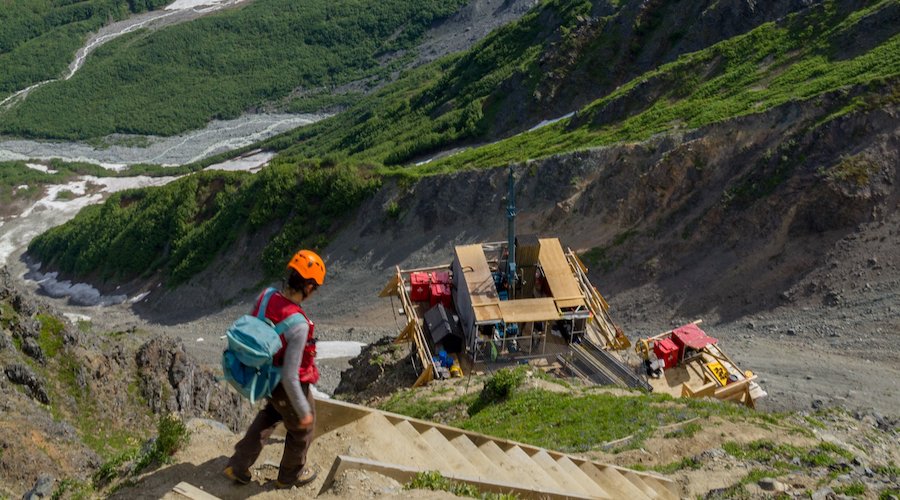
Credit: Defense Metals
British Columbia’s mining policy environment is at a pivotal moment. Industry policy and competitiveness were the focus of a recent Canadian Mining Journal interview at PDAC 2026 with Michael Goehring, president and CEO of the Mining Association of British Columbia (MABC).

Goehring pointed to a growing sense of momentum in the province, driven by recent permitting decisions, new federal incentives, and the work of B.C.’s Critical Minerals Office (CMO). At the same time, he emphasized that unlocking the province’s full geological potential — particularly in critical minerals essential for clean energy technologies — will depend on more than policy announcements. It will require sustained improvements in regulatory efficiency, stronger alignment between federal and provincial frameworks, and deeper collaboration with Indigenous communities.
The conversation reflects a broader tension facing Canadian mining: progress is visible, but systemic challenges remain. What follows is a closer narrative look at that discussion — what is changing, what is working, and where gaps persist.
Q: There is a sense of renewed momentum in British Columbia’s mining sector. How real is that progress?
A: According to Goehring, the momentum is real — but still early. After what he describes as a prolonged period of “stasis,” recent permitting activity signals a shift. In a short span, multiple permits have been issued for new or expanded mining projects, including a recent approval tied to Hudbay’s Copper Mountain operation.
That activity matters. In a jurisdiction where permitting timelines have often been cited as a barrier to investment, even incremental improvements can influence how projects are perceived by investors and operators.
At the same time, Goehring is careful not to overstate the change. The recent approvals represent progress, but not yet systemic reform. The permitting system, in his view, still requires durable improvements that can consistently support new project development.
This distinction is important. Momentum, in this context, is not defined by isolated approvals but by whether those approvals signal a sustained shift in how the system operates.
Q: What would meaningful regulatory improvement look like in practice?
A: Goehring’s answer centres on consistency and predictability. He points to the need for “systemic change” in the permitting regime — changes that go beyond individual project approvals to reshape timelines and processes across the board.
In practical terms, this means reducing uncertainty. For mining companies making long-term capital decisions, timelines are as critical as outcomes. Delays or unclear processes can affect not only project economics, but also whether projects proceed at all.
There is also an implicit recognition that regulatory efficiency does not mean reducing environmental oversight. Instead, the objective is to improve how that oversight is delivered — making it more coordinated, transparent, and timely.
The challenge, as reflected in the discussion, is that such improvements are incremental. They require coordination across ministries, alignment with federal processes, and ongoing engagement with project proponents and Indigenous communities.
Q: How are federal critical minerals policies influencing investment decisions?
A: Federal policy is beginning to shape the investment landscape, but its impact will depend on implementation.
Goehring highlights the “Clean Technology Manufacturing Tax Credit” introduced in the latest federal budget as a key development. The credit is particularly relevant in B.C., where copper and polymetallic deposits play a central role in the province’s mining profile.

Credit: Northisle Copper and Gold
From an industry perspective, the importance of such incentives lies in their influence on final investment decisions. Mining projects typically require significant upfront capital, and fiscal measures can help improve project economics at a critical stage.
However, the effectiveness of these incentives is tied to timing and certainty. As Goehring notes, the tax credit had not yet been fully operationalized at the time of the discussion. Until measures are finalized and implemented, their full impact remains prospective.
This highlights a broader dynamic in Canadian mining policy: announcements can signal intent, but execution determines outcomes.
Q: How does provincial policy interact with federal initiatives?
A: Provincial permitting remains the determining factor. While federal incentives can improve the financial case for projects, Goehring underscores that what happens “on the ground” in B.C. ultimately shapes project timelines and viability. Even with strong federal support, delays or uncertainty at the provincial level can offset potential gains.
At the same time, there are signs of increased coordination. The establishment and expansion of the Critical Minerals Office (CMO) reflect an effort to streamline processes and support project development before formal permitting begins.
The CMO’s approach — working with proponents and First Nations to “de-risk” projects — represents a shift toward earlier intervention. Rather than addressing issues during formal review processes, the model aims to resolve them in advance, potentially shortening timelines later.

CMO works with industry, unions, stakeholders, and First Nations to develop and implement a capital markets and investment attraction strategy that identifies opportunities for mineral exploration and the critical minerals sector.
Q: What role is the CMO playing?
A: The office is positioned as a bridge between policy and project execution. Goehring identifies three critical mineral projects, focused on copper and rare earth elements, recently added by B.C. to the CMO to help speed up assessment and permitting. The projects are Northisle Copper and Gold Inc.’s North Island project, Surge Copper Corp.’s Berg project, and Defense Metals Corp.’s Wicheeda project. These projects are considered strategically important within the broader context of critical minerals supply.

in B.C. Credit: Surge Copper
The CMO’s role is not to replace regulatory processes, but to prepare projects for them. By coordinating engagement with government agencies and Indigenous communities early, the office aims to reduce risk and improve readiness.
Q: What are the top priorities of MABC for supporting mining growth in 2026?
A: The association’s priorities focus on three areas: permitting, Indigenous capacity, and workforce development.
The first is accelerating permitting through systemic improvements. This aligns with the broader industry focus on regulatory efficiency and predictability. The second priority centres on Indigenous participation. Goehring emphasizes the importance of ensuring that First Nations have the administrative and technical capacity to engage effectively in project development. This is framed not only as a matter of reconciliation, but as a practical requirement for advancing projects. The association has called for increased government support in this area, including funding and resources to strengthen governance and technical capabilities.
The third priority is workforce development. According to industry estimates cited in the discussion, the sector will require approximately 10,000 new workers by 2030 to support growth and replace retiring employees.
This includes a range of roles, from skilled trades to technical and professional positions. Addressing this need will require coordinated efforts across government, industry, and educational institutions.
The projected need for new entrants reflects not only anticipated project growth, but also demographic trends within the existing workforce. As experienced workers retire, new talent must be trained and integrated.
This creates a dual challenge: expanding capacity while maintaining institutional knowledge.
Goehring points to the need for a “whole-of-government” approach, suggesting that workforce development cannot be addressed by industry alone. Training programs, education pathways, and immigration policies all play a role.
Finally, although progress is evident, but it is not yet decisive. British Columbia holds significant geological potential, particularly in minerals tied to the energy transition, and recent federal and provincial policy developments signal growing recognition of that opportunity. Permitting activity, fiscal incentives and initiatives such as the CMO suggest a more supportive environment. However, structural challenges remain. Regulatory processes are improving but not fully optimized, Indigenous capacity is essential yet uneven, and workforce gaps are still emerging. Competitiveness will depend not on any single factor, but on how effectively these elements align. 
Watch a video of the interview here
https://youtu.be/Kb9wE_Jn8Yg?si=rQU5GaB4wAVct8iR
Comments