It is not only a frenzy for critical minerals: There is a modern gold rush too
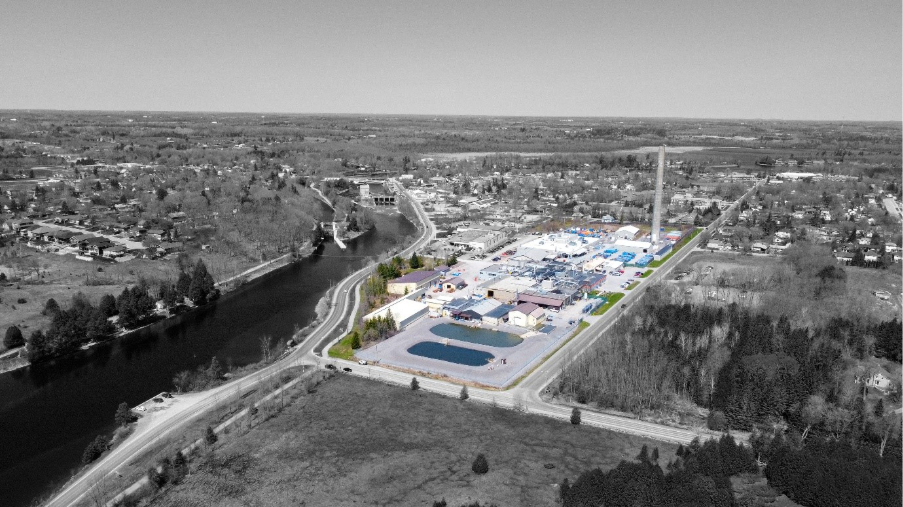
An insider’s view of the rush from the Canadian lab that is buzzing with activity
People who have been involved in the mining industry for decades say there is a modern gold rush taking place as the value of one of the world’s most historic commodities has skyrocketed. The price of gold reached record highs in early 2026, driving increased exploration and project activity, helping to flood samples at unseen levels into SGS Lakefield, a globally recognized Metallurgical Centre of Excellence.
Tyler Crary, director, operations for metallurgy and consulting (North America), who is based at SGS Lakefield, has never seen anything quite like this in his two decades in the industry. We are seeing a gold rush happening now. As we celebrate our 85th anniversary, our deep roots in gold metallurgy position us to help clients navigate today’s gold rush and advance the next generation of Canadian gold projects,” Crary said.
Jewellery no longer the golden ticket
To understand why this is happening, we turned to Chris Fleming, a senior metallurgical consultant at SGS with more than 50 years of experience working with gold. Fleming is one of the world’s leading experts in hydrometallurgy and precious metals processing and has been recognized for his role in pioneering commercialized gold extraction techniques. In 2023, he received the Canadian Mineral Processors (CMP) Lifetime Achievement Award.
Fleming explains that in the past up to 70% of the new gold mined every year went into jewellery, with the rest going into investment vehicles or central banks buying up gold bars.
“As a result of that, there has always been an upper cap on the price of gold,” Fleming says. “When the price gets too high, people stop buying jewellery and jewelry pawning creates an artificial supply.”
Fleming says in the past few years, those ratios have shifted with more than 50% of all new gold now going into investments. He attributes this shift to economic uncertainty and geopolitical tensions around the world that have many turning away from the U.S. dollar back to gold as a safe haven. That has led the price of gold to almost double as anybody who holds gold in their portfolio has seen. There is no longer that upper cap.
Everything gold is new again
Tyler Crary says high gold prices are reviving conventional and complex refractory projects, which average 16 years from exploration to operation. Gold projects proved more resilient than other projects during the 2009 financial crisis, although financing later slowed. Despite market cycles, gold accounts for up to 50% of exploration budgets.
Canada continues to be a key player
You might be asking what Canada’s role is in all of this. “We are in the top five in gold production and where Canada is uniquely placed is that over 50% of all the mining and exploration companies in the world are based either in Toronto or Vancouver,” Fleming says.
He adds, “that means Canada is seen as a place where you can raise finances for mining projects. 50% or more of the projects that we do at our lab in Lakefield are gold projects.”
Crary says Canada has other advantages that has led to a lot of new mines being developed here in the past 20 years. He says gold is in abundance in various regions around the world but some of those are not considered as safe as Canada. He says this country has the labour and governments behind the industry as well.
Simpler gold projects have been explored and developed
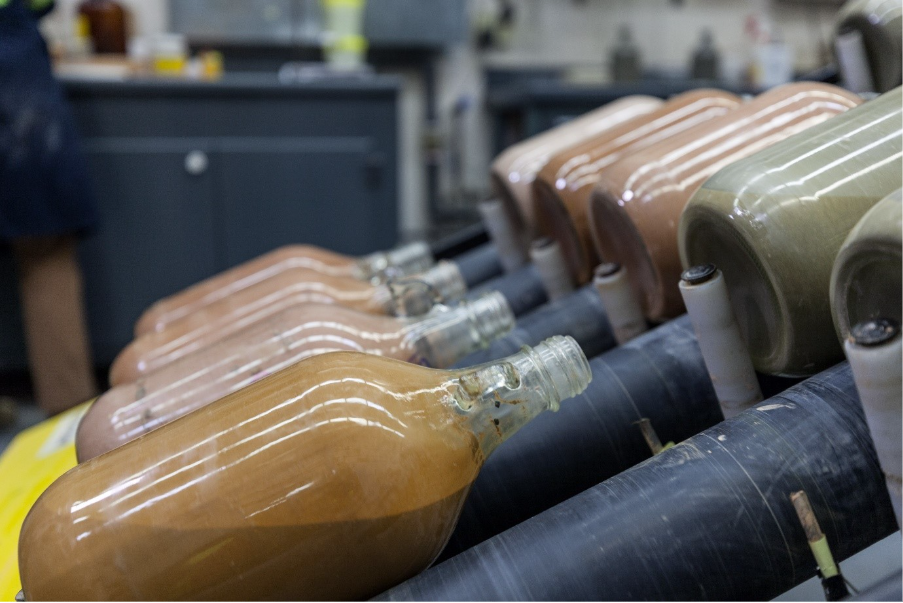
Crary says SGS Lakefield tests increasingly common refractory sulfide projects, while conventional projects go to other labs. Gold associated with sulfur or carbon requires more processing, higher costs and skilled staff, particularly at remote sites. Even high-grade deposits may require significant investment. Thorough feasibility studies help reduce the greater risks of high-pressure, high-temperature pressure oxidation and determine the most suitable metallurgical and economic approach for each project before development proceeds. James Brown is director of consulting within metallurgy and consulting (North America) at SGS. He explains that conventional or existing projects help companies optimize their processes and if they can improve recovery by one or two per cent, at current prices, that is very significant. But he highlights things are much more complicated these days.
The simpler gold projects have been explored and developed. Ores are now lower grade and more complex. What makes that challenging Brown says is that the technical know-how is not easy to find.
“With the surge in gold projects, the expertise in the industry is spread thin. There are not a lot of graduates coming out of university getting into the industry. That is where we can help. We have the expertise and, in some cases, have metallurgists that can go on site to help fill in on a short-term basis if operations lack the experience that they need.” Brown adds, “we have people like Chris and Tyler who have worked on thousands of gold projects.”
Future trends for gold
Neri Botha says critical minerals associated with gold are making some deposits more financially viable, turning material once considered waste into a potential recovery opportunity. Tyler Crary says Barrick Mining Corporation is expanding beyond gold into copper and critical minerals. He predicts more major gold miners will follow, using their operational experience to advance projects rapidly from exploration to operation.
Our SGS experts look back and to the future of gold projects:
Detour Lake — the largest gold-producing mine in Canada
It is difficult to pick just one milestone moment from the thousands of projects Fleming has been involved with over the years, but the shift in gold mining we are seeing today is on full display at Detour Lake in Northern Ontario. This is a very large, low-grade mine, and to remain profitable, they operate on a very large scale, mining, crushing and milling millions of tonnes of ore every month.
Over several phases of project development, SGS Lakefield completed comprehensive metallurgical characterization and process-development test work for the Detour Lake deposit. Programs included comminution, gravity concentration, cyanidation, recovery optimization and ore variability assessments to support process flowsheet design, feasibility studies, reserve estimation and operational improvements. The results demonstrated strong amenability of Detour Lake mineralization to conventional gold processing methods and provided the technical foundation for Canada’s largest and most successful open-pit gold mining operations.
SGS work on groundbreaking technology to extract difficult deposits
A key highlight for James Brown has been his involvement in the groundbreaking Platsol process, first developed by SGS Lakefield in 2000. It is a single-step, high-temperature pressure oxidation leaching technology to simultaneously extract Platinum Group Metals (PGMs), gold and base metals from complex, low-grade polymetallic sulfide ores and bulk concentrates.
It serves as a highly efficient, cleaner and more economical hydrometallurgical alternative to conventional smelting. “I really do think at some point we are going to see this technology used on a commercial scale all over the world,” Brown says.
B2Gold’s Goose Project in Nunavut
Tyler Crary feels lucky to have been involved in all B2Gold’s projects that have gone from exploration to operation. He highlights B2Gold’s Goose Project.
Based in Vancouver, B2Gold has operations around the world including in the Philippines, Western Africa and Namibia. The Goose Project was their first in Canada.
“Essentially, we tried to fine tune everything we could to help them with their capital and operating costs. They are in an extreme remote location in Nunavut. They must buy all their equipment and reagents a year in advance so every little dollar counts,” Crary says.
He adds, “we were helping them de-risk the project to give them confidence it was economically viable, well before the price of gold surged the way it has today. Small changes we helped them with led to savings of more than $24 million a year.”
Narrow vein mining in Newfoundland
Neri Botha highlights work with Anaconda Mining and Novamera’s narrow-vein mining in Newfoundland. SGS provides geology, geometallurgy and testing, while AI-driven modelling and subsurface imaging are making previously variable, uneconomic deposits increasingly viable for extraction.
Teddy Katz is a freelance writer.
Related Posts
JLR wins Canadian Consulting Engineering award for responsible AI implementation
Vizsla Copper launches 2,000-metre Copperview drill program, wraps Poplar phase-2
Volta doubles Springer rare earths, eyes 2027 study
October 19, 2026
Volta doubles Springer rare earths, eyes 2027 study
The critical minerals race is becoming a race for talent
October 16, 2026
The critical minerals race is becoming a race for talent
Comments