From pit to platform: Why mining’s value still lags tech and how Canadian law can help close the gap
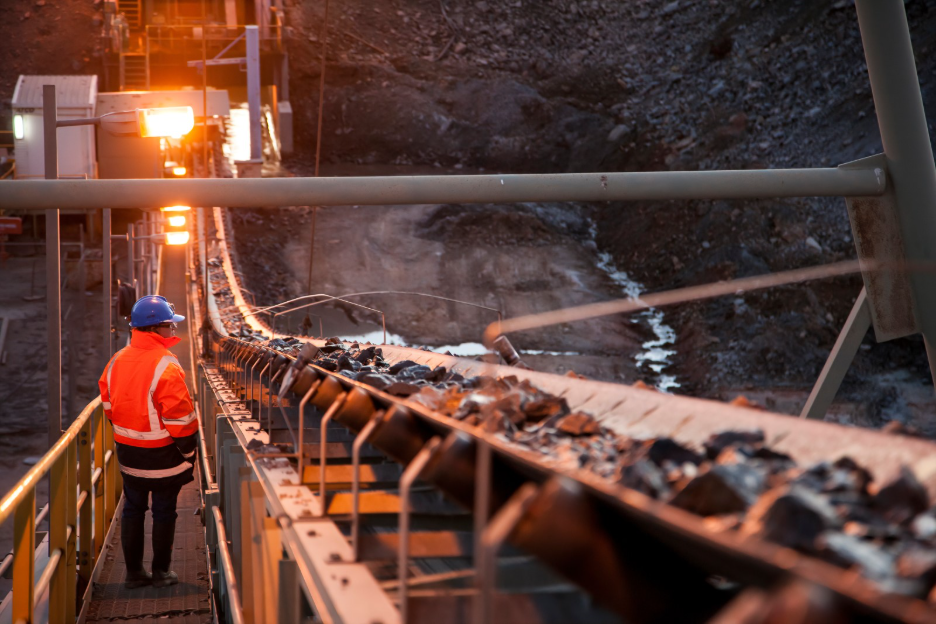
Mining is not merely a traditional supplier of commodities; it is a foundational component of the physical infrastructure underlying modern computation. Artificial intelligence (AI), hyperscale data centre expansion and emerging quantum computing technologies depend on semiconductor manufacturing, electricity generation and transmission, advanced electronics, cooling systems, batteries and other infrastructure requiring minerals extracted from the earth. The technological economy therefore increasingly depends on a mineral-intensive physical foundation.
Apple, Microsoft and NVIDIA generate revenue, earnings and market capitalization that exceed those of individual mining companies. Technology companies command higher valuation multiples because scalable models, low marginal costs and expanding markets create characteristics that mining companies generally cannot replicate. Yet, the physical inputs enabling technological innovation originate upstream, while financial rewards accrue disproportionately to companies higher up the value chain.
This valuation difference does not demonstrate that mining is intrinsically undervalued relative to technology. Much of the differential reflects economically rational differences in scalability, capital intensity, geological uncertainty, commodity price exposure and regulatory risk. The question is whether mining’s discount reflects avoidable legal and institutional uncertainty. Geology, commodity prices and capital intensity create structural risks that law cannot eliminate; however, unnecessary legal and regulatory uncertainty can affect project timing, capital requirements and expected cash flows.
TSX and TSX Venture Exchange mining companies operate amid front-loaded capital expenditure, geological uncertainty and long-term environmental liability. National Instrument 43-101 establishes standards for disclosure of scientific and technical information on mineral projects and requires that technical information be supported by qualified professionals. It distinguishes supported resources and reserves from exploration concepts and other forward-looking expectations, enhancing investor protection and market integrity.
Capital markets reinforce the divide. Mining companies are more often assessed through net asset value, discounted cash flow, reserve life, production profiles, cost curves, commodity price assumptions and jurisdictional risk, although comparable company multiples, transaction values and exploration optionality also matter. Regulatory exposure enters valuation when permitting uncertainty, delays, litigation or changing requirements affect development schedules, capital needs and cash flows. Canadian obligations, including impact assessment, Indigenous consultation and material climate risk disclosure, can affect project assumptions and returns.
Canadian mining companies also face complex environmental and social obligations subject to legal enforcement. The federal Impact Assessment Act, provincial environmental assessment regimes, constitutional Indigenous rights and the federal UN Declaration Act together form a legal landscape in which Indigenous rights, cumulative effects and climate considerations can affect project development and approvals. These frameworks can lengthen timelines and increase complexity.
The federal impact assessment regime illustrates why regulatory predictability matters. In October 2023, the Supreme Court of Canada found the designated projects portion of the federal impact assessment scheme unconstitutional in substantial part, prompting Parliament to amend it; those amendments took effect on June 20, 2024.
The valuation divergence feeds into mining’s reputational challenge. Canadian public discourse often associates mining with environmental damage, conflicts with Indigenous communities and boom-bust regional economies. Community acceptance and Indigenous relationships can impact the prospects, timing and perceived risk of major projects. Modest financial returns compared with technology can reinforce perceptions of outsized social and environmental costs.
Repairing that image requires more than public relations; the credible Canadian legal path runs through demonstrable compliance and environmental, social and governance (ESG) performance. Canadian securities legislation already requires issuers to disclose material climate-related risks affecting their businesses in the same manner as other material information. Canada’s proposed expansion of mandatory climate-related disclosure remains unsettled following the Canadian Securities Administrators’ (CSA) April 2025 decision to pause development of a new mandatory rule. Material climate risks remain a securities disclosure consideration under existing Canadian securities law, including NI 51-102 and CSA Staff Notice 51-358, while Canada’s broader framework remains under development. Clear disclosure of material climate risks also strengthens investor confidence by demonstrating board oversight of long-term operational and jurisdictional risks. Integrating material climate risks into board oversight and reporting them clearly can give investors a basis for assessing resilience and long-term risk.
For boards, counsel and management, legal strategy extends beyond permitting and compliance to the information and relationships that underpin investors’ assessment of project risk. Decisions concerning impact benefit agreements, material climate risk disclosure and Indigenous partnership arrangements can become relevant to investor due diligence when they affect project legitimacy, permitting risk, operational continuity or litigation exposure. These considerations influence project risk and long-term value, making legal strategy part of capital markets strategy.
Legal compliance alone does not increase share price. Its financial effect runs through project economics: legal uncertainty can delay construction, increase capital requirements, expose projects to litigation and alter project scope, expected cash flows and required returns. Stronger compliance or ESG performance does not necessarily command a valuation premium; the value lies in reducing avoidable uncertainty while preserving economic optionality.
Indigenous rights and benefit sharing are equally central. Canadian jurisprudence on the duty to consult and accommodate establishes a constitutional framework that is particularly important for resource projects. The Supreme Court of Canada’s decisions in Haida Nation, Taku River, Clyde River and Chippewas of the Thames confirm that the Crown must, where the legal threshold is met, consult Indigenous peoples before decisions that may adversely affect asserted or established Aboriginal or treaty rights. They do not create an automatic veto over development but require meaningful consultation and accommodation where appropriate. The duty is context-specific, depending on the right’s strength and the seriousness of potential adverse impacts. Although the duty rests with the Crown, proponents often support consultation and relationships with affected communities. Companies moving beyond minimum procedural compliance toward equity participation, revenue sharing and, where appropriate, co-governance can shift the relationship toward shared value creation.
Mine development timelines are another factor shaping valuation. Complex greenfield projects can take many years, from discovery through feasibility, permitting, financing, construction and production, depending on the commodity, infrastructure, jurisdiction and Indigenous engagement.
Critical minerals have elevated the strategic importance of mining. Canada’s Critical Minerals Strategy treats critical minerals as strategically important to the country’s economic, technological and national security objectives, with particular emphasis on strengthening domestic production, processing and value chains. Canada nevertheless has gaps in domestic processing and refining capacity for some critical minerals, including lithium, while mining companies often sell into global supply chains where additional margins can accrue to processors, converters and manufacturers. These constraints remain important even as strategic demand increases.
One opportunity to narrow the valuation gap is to reframe mining’s role in the energy transition and technological economy. These narratives align with government priorities, including Canada’s commitments under the Canadian Net-Zero Emissions Accountability Act and industrial policy supporting clean technology manufacturing.
Indigenous partnership models offer another avenue. Equity participation, revenue sharing and co-governance arrangements can demonstrate commitment to long-term value creation rather than transactional compliance. The UNDRIP Act’s obligations apply to the federal government and federal laws, not directly to provincial and territorial governments. For mining companies, treating Indigenous participation as integral to project legitimacy can be more durable than minimum procedural compliance.
Innovation represents a further opportunity. Mining companies investing in digital technologies, automation, circular economy solutions and midstream integration can shift their position in the value chain. These investments can reduce costs, improve environmental performance, create revenue streams and align mining with innovation-driven valuation narratives.
The comparison between mining earnings and technology profits exposes a misalignment between where value is created physically and where it is captured financially. Mining produces materials that enable technological innovation, including infrastructure supporting increasingly compute-intensive technologies, yet financial rewards accrue disproportionately to companies that transform those materials into platforms, devices and systems. Canadian law cannot erase this misalignment, but it can create conditions for mining companies to capture more value.
Stable regulatory frameworks, predictable permitting, credible climate disclosure and meaningful Indigenous partnerships can reduce perceived project and jurisdictional risk and, in appropriate circumstances, the risk premiums investors apply to mining assets. Lower perceived legal and jurisdictional risk can support valuations by reducing uncertainty around project timing, capital requirements and cash flows, although commodity prices, capital intensity, geological uncertainty and broader market conditions remain dominant influences.
Legal clarity can therefore help narrow the discount applied to certain mining assets, but it cannot eliminate structural valuation differences arising from mining’s capital intensity, geological constraints and limited scalability. Mining’s image will improve when the sector demonstrates it is not merely compliant but forward-looking. Environmental stewardship, Indigenous partnership and strategic communication can reposition companies as essential contributors to Canada’s industrial future. The energy transition and expansion of advanced computing require vast quantities of critical minerals, and Canada is well positioned to supply them. The challenge is not to mimic technology valuations but to ensure mining’s indispensable role is recognized and trusted.
Carlos da Costa, PhD, is an adjunct finance professor at the University of British Columbia and an experienced financial professional.
Related Posts
Power Metallic builds a polymetallic district at Nisk
October 8, 2026
Power Metallic builds a polymetallic district at Nisk
Critical One plans ‘Critical Two’ spin-out for Kenora and Namibia

TCG, Indigenous Nations partner on Ontario mining initiative
October 8, 2026
TCG, Indigenous Nations partner on Ontario mining initiative

Dynasty concludes Thundercloud drill campaign
October 8, 2026
Dynasty concludes Thundercloud drill campaign

AME report sees $23B economic boost from new Canadian mines
October 7, 2026
Comments