Power Metallic builds a polymetallic district at Nisk
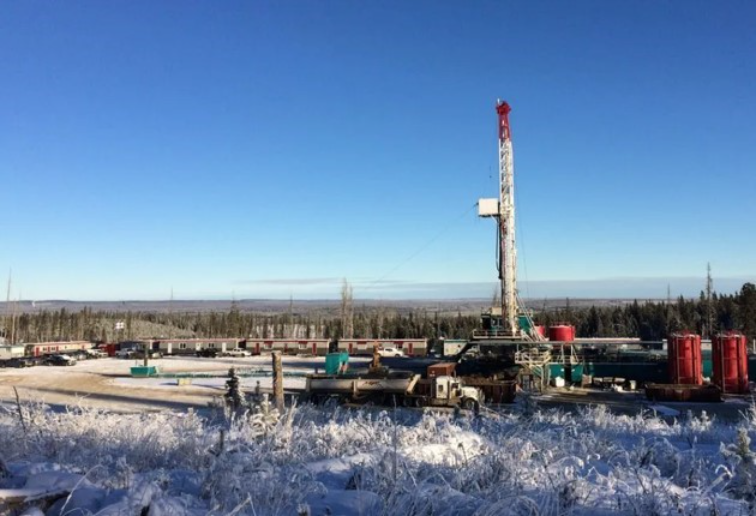
Power Metallic Mines, formerly known as Power Nickel, has evolved from a nickel-focused explorer into a Canadian polymetallic company centred on its Nisk District in Quebec’s Eeyou Istchee James Bay territory, with its name change reflecting the project’s expanding mix of copper, platinum group metals (PGMs), nickel, gold and silver. The company holds an 80% interest in the core Nisk property and controls about 330 sq. km of surrounding ground, covering roughly 50 km of prospective basin margins. Its broader portfolio includes the Jabal Baudan copper-gold-zinc exploration licence in Saudi Arabia and a 50% shareholding in Chilean Metals, owner of projects in B.C. and Chile.
Despite that geographic reach, Nisk is clearly the main event. Power Metallic’s decision to spin out its Golden Ivan and Chilean exploration properties allowed the company to direct its drilling capital and management attention toward Quebec. That focus has produced three mineralized zones — Nisk Main, Lion and Tiger — along with an extensive land position that gives the company room to test whether those discoveries belong to a much larger system.
From discovery to resource
“This inaugural Lion resource confirms what the drilling has been telling us: Lion is a high-grade polymetallic deposit,” CEO Terry Lynch said in a press release on Sept. 8, 2026. The estimate moves Lion beyond a collection of drill intersections, providing a classified resource that can support mine planning, metallurgical studies and the preliminary economic assessment targeted for the first half of 2027.
Vice-president of exploration Joe Campbell emphasized the project’s remaining exploration potential, saying, “The deposit remains open at depth.” Power Metallic is testing that potential through deep step-out drilling and borehole electromagnetic surveys below the 600-metre vertical depth covered by the resource model.
The inaugural Lion resource, announced Sept. 8, contains 4.145 million tonnes in the indicated category grading 3.86% copper equivalent. It includes average grades of 1.68% copper, 2.61 g/t palladium, 0.85 g/t platinum, 0.49 g/t gold, 12.21 g/t silver and 0.10% nickel. A further 601,000 inferred tonnes grade 4.01% copper equivalent (1.84% copper, 2.86 g/t palladium, 0.59 g/t platinum, 0.41 g/t gold, 12.47 g/t silver, 0.13% nickel).
More than 85% of the Lion resource is classified as indicated. About 2.78 million indicated tonnes and 100,000 inferred tonnes fall within an open-pit-constrained resource, while the balance was reported using underground constraints. The mineralization begins at surface and remains open at depth, according to the company.
Those characteristics matter. High grades can reduce the amount of material that must be mined and processed for each unit of payable metal. Near-surface mineralization can also offer development flexibility, although the economic merits of any mining sequence have yet to be demonstrated. Power Metallic plans to assess an initial open pit followed by underground mining at Lion, with possible feed from Nisk Main, in a preliminary economic assessment (PEA) targeted for the first half of 2027.
Nisk Main provides a different metal balance. Its updated resource (both open pit and underground) contains 2.703 million indicated tonnes and 2.016 million inferred tonnes, with nickel, copper, cobalt and PGMs. Rather than treating Nisk Main and Lion as identical deposits, the company is evaluating how their different mineralization styles could fit within a broader development strategy.
Metallurgy strengthens the case
Metallurgy has strengthened that case without settling it. Locked-cycle testing by SGS Canada, at its Quebec Metallurgical Laboratory, on a representative Lion composite produced a concentrate grading 25.8% copper. Reported recoveries included 98.9% copper, 93.9% palladium, 96.8% platinum, 85% gold, 88.9% silver and 77.1% nickel. A separate low-grade composite also produced a concentrate containing more than 25% copper, with copper recovery of 98.3%. These are preliminary laboratory results, not commercial plant performance, but they indicate that Lion mineralization responded well to conventional sulfide flotation.
Infrastructure and exploration upside
Location may become another advantage. The district is accessible by the all-season Route du Nord. The Nemiscau airport is about 30 km west, while Hydro-Quebec’s 735-kilovolt Albanel substation is about four kilometres from Nisk Main and 9.1 km from Lion. Proximity does not guarantee a power connection, permitting approval or favourable economics, but existing regional infrastructure can help distinguish Nisk from more isolated northern projects.
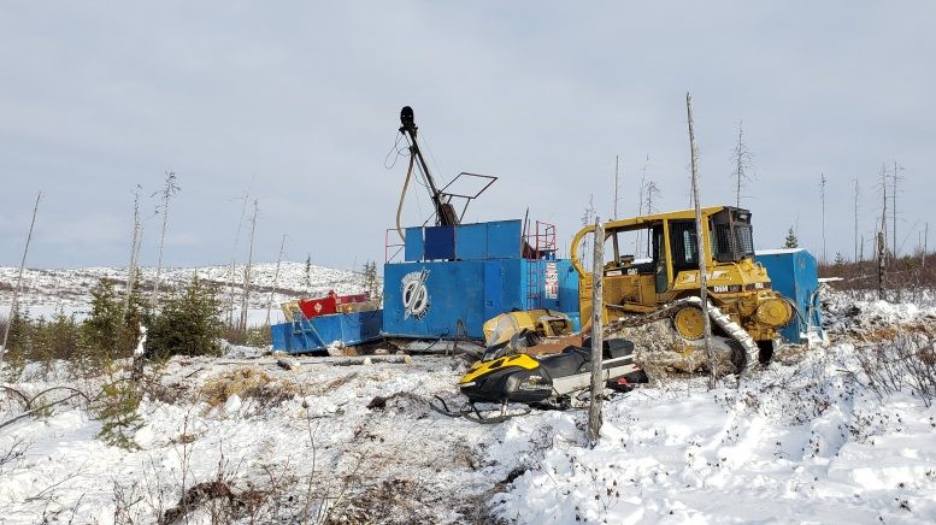
Power Metallic is continuing to test the district rather than treating the current estimate as an end point. The company has five drills active and outlined a 40,000-metre program supported by the $28.2-million financing it closed in June when it welcomed Eric Sprott as a new shareholder. Work is targeting Lion at depth, Lion East, the corridor between Lion and Nisk and several geophysical anomalies. Tiger, about 700 metres east of Lion, remains an emerging nickel-copper target without a mineral resource.
That two-part strategy was outlined by CEO Terry Lynch in a recent interview. “We are pursuing two tracks: obviously, get the MRE out … to validate what we have already found, and then let’s find more of it,” he said. With the resource estimate now completed, Power Metallic’s attention is shifting toward the planned PEA while drilling tests Lion’s extensions and searches for additional mineralized bodies across the district.
The work ahead
The distinction between a promising district and a mine remains substantial. Power Metallic must demonstrate continuity beyond the present resource, complete economic and engineering studies and address environmental, infrastructure, permitting and Indigenous consultation requirements. Mineral resources are not mineral reserves and do not have demonstrated economic viability.
Still, Nisk has crossed an important threshold. Lion is no longer supported only by exceptional drill intersections: it now has a largely indicated maiden resource, encouraging preliminary metallurgy and a defined path toward economic assessment. Nisk Main adds nickel-rich optionality, while Tiger and the wider property provide exploration upside.
The next question is therefore more disciplined than the one Power Metallic faced after discovering Lion in 2023. It is no longer simply whether the company has found high-grade polymetallic mineralization. It is whether Lion, Nisk Main and future discoveries can be assembled into a practical, financeable Quebec mining operation. The planned PEA should provide the first meaningful answer.
Related Posts
From pit to platform: Why mining’s value still lags tech and how Canadian law can help close the gap
Critical One plans ‘Critical Two’ spin-out for Kenora and Namibia

TCG, Indigenous Nations partner on Ontario mining initiative
October 8, 2026
TCG, Indigenous Nations partner on Ontario mining initiative
Dynasty concludes Thundercloud drill campaign
October 8, 2026
Dynasty concludes Thundercloud drill campaign
AME report sees $23B economic boost from new Canadian mines
October 7, 2026
Comments