Agnico Eagle grows in Quebec: Becomes world’s second largest gold miner
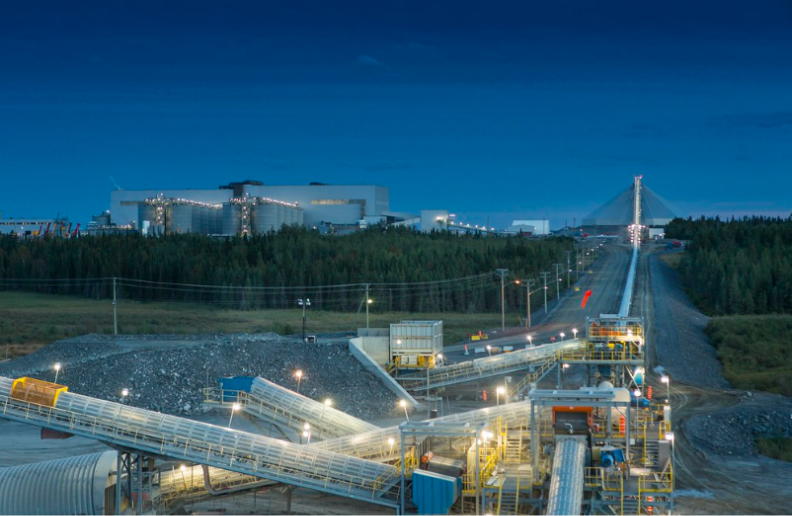
Since its founding in 1957 by the legendary Paul Penna, Agnico Eagle Mines has grown to be the world’s second largest gold miner in 2025 (ahead of Barrick and behind only Newmont).
Having reached production of 3.5 million oz. of gold in 2025, the company is growing. Agnico has expansion projects at its Canadian Malartic complex in Quebec and the Detour mine Ontario. Both are slated to become million-ounce-per-year performers. Development plans are being made in Ontario, Nunavut, Finland and Mexico.
Agnico has a unique corporate ethos, as Dominique Girard, COO for Nunavut, Quebec and Europe explained: “Our greatest asset is our people.”
The corporate culture is anchored around family, whether it be the families of employees or the community. Round that out with collaboration, innovation and accountability, Girard added, giving Agnico an enviable employee turnover rate of only 5% in Quebec.
Girard talked about another key to Agnico’s success: its strategy. Rather than consider itself a “global” miner, the company practices being a “regional” miner. That regional focus means, “We know all the juniors,” he said, and that is reflected in Agnico’s support of small explorers with projects in need of a cash boost. This year, the company has invested tens of millions of dollars to half a dozen juniors.
Such a regional strategy gives Agnico a reputation as a skilled, transparent operator. It further supports a quality pipeline of potential projects that will build reserves and resources. And, again, it includes the ability to attract and retain a skilled and engaged workforce as well as trusting relationships with communities where the company operates.
Now, let’s look at three very successful Agnico projects in Quebec, starting with the second largest gold mine in Canada.
Canadian Malartic Complex
Gold was originally discovered near Malartic, Quebec, in 1923, and underground mines produced from 1923 through the 1980s. Osisko Mining consolidated the local properties between 2008 and 2011, when it opened the Canadian Malartic open pit.
Malartic became Canada’s largest surface gold mine. As mining expanded, the company undertook the challenging job of relocating the town with new housing, roads and services.
Osisko was bought out by a joint venture of Yamana Gold and Agnico in 2014, and deep exploration began. By 2018, the Odyssey, East Malartic and East Gouldie zones had been drilled, with the potential to support an underground operation. Work began on the Odyssey portal and ramp by the end of 2020. Three years later, Agnico bought Yamana’s assets and continues to own 100% of the Canadian Malartic complex.
With the depletion of the Canadian Malartic pit in 2024, the Barnat pit has been the source of most of the ore from the complex. On July 1, 2026, a rock mass movement in the pit forced its suspension and required a redesign of the pit. Remediation work is ongoing to restore pit access, with mining activities expected to resume in the fourth quarter of 2026. This will have a negative effect on ounces produced from Barnat during the second half of the year; however, Agnico expects its companywide, full year gold production will remain within guidance — 3.3 million to 3.5 million oz. of gold — although near the lower end.
Development for the Odyssey underground mine marks the next step forward at Malartic. The project was approved in Feb. 2021, and in Nov. 2022, the first gold from the project was poured during early development of the ramp. Production from the Odyssey South zone reached its planned mining rate in the fourth quarter of 2023 and has been sustained since. Mining from the East Gouldie zone via the ramp began in Mar. 2026, with two stopes now opened and actively being mined.
The first phase of shaft sinking reached a depth of 1,586 metres in July 2026, and ore hoisting is to begin in the second quarter of 2027 from the East Gouldie zone. A second phase of sinking for the No.1 shaft is planned from 2029 to 2031. Ramp development is advancing, expected to reach the planned shaft bottom at 1,870 metres in 2030. Agnico is also designing a second shaft for Odyssey.
Agnico has stated plans to reach annual gold output of 1.0 million oz./y at the Canadian Malartic complex, through its “fill-the-mill” strategy, designed to maximize the site’s 60,000-tonne-per-day processing capacity. Starting in 2029 the first shaft at Odyssey is expected to supply approximately 20,000 t/d, enough to produce approximately 550,000 oz. of gold per year.
The goal is not out of reach. The construction of a second shaft at the Odyssey deposit and the development of two satellite deposits — Marban open pit and Wasamac underground — could supply much of the balance.
LaRonde Complex
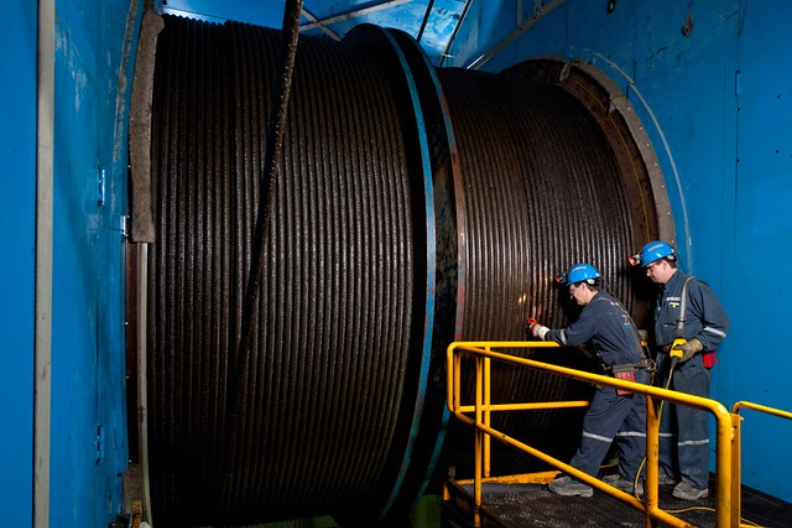
Agnico’s LaRonde project has surpassed 8.0 million oz. of gold poured since it reached commercial production in 1988.
LaRonde is home to the deepest single-lift shaft in the Western Hemisphere — the 2.2-km deep Penna shaft. But the mine is deeper still. Thanks to an internal shaft, mining currently extends to beyond 3.0 km below surface.
Mining at such depths inspired Agnico to launch automation initiatives. About 25% of the LaRonde ore was moved to the surface with remote controlled scoops and trucks during the first half of this year. Automated performance continues to improve, for example at the LZ5 zone, where about 2,030 tonnes per fully automated shift was reached in the month of June.
Agnico noted in the second quarter report that about 10% of the ore reaching the surface occurs between shifts, a boost to productivity and equipment utilization.
Besides recovering gold, the LaRonde mineral processing plant also has flotation circuits which produce copper and zinc concentrates. Base metal containing material from Goldex is also treated at LaRonde.
LaRonde is an award-winning operation. In 2023, it received the TSM Excellence Award from the Mining Association of Canada for the transition to filtered tailings management, which improves sustainability. That year, it also received a community relations award from the Quebec Mining Association for collaboration with the Abitibiwinni First Nations and the Nikan project, which improves integration and retention of Indigenous workers.
Goldex Complex
Agnico’s Goldex mine is often thought of as a solid, stable producer, but beware: calling it “stodgy” would be a gross mischaracterization. First opened in 2008 and beset with water inflow, it was closed in 2011. The mine reopened in 2013 on the strength of the Deep 1 deposit.
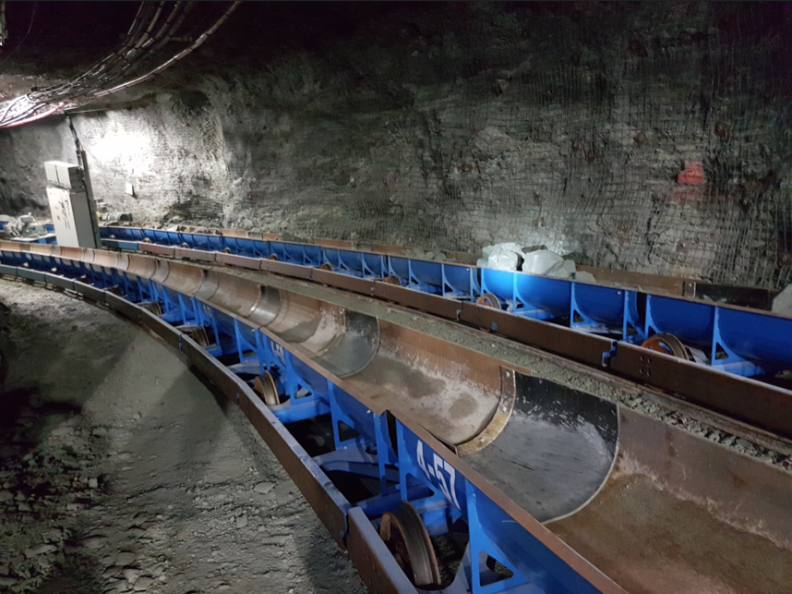
Careful consideration was giving to sustainability for the reopened producer. Ore haulage at Goldex is handled by an innovative Railveyor system between 1,200 metres below surface (the lowest Deep 1 level) and the ore handling facilities on the 750-metre level. This system was installed in 2017 to replace underground trucks, and when the benefits were calculated in 2024, the Railveyor reduced carbon emissions by 39% and lowered operating costs by up to 75%. Where load-haul-dumpers are used, they are extra large 15-yard (11.5 m3) units.
Goldex is the winner of double health and safety recognition. In 2023, it was the winner of the CIM’s John T. Ryan national award (for the lowest reportable injury frequency) and the Mining Association of Quebec’s F.J. O’Connell award for underground operations.
Reserves are sufficient to ensure the Goldex mine and mill will operate until 2032. Meanwhile, Agnico has a conversion drilling program at the South and Deep 2 zones. Also of interest are the drilling programs at the Bulldog, Akasaba and Akasaba West deposits nearby.
Marilyn Scales is a freelance mining writer.
Related Posts
Quebec’s Bill 11: streamlining the Mining Act to accelerate project development
Trelleborg launches pressure-activated sealing solution
October 7, 2026
Trelleborg launches pressure-activated sealing solution
NMG, McGill University partner on low-emission battery coating process
Vizsla Copper logs high-grade silver at Alaska project
October 7, 2026
Vizsla Copper logs high-grade silver at Alaska project
Comments