Canadian mines need an AI decision log before automation scales
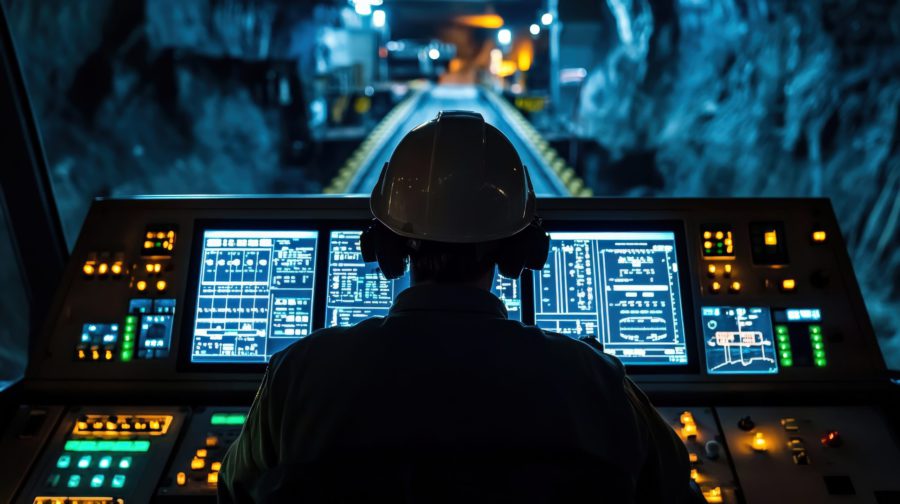
Canadian Mining Journal recently described a sector becoming smarter, more connected and more constrained, with AI-assisted exploration and real-time monitoring changing how decisions get made. That combination creates a management problem that deserves more attention. When a recommendation moves from an algorithm to a dashboard to an engineer to an operating decision, a mine can gain speed while losing a clear record of who checked what, what was overridden and what happened next.
Canadian mining companies should build a lightweight AI decision log before they scale automation across high-consequence workflows. The log should focus on material decisions, rather than every prompt or routine system output. Good candidates include exploration target ranking, predictive maintenance, production sequencing, equipment inspection prioritization, and environmental monitoring. The goal is simple: preserve enough context to understand why a consequential recommendation entered the workflow and how people handled it.
Each log should identify five things: the AI-enabled system and its recommendation; operating context or data source; accountable reviewer; whether the recommendation was accepted, modified or rejected and why; and results, including corrections, near misses, rework and recurring problems. Integrate logs into existing systems to avoid bureaucracy.
The value goes well beyond compliance. In an April PDAC 2026 interview, Canadian Mining Journal highlighted a central challenge of digital transformation: companies often already possess valuable data, yet they struggle to integrate new tools into workflows and decision-making. A decision log makes those integration failures visible. If a maintenance model keeps producing alerts that experienced tradespeople override for the same reason, the company has discovered a data or model problem. If an exploration ranking repeatedly misses geological context that geoscientists restore manually, the company has found a workflow gap. If one shift uses an AI-generated inspection recommendation differently from another, the company has found a training and governance gap.
That feedback also helps companies distinguish useful automation from impressive demonstrations. A model may produce accurate predictions during a pilot while creating downstream rework, slow escalations or extra verification at scale. Those hidden costs rarely appear in a dashboard focused on model accuracy. They do appear when teams record overrides, corrections, time lost and repeated exception patterns.
Canada’s current AI transparency consultation gives mining leaders another reason to build this capability now. The federal government is asking how organizations should communicate AI system capabilities and limitations, track serious incidents and track the activity and interactions of AI agents. Mining companies can use that policy window to design traceability around the realities of field operations, rather than waiting for generic requirements that may fit office software better than mines, mills and remote sites.
A 90-day pilot would be enough to test the idea. Pick one workflow, such as predictive maintenance or exploration target triage. Ask supervisors and technical owners to review the log weekly. Track how often people override recommendations, what causes the overrides, how long corrections take, whether the same exception returns and whether the process creates unnecessary rework. If logging takes too long, reduce the fields. If teams cannot identify who owns a decision, fix the ownership model. If a vendor cannot provide enough information to distinguish one model or workflow change from another, address that in procurement.
Procurement deserves special attention. Vendors should support basic auditability for high consequence uses, including identifiable system changes, exportable records, clear release notes and a reliable way to reconstruct what happened after an incident. When a product cannot support that level of traceability, mines can keep it in an advisory role until the operational controls catch up.
The same approach respects the value of frontline judgment. Operators, engineers, maintainers and geoscientists often see failure modes before executives or software teams do. A decision log turns those corrections into organizational learning. It also makes responsibility visible, which helps employees understand where judgment still belongs to people.
Mining has always depended on disciplined records because physical operations carry real consequences. AI should meet the same standard. The mines that scale these tools successfully will know more than what a system recommended. They will know who challenged it, what changed, what the result was and whether the correction became part of the next decision.
Gleb Tsipursky, PhD, is a consultant and author specializing in decision-making, cognitive bias, AI adoption and the future of work.

Related Posts
The great Canadian white gold rush
October 9, 2026
The great Canadian white gold rush
Beyond the deposit: Turning Quebec’s mineral wealth into lasting economic advantage
Rock Tech closes $6M private placement
October 9, 2026
Rock Tech closes $6M private placement
New Schneider Electric series tackles AI, energy demand and sustainability

DLE Xchange Canada seeks 2027 conference speakers
October 9, 2026
Comments