Eight years underground: Six lessons from Agnico Eagle’s autonomous haulage journey at LaRonde LZ5
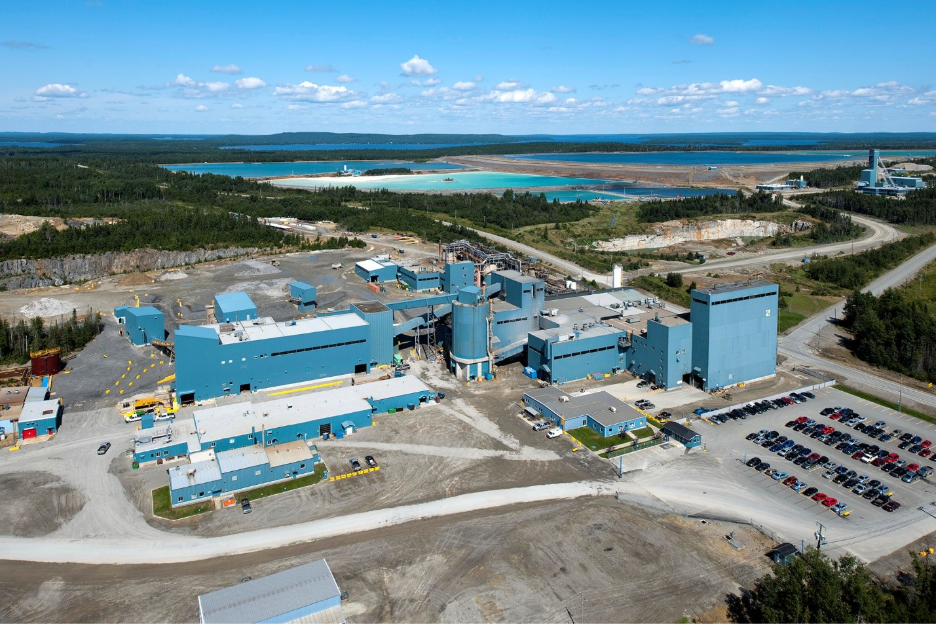
Since deploying autonomous underground loaders and haulage trucks in 2018, Agnico Eagle’s LaRonde Zone 5 (LZ5) operation in Quebec has developed one of Canada’s longest-running underground automation programs. Nearly eight years of production experience have delivered gains in equipment utilization, productivity and worker safety, while exposing challenges in communications, workforce development and systems integration. Today, LZ5 has 25 machines available for its AutoMine Core Fleet, with two more being commissioned: 16 Sandvik TH551i trucks, three TH545i trucks and six LH517i loaders. As more Canadian underground mines consider automation, LZ5’s experience shows that success depends on much more than buying autonomous equipment. Six lessons stand out.
1. Choose your automation partner carefully: It may be a life-of-mine decision
Autonomous mining is increasingly driven by software as much as by mobile equipment. Fleet management, traffic control, dispatching, analytics and maintenance systems must work together reliably. Choosing an autonomous supplier is therefore more than an equipment procurement decision. It can establish a technology relationship that lasts for much of a mine’s life.
Using different manufacturers for loaders and haulage trucks can also create additional integration challenges. Once an autonomous ecosystem is established, switching suppliers can be expensive and operationally disruptive. Operators must look beyond initial machine performance and evaluate a vendor’s technology roadmap, software support, training, future upgrades, licensing, spare parts availability and technical support.
At LZ5, Sandvik AutoMine Core Fleet software operates and optimizes the fleet, while onboard Sandvik navigation software enables autonomous operation. Agnico Eagle’s site teams perform maintenance with support from two Sandvik AutoMine maintenance technicians. With a large fleet, the operation has established performance baselines; machines that deviate can be scheduled for log-file review, calibration or parts replacement. More specialized service is available through Sandvik’s local customer service centre in Val-d’Or. The lesson is straightforward: in autonomous mining, the supplier relationship extends far beyond the machine itself.

2. Automation creates production time not just labour savings
A common misconception is that the primary benefit of autonomous mining is labour reduction. At LZ5, one of the most important benefits is the ability to maintain production when personnel cannot enter the mine.
Blasting occurs twice daily from Monday to Thursday and typically restricts underground access for about four hours per day. In a conventional operation, those periods would represent lost production time. Autonomous equipment can continue operating while personnel remain on surface, recovering approximately 16 hours of productive operating time over a four-day workweek. Loading and haulage can also continue Friday through Sunday without personnel underground.
No personnel are permitted underground during autonomous loading and haulage at LZ5. That operating model can increase equipment utilization and mine productivity without extending shifts or adding underground personnel. But capturing the benefit requires more than autonomous machines. Mine schedules, blasting practices and workforce arrangements must be designed around continuous autonomous operation. The business case is therefore not simply about replacing labour; it is about creating productive hours that would otherwise be unavailable.
3. Communications infrastructure is just as important as mobile equipment
Reliable communications are the foundation of autonomous mining. At LZ5, equipment operates underground on a private wireless network. When trucks travel from the underground portal to the surface crusher; however, even a distance of only about 100 metres requires a second wireless network because of Canadian wireless regulations.
Early in the project, Agnico Eagle secured dedicated wireless spectrum for surface autonomous operations. More recently, Canada’s Non-Competitive Local Licensing framework has simplified access to localized spectrum. LZ5 equipment consequently operates with two networks and two SIM cards: one for the underground private network and another for the surface.
Physical infrastructure matters as well. Underground haulage ramps must be maintained to a high standard because autonomous trucks can spend much of their operating time on these routes during blasting periods and weekends. Consistent road conditions improve performance and reduce interruptions.
Autonomy also increases dependence on IT support. A communications failure, network interruption or software problem can stop production immediately. LZ5 therefore places a high priority on IT resources and fail-safe protocols. The broader lesson is that investment in mobile equipment must be matched by investment in communications systems, road conditions and technical support. Without the supporting infrastructure, even sophisticated autonomous equipment cannot deliver consistently.
4. Automation changes jobs rather than eliminating them
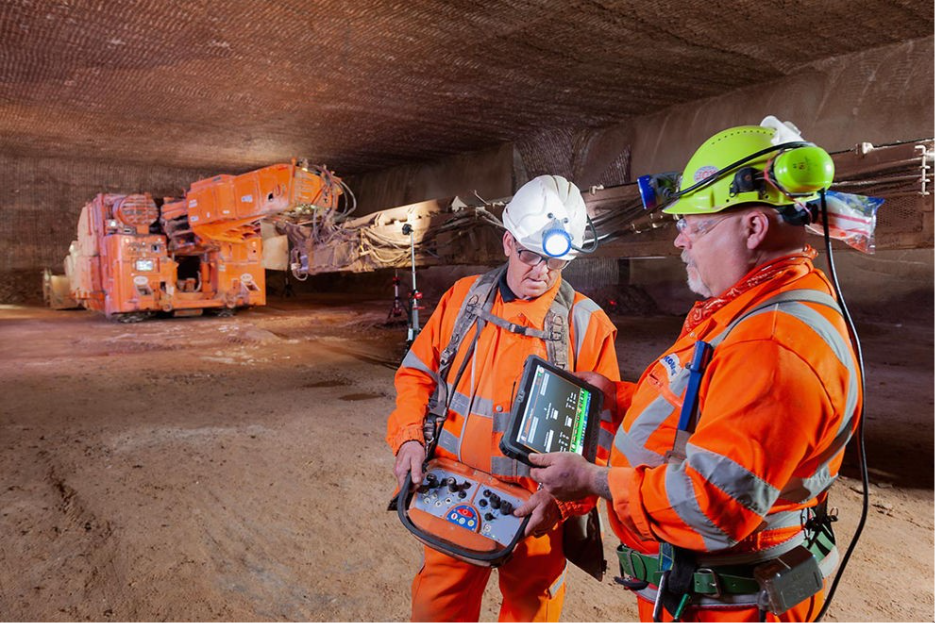
Autonomous operations do not remove people from the process. At LZ5, they shift operators from underground equipment cabs to a centralized surface control room, while human oversight remains critical.
During autonomous operation, trucks climb the main ramp without manual intervention. Because the ramp is a single-lane haulage route, uphill traffic receives priority and downhill trucks are directed to designated pull-off bays. Remote operators oversee these movements, as well as truck positioning for loading, reversing into loading bays and movements between the surface portal and crusher.
Loading itself is performed remotely by operators in the surface control room. The result is a hybrid operating model: routine haulage functions are automated, while people retain control of more complex interactions and decision-intensive tasks. Control-room personnel supervise fleet movements, manage exceptions, intervene when conditions change and manually control equipment during operating stages where autonomy is not practical or permitted.
The operator’s role therefore changes fundamentally. Success depends less on physically controlling a machine and more on situational awareness, troubleshooting, traffic management and decision-making. Automation changes where and how people work, rather than simply removing them from the operation.

5. Change management is as important as technology
Experienced equipment operators do not necessarily move immediately into remote-control or autonomous-supervision roles. Operators accustomed to steering wheels and direct machine control must learn joystick-based systems, digital interfaces and a different way of understanding equipment behaviour. LZ5’s experience indicates that reaching full proficiency can require several months of training and operational experience.
Autonomous projects should therefore budget sufficient time for workforce development as well as technology. Operators can be involved early in system testing, training and procedure development, helping them understand how their jobs will change before the technology becomes routine.
Change management begins before autonomous equipment arrives on site. Employees who understand why automation is being introduced and what their future roles will involve are better placed to adapt to the new operating model. Technical reliability may get an autonomous system running, but workforce capability and confidence help determine whether it becomes a sustainable production system.
6. Autonomous mining is never finished
After nearly eight years, LZ5 continues to refine its operating procedures, communications systems, software platforms and workforce capabilities. That experience challenges the idea that automation is a project with a commissioning date and a defined finish line.
As fleet size grows and operating conditions change, performance must continue to be monitored and the system adjusted. Equipment baselines, software, communications, maintenance practices and operator skills all require continuing attention. The value of accumulated operating experience is therefore as important as the initial technology deployment. Autonomous mining is best viewed as a continuous-improvement process in which each operational issue provides information for the next refinement.
Conclusion
LaRonde LZ5 shows that underground autonomy has moved beyond the pilot stage. Its experience demonstrates that productivity and safety benefits depend on much more than autonomous trucks and loaders. Supplier strategy, communications infrastructure, operating practices, maintenance and workforce development all form part of the system. For mines considering automation, perhaps the most important lesson from LZ5 is that the technology should not be treated as an equipment project. It is a long-term operating transformation that must continue evolving with the mine.
Brian O’Hara is a freelance mining writer.
Related Posts
Battery-electric mining equipment changes the fire risk: Is your protection plan ready?
Sponsored Resource Review video: Newfoundland and Labrador targets mining barriers

Sponsored Xplor video: Amex digs towards Perron bulk sample
November 10, 2026
Sponsored Xplor video: Amex digs towards Perron bulk sample
When minutes become millions: The hidden cost of traditional blast-clearance practices in underground mining
Komatsu puts safety conversations to work
November 9, 2026
Comments