Ontario mining at a moment of consequence: Turning policy commitments into global leadership
Ontario’s mining sector is once again at a crossroads in 2026 — but this time, the stakes are higher, the global context is more volatile, and the opportunity is more consequential than at any point in recent memory.
Around the world, governments are racing to secure access to the minerals and metals that underpin clean energy systems, digital infrastructure, advanced manufacturing, and national security. Supply chains are being redrawn. Trade relationships are under strain. Geopolitical tensions, once peripheral to mining investment decisions, are now central to them. In this environment, mining is no longer simply a resource industry. It is a strategic asset.
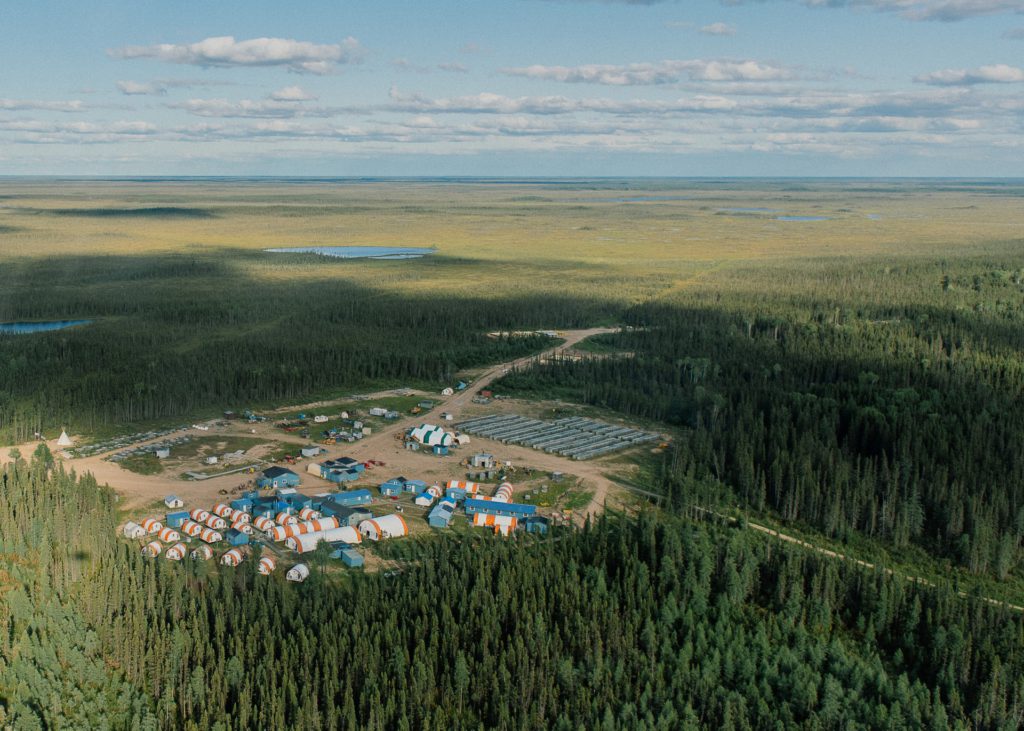

Jurisdictions that can deliver certainty, efficiency, and reliability will attract investment. Those that cannot will fall behind. Ontario is well-positioned to lead, but leadership will not happen by default. It will require deliberate choices, sustained investment, and a clear declaration that mining is a strategic priority for the province, not only in words but in outcomes. The Ontario government has taken important steps in the past year to move in this direction and reinforce mining as a driver of long-term growth. The challenge — and the opportunity — now is to convert momentum into measurable progress across the full mining ecosystem: exploration, development, operations, processing, infrastructure, and people.
Policy momentum in 2025: A foundation to build on
The Ontario government’s 2025 initiatives mark a meaningful shift toward a more competitive and coordinated approach to economic development, with mining rightly positioned at the core.
The launch of the “One Project, One Process” framework represents a key step toward optimizing government approvals for advanced exploration and mine development. By committing to a more coordinated, modernized regulatory approach, Ontario is signalling to investors that it understands the importance of time, certainty, and predictability in capital-intensive industries.
Investments in the “Critical Minerals Processing Fund” further reinforce this message. Expanding Ontario’s processing capacity is essential to reducing reliance on foreign supply chains and ensuring that the value of Ontario’s mineral resources is realized here at home. Processing is not an optional add-on; it is a strategic necessity.
The cooperation agreement with the federal government to eliminate regulatory duplication and unlock the Ring of Fire is another important milestone. Aligning provincial and federal processes is essential to advancing major projects efficiently and responsibly, particularly in regions with transformative potential for Indigenous communities and Northern Ontario.
The government’s investments in Northern infrastructure, including the reconstruction of Geraldton’s Main Street as a “Gateway to the Ring of Fire,” demonstrate an understanding that mining success depends on more than ore bodies alone. Transportation networks, community infrastructure, and regional development are foundational to sustainable growth. This approach is further reinforced by the community partnership agreements with Marten Falls First Nation and Webequie First Nation, which provide a clearer, more collaborative path toward advancing critical road infrastructure while aligning economic development with Indigenous priorities and long-term regional benefits.
Additional measures, such as steps to provide electricity price relief, fair WSIB premiums with rebates, and support for skilled trades training and upskilling, address real cost and workforce pressures facing mining companies and workers alike.
These measures align with the ambition outlined in the government’s “Critical Minerals Strategy,” which positions Ontario as a leader in the responsible production of essential minerals, and build on progress achieved through the “Building More Mines Act.” They also arrive at a moment when miners, investors, Indigenous partners, and governments alike are seeking certainty in an increasingly uncertain world.
But policy announcements are only the beginning. The question now is how Ontario builds on this foundation. The true test lies in implementation — across all commodities, all regions, and all stages of the mining lifecycle.
A sector that delivers — Economically and socially
Mining is already one of Ontario’s most significant economic contributors, and its importance is growing.
In 2023, Ontario’s mining industry contributed $23.8 billion directly to the provincial GDP. When indirect and induced impacts are included, the total exceeds $31 billion. The sector employs nearly 22,000 people directly, with average annual earnings of approximately $150,000, and supports a broader ecosystem of roughly 130,000 jobs across the province.
Mining is also a cornerstone of Ontario’s export economy. Mineral exports reached $64 billion in 2023 — more than a quarter of Ontario’s total exports. Of this, $42 billion was shipped to the U.S., including $5.7 billion in critical minerals, such as nickel, copper, and platinum.
Ontario is Canada’s leading gold producer, with 18 active gold mines producing 2.9 million oz. in 2023. Gold is now Canada’s second-largest export, and in Ontario it plays a unique economic role. Gold projects are often first movers in emerging regions, helping to finance infrastructure, establish transportation and power networks, and create the conditions for other industries to expand across Northern Ontario. Gold deposits also frequently host critical minerals that are essential to aerospace, energy, and defence applications.
Ontario’s global leadership extends beyond production. The province is the world’s premier hub for mining finance, with approximately 40% of global mining companies listed on the Toronto Stock Exchange and a combined market value exceeding $600 billion. This concentration of capital, expertise, and innovation underpins exploration, development, and technological advancement not only in Ontario, but also around the world.
Mining is also a leader in economic reconciliation. There are over 140 active agreements with Indigenous communities across Ontario, and Indigenous representation in the mining workforce stands at 12% — four times the provincial average across all sectors. These partnerships demonstrate what is possible when development is approached collaboratively and respectfully.
A sector under pressure
Despite its strengths, Ontario’s mining sector operates in an increasingly challenging environment.
Base metals markets, particularly nickel, illustrate the challenge. A surge in Chinese-backed smelting capacity in Indonesia, where facilities expanded from four to 55 in just over a decade, has driven global oversupply and depressed prices. While Indonesia has announced plans to reduce production quotas in 2026, most analysts still forecast a global nickel surplus through at least 2026 owing to the scale of existing capacity and softer-than-expected demand from the electric vehicle sector.
These market dynamics place pressure on Ontario operations, particularly given that we are a high-cost jurisdiction. Energy costs remain a significant challenge, weakening Ontario’s global competitiveness relative to neighbouring jurisdictions. Aging assets, deeper and more complex orebodies, declining grades, and greater variability all require higher capital investment simply to maintain production.
At the same time, the sector is navigating an increasingly nonlinear, accelerated, volatile, and interconnected (NAVI) operating environment. Risks can materialize suddenly, triggering cascading effects that undermine investor confidence and restrict access to capital. Regulatory delays, cost escalation, and workforce shortages can quickly erode the viability of otherwise strong projects.
While major greenfield developments such as the multi-generational opportunity in the Ring of Fire are important to Ontario’s long-term future, existing mining operations must not be overlooked. Established hubs like Sudbury, Timmins, and Thunder Bay remain vital to Canada’s mining and critical minerals supply. These operations employ thousands of people, generate regional wealth, and offer lower-risk opportunities to support today’s mineral needs while longer-term projects advance. Sudbury alone has supplied high-purity nickel for over a century, supporting more than 60% of U.S. aerospace and defence requirements.
Resilience also depends on supporting all commodities. Gold’s current strength provides stability and fiscal support, but commodity markets are cyclical. Sustained investment across commodities is essential to long-term planning, particularly as revenues generated by strong performers help support minerals facing weaker market conditions.
Removing structural barriers to growth
Access to capital is inseparable from regulatory efficiency. Investors assess jurisdictions not only on geological potential, but also on how quickly and predictably projects can move through approvals, how competitive energy costs are, how tax regimes compare, and whether governments act in a coordinated and strategic manner. These factors increasingly determine where capital flows.
Competing jurisdictions understand this reality. They are actively de-risking mining investment through streamlined permitting, competitive energy pricing, and clear, coordinated government support. Ontario must do the same, not only for new developments, but also for existing operations seeking expansions, modifications, and mine life extensions, or simply, for everyday operational success. This requires a true whole-of-government approach that delivers competitive energy pricing, targeted tax incentives, and a fully implemented, adequately resourced “One Project, One Process” framework.
Crucially, regulatory modernization must extend beyond greenfield projects. Operating mines are the backbone of Ontario’s mining economy, yet too often face permitting delays that increase costs and undermine competitiveness. Without a modern, efficient framework that supports ongoing operations, Ontario risks production disruptions, deferred investment, and the gradual erosion of its position in an increasingly competitive global market.
People and place: The foundations of a competitive mining sector
People are as critical to mining as geology, and Ontario’s workforce challenge is becoming more acute. Skills shortages are expected to intensify as retirements accelerate and competition for experienced workers increases. Without a strong, visible pipeline of people who are aware of, interested in, and actively preparing for careers in mining, projects will stall regardless of market demand or policy ambition.
These workforce pressures are compounded by persistent infrastructure gaps in Northern Ontario. Housing shortages, limited access to healthcare and education, gaps in digital connectivity, and insufficient cultural and community supports all make it more difficult to attract and retain workers and their families. Operational challenges are further amplified by unreliable passenger air service and flight schedules that do not align with business needs, increasing costs and, in some cases, forcing workers to travel long distances on highways that are frequently hazardous in winter conditions.
Addressing these challenges is not peripheral to mining competitiveness. It is fundamental. A sector that cannot attract people, support communities, and move workers safely and efficiently cannot grow, no matter how strong the underlying resource base may be.
From momentum to defining action: What comes next
As global demand for strategic minerals accelerates, and geopolitical tensions intensify, Ontario faces a narrow but consequential window to act. The province has a rare opportunity to implement a comprehensive growth strategy that strengthens mining at home, diversifies markets, and positions Ontario as a global leader in the production of strategic minerals.
Ontario already has what many jurisdictions lack: an exceptional mineral endowment, established processing capacity, and strong, evolving partnerships with Indigenous communities. What is required now is sustained focus and execution.
This means moving beyond isolated initiatives toward coordinated, strategic action across government. It means ensuring that “One Project, One Process” is fully resourced and applied consistently across the mining spectrum. It means treating energy pricing, infrastructure investment, workforce development, and Indigenous partnerships not as separate policy files, but as integrated components of a single, coherent growth strategy.
In 2026, the ambitions set out in Ontario’s “Critical Minerals Strategy” must be visible on the ground. Streamlined permitting, competitive energy pricing, expanded processing capacity, targeted infrastructure investment, and meaningful progress on economic reconciliation must become outcomes, not aspirations. This focus must apply across all commodities and all operations, from new developments to established mines that underpin today’s supply.
To support this shift from ambition to delivery, the Ontario Mining Association (OMA) has put forward a comprehensive set of recommendations for the 2026 provincial budget across six priority areas: strengthening geoscience and supporting a resilient mine lifecycle, modernizing regulatory processes, deepening Indigenous partnerships, delivering a competitive energy framework, growing the mining workforce, and incentivizing innovation.
These recommendations are practical and targeted, grounded in the realities of global competition and the operational needs of Ontario’s mining sector. They recognize that success depends on coordinated action across policy areas and sustained investment over time.
Turning commitments into sector wide progress will require consistent follow through, adequate resourcing, and a willingness to modernize systems that no longer serve Ontario’s competitive interests. It will also require ongoing collaboration among government, industry, Indigenous partners, and communities. The OMA stands ready to work with all partners to help deliver this next phase of growth.
From commitment to leadership: A clear path forward
The decisions made over the next year will determine whether Ontarians merely participate in the global minerals economy or lead it. Whether investment flows here or elsewhere. Whether communities in Northern Ontario grow or stagnate. Whether Canada’s allies see Ontario as a reliable partner in an uncertain world.
The government of Ontario has laid important groundwork. The task now is to build on it with urgency, consistency, and ambition.
The opportunity is real, the risks of inaction are clear, and the time to move from momentum to leadership is now. 
Priya Tandon is the President of Ontario Mining Association.
Related Posts
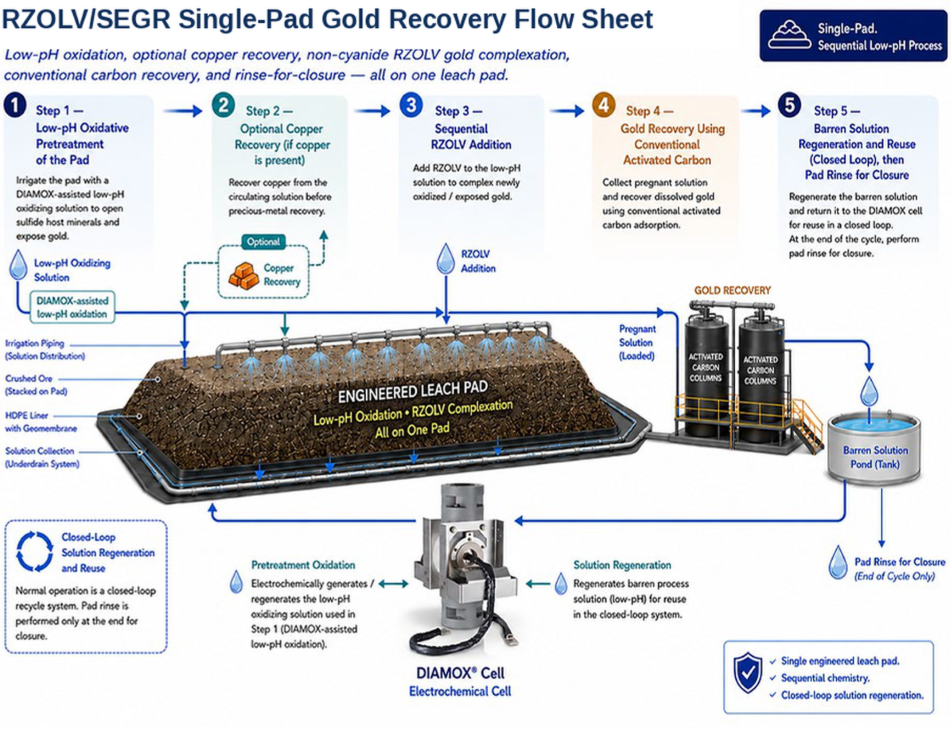
The trillion-dollar gold question:
September 16, 2026
The trillion-dollar gold question:
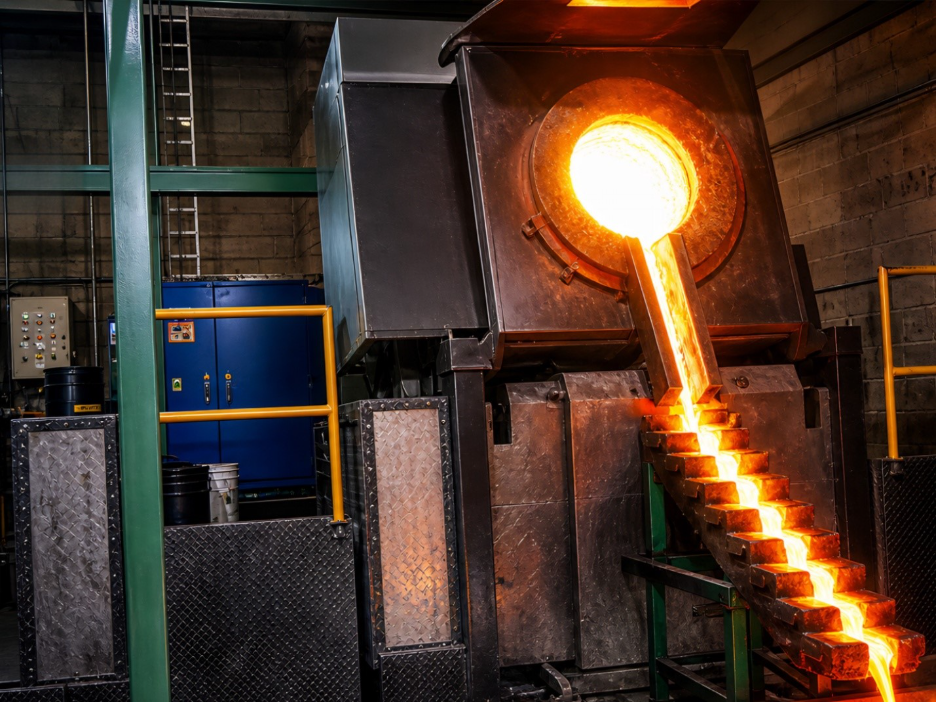
Gold refining goes electric
September 16, 2026
Gold refining goes electric
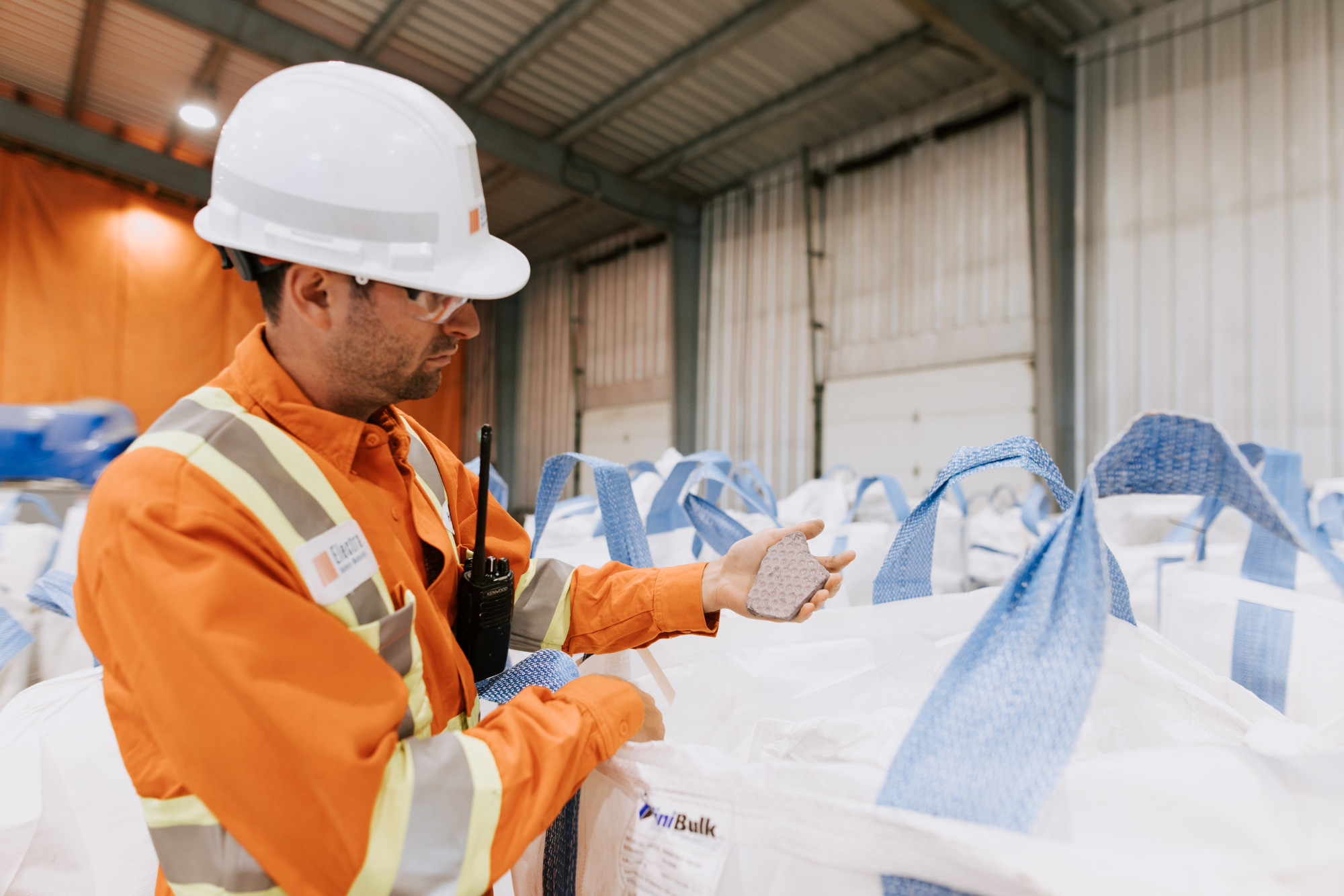
Electra releases preliminary battery recycling results
September 16, 2026
Electra releases preliminary battery recycling results
Kootenay Silver reports strong silver grades at Columba
September 16, 2026
Kootenay Silver reports strong silver grades at Columba
New Found Gold reaches commercial output at Hammerdown
September 16, 2026
Comments