The great Canadian white gold rush
Alberta mining companies use advanced DLE technologies for their lithium-in-brine projects
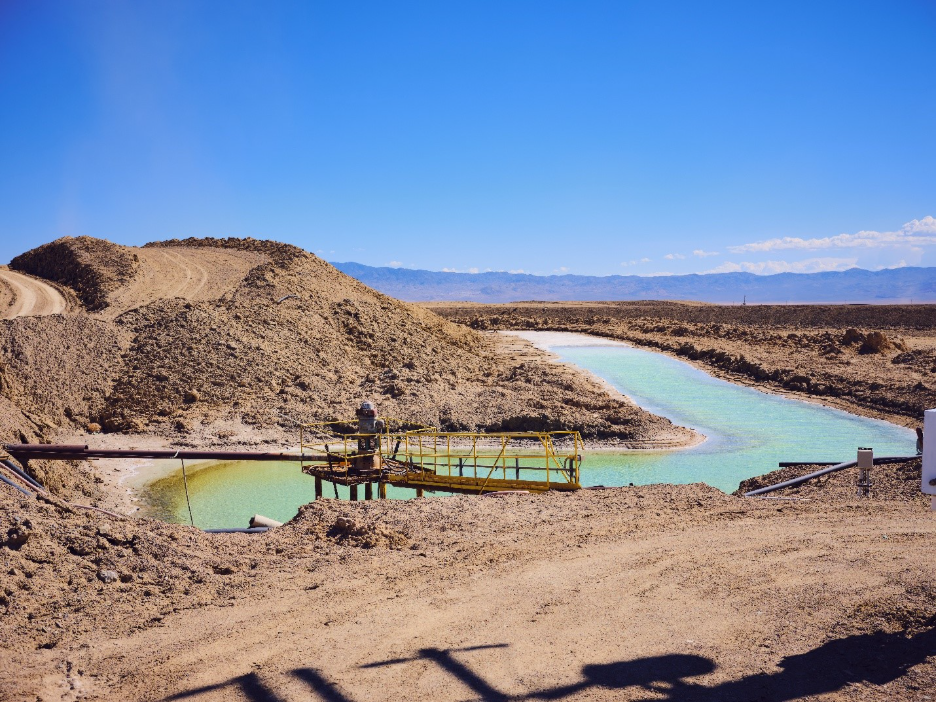
The global energy transition has spurred Alberta mining companies to produce lithium — a key ingredient in lithium-ion batteries for portable electronics, electric vehicles (EVs) and stationary energy storage systems (SESS) — for the North American market.
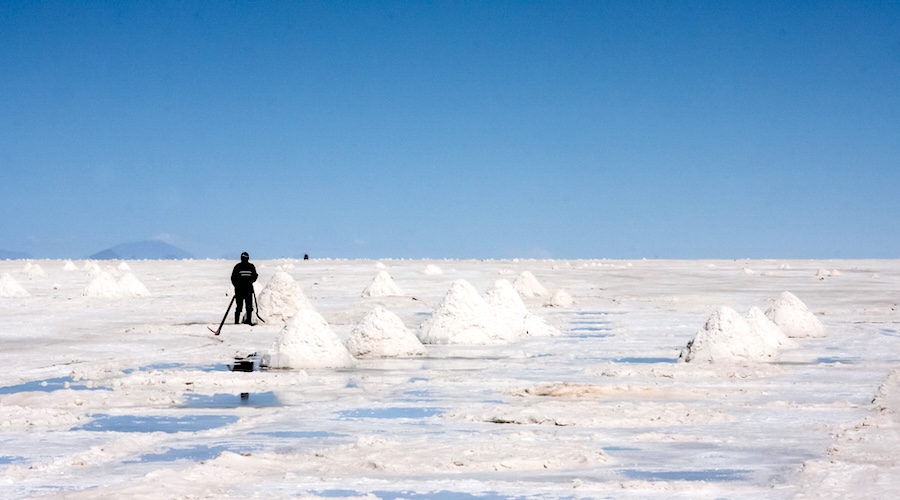
For the past 10 years, growth in lithium-ion battery use has resulted in batteries becoming the leading end-use for lithium. This growth led to a rush to find new sources of vast resources of lithium prompting mining companies to move from mining lithium from hard rock mineral deposits or salars using solar evaporation ponds to lithium-rich brines. The result has been the development of an alternative method to extract lithium from lithium-rich brine, which is found in abundance in depleted oil and gas reservoirs in Alberta.
Alberta Geological Survey
According to a new report by the Alberta Geological Survey, “In-Place Lithium Resource Estimate for Alberta,” there is an estimated 82.5 million tonnes of lithium carbonate equivalent (LCE) in place, about 62 million tonnes of which occurs within existing mineral lease properties. This in-place lithium resource estimate is one of the world’s largest known lithium accumulations.
The report also says that almost 95% of the total accumulation is found in the Devonian Leduc Formation where the province’s first major crude oil discovery was made in 1947. This formation is now a major source of lithium-rich brine, a waste product from oil extraction from reservoirs, which is being used as feedstock to produce high-purity lithium.
Furthermore, the report says that economic assumptions of the total in-place lithium volume suggest that potential revenue could exceed US$1 trillion using direct lithium extraction (DLE) technology and a price assumption of US$20,000 per tonne of battery-grade LCE.
DLE technology
To extract lithium from brine, an advanced form of DLE technology has been developed. This technology can be modified depending on the type of brine and reservoir. The International Lithium Association says, “The DLE process begins with the collection of lithium-rich brine from underground reservoirs, where it undergoes pre-treatment to remove impurities. This purification step ensures optimal conditions for subsequent extraction processes.
DLE methods employ various techniques such as adsorption, ion exchange, solvent extraction or membrane processes to selectively capture lithium ions from the brine while leaving other ions behind. These extraction methods offer efficient and selective separation of lithium from the brine, paving the way for high-purity lithium production.
Following extraction, the captured lithium ions undergo post-treatment to recover them from the capturing material or phase. This typically involves processes after desorption or stripping processes of DLE to concentrate, refine and convert the lithium salt, usually LiCl, to lithium compounds suitable for various applications.”
Compared to lithium extraction from hard rock mineral deposits or salars using solar evaporation ponds, the advantages of DLE technology are that the process can produce lithium within hours compared to months or even years for evaporation; it has a higher recovery rate of up to 95%; it is 66% less carbon-intensive than hard rock mining and requires 50% less energy, it recycles fresh water so no process water is required; and it has a much smaller land footprint, less than 10%.
Several Alberta lithium companies are testing DLE technologies, with commercial production expected within one to three years, potentially adding millions of tonnes of Alberta-produced lithium to the North American market.
E3 Lithium
E3 Lithium, a Calgary-based company, has validated its DLE technology on a demonstration scale and is working toward commercialization.
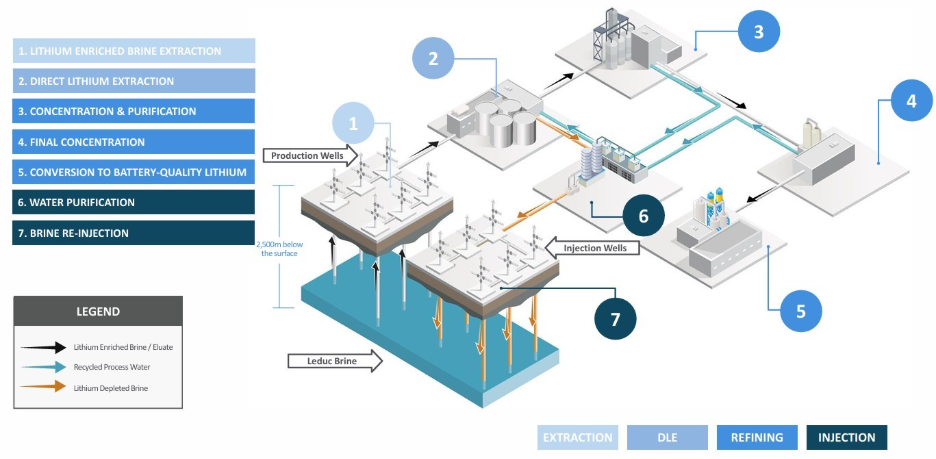
The company’s Clearwater Project is a large-scale lithium-in-brine development that leverages DLE technology and existing oilfield infrastructure to produce battery-grade lithium carbonate (LC). E3 Lithium is currently building and operating its Demonstration Facility and designing its Clearwater Project Central Processing Facility near Olds, Alberta. The Demonstration Facility has already verified the company’s ability to produce high-purity, battery-grade LC for domestic and international critical mineral supply chains.
E3 Lithium’s total resource (measured & indicated) is over 21 million tonnes LCE and represents approximately 40% of Canada’s total lithium resources, with the company on track to produce the first battery-grade lithium at scale in Canada. The company has proposed a staged development plan with a capacity of 12,000 t/y LC as the first stage of production and expansion potential of up to 36,000 t/y LC.
In the greater Bashaw District, E3 Lithium has the brine volume to scale production up to 150,000 t/y LC for 50 years. In addition to its large Bashaw District resource, the company also has the Garrington District resource, hosted in the same well-understood Leduc aquifer as the Bashaw District. The company recently announced it would start a strategic process to optimize value for its Garrington asset.
“E3 Lithium is one of Canada’s near-production battery-grade lithium projects, combining scalable domestic resource development with innovative extraction technology to support a secure, low-impact and globally competitive battery supply chain,” says Chris Doornbos, chair and chief executive officer of E3 Lithium.
Summit Lithium Technologies
Headquartered in Alberta, Summit Lithium Technologies (formerly Summit Nanotech), a global technology company, is advancing the commercial deployment of its proprietary DLE technology for lithium producers in Chile, Argentina and the U.S.
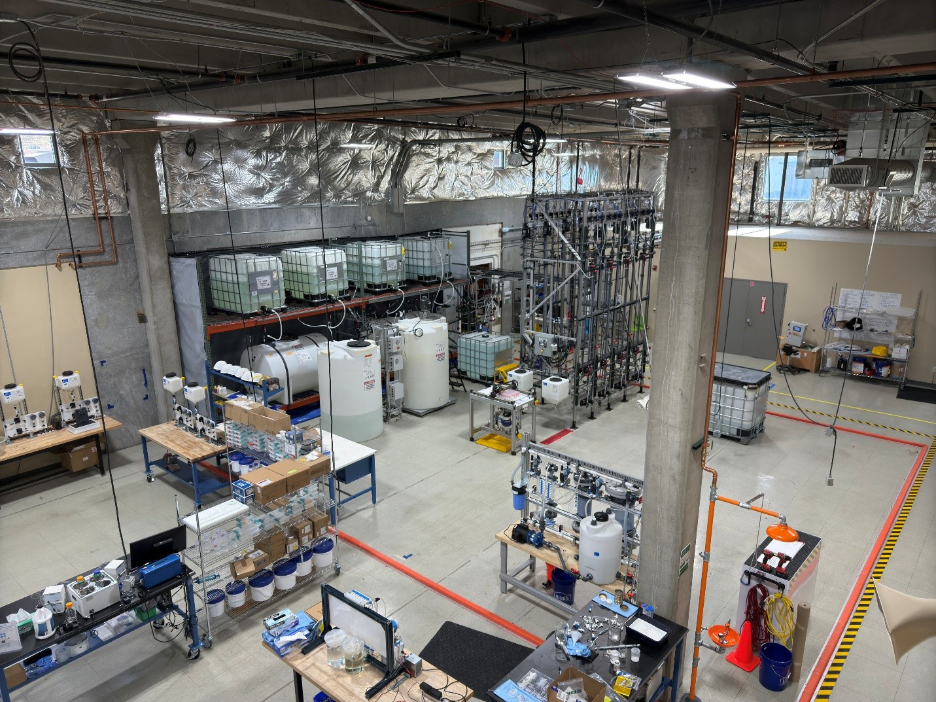
Summit has built a layered demonstration program that validates its denaLi DLE technology from bench scale through field deployment. The program includes an in-house pilot system in Colorado that has been in operation for approximately two years and a rapid-validation demonstration plant in Santiago, Chile, that began processing customer brine in early 2026. Summit also deployed a field demonstration system on Albemarle’s site in Northern Chile in 2025, confirming that pilot-stage performance translates to real-world operating conditions. Each stage feeds validated data into the next, de-risking the path to commercial deployment.
“Canada has the policy framework and engineering talent to play a defining role in securing North American lithium supply. Summit’s pilot and demonstration program proves that sorbent-based DLE can deliver high recovery, low water use and predictable economics. With our intellectual property based in Calgary, that is Canadian innovation helping build the supply chain that the EV battery industry and battery energy storage market will depend on,” says Joe Arencibia, president and chief operating officer of Summit Lithium Technologies.
denaLi is Summit’s proprietary sorbent-based DLE technology. At its core is eLivate, a high-performance lithium-selective sorbent engineered for durability, high capacity and fast kinetics. The denaLi system is designed to achieve greater than 98% lithium recovery, greater than 95% impurity rejection and uses approximately 50% to 90% less water than commercial DLE benchmarks. The system architecture is optimized for commercial-scale operation and Summit’s predictive modeling platform integrates data from every stage of testing to continuously improve plant design and performance. The result is a DLE system engineered to deliver the lowest levelized cost of lithium production over a full project lifecycle.
“The hardest problem in DLE is scaling a complex multi-column system that performs reliably under real operating conditions. Our approach makes denaLi commercially viable across lithium price cycles, not just in favourable market conditions,” says Arencibia.
LithiumBank
LithiumBank Resources is advancing toward commercial lithium production through a phased, modular development strategy focused on leveraging existing infrastructure, proven DLE technology licensed from SLB (formerly Schlumberger), rapid development timelines and disciplined capital deployment. By targeting brownfield-style development in established oil and gas regions, the company aims to reduce upfront capital costs, accelerate permitting and construction and minimize environmental impact compared to conventional extraction methods.
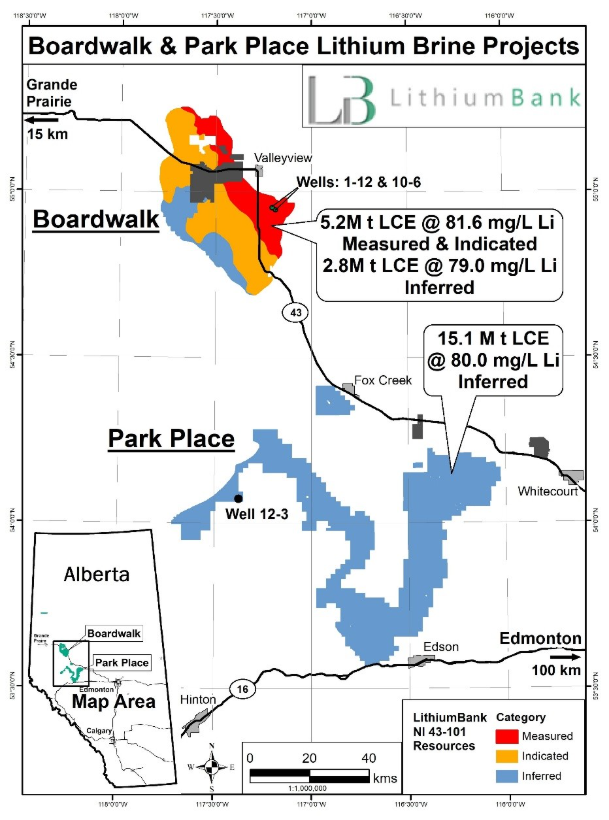
Central to LithiumBank’s strategy is its agreement with SLB to deploy the company’s well-to-product lithium solution, enabling continuous brine extraction with high recoveries, rapid processing and a compact footprint. LithiumBank is advancing three lithium-brine projects in Alberta and Saskatchewan near existing infrastructure. Its flagship Boardwalk Project hosts grades of approximately 80 mg/L and a resource exceeding 8 million tonnes LCE, with commercialization targeted for 2029. Park Place has a 15.1-million-tonne inferred LCE resource, with pilot testing delivering strong lithium recoveries consistent with Boardwalk. Saskatchewan’s Kindersley Project offers longer-term growth potential, supported by favourable brine characteristics and existing nearby regional infrastructure.
“LithiumBank’s development strategy is built around speed, efficiency and sustainability. We are significantly reducing both capital requirements and development timelines. This positions us to bring lithium production online faster with a limited environmental footprint,” says Paul Matysek, executive chairman of LithiumBank Resources.
NeoLithica
Founded in 2021, NeoLithica is a Calgary-based critical mineral resource development company. NeoLithica’s flagship Peace River Lithium Project is situated in northwest Alberta and targets the lithium-bearing brine in the Leduc and Wabamun Formations. The company has assembled 2770 square kilometreof brine-hosted mineral licenses containing a NI 43-101 reported resource of 10 million tonnes LCE. NeoLithica plans to produce battery-grade LC at 99.5% purity.
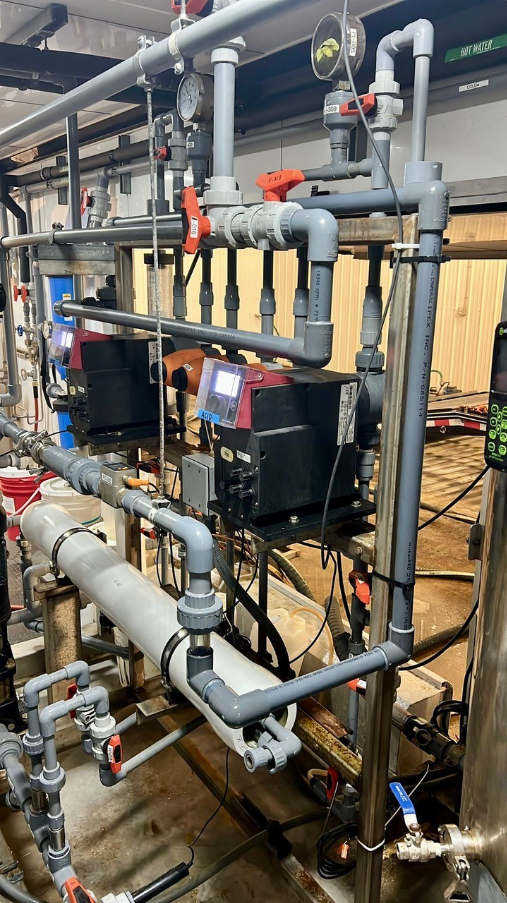
This project is in its pre-commercial development stage with a commercialization program currently underway to initially establish 20,000 t/y of lithium production within a three-year period. First commercial production is expected to start in late 2027. After annual commercial production of 20,000 tonnes LC has been achieved, production capacity might ultimately be expanded to 100,000 tonnes annually to meet its demand forecast.
“Supporting a domestic supply chain is critical for national security and economic resilience. NeoLithica’s commitment to made-in-Canada lithium ensures that automotive manufacturers in the Ontario-Quebec EV corridor and domestic battery energy storage manufacturers have access to ethically sourced, low-carbon materials without the logistical hurdles of trans-oceanic shipping,” says Barry Caplan, founder and president of NeoLithica.
Diane L.M. Cook is a freelance mining writer.
Related Posts
Canadian mines need an AI decision log before automation scales
October 9, 2026
Canadian mines need an AI decision log before automation scales
Beyond the deposit: Turning Quebec’s mineral wealth into lasting economic advantage

Rock Tech closes $6M private placement
October 9, 2026
Rock Tech closes $6M private placement
New Schneider Electric series tackles AI, energy demand and sustainability
Comments