Thinking beyond the box: Mining education innovation in Saskatchewan
A glance at a map shows Saskatchewan as almost perfectly rectangular. Its approach to mining education is anything but.

Across Saskatchewan, educators, industry and organizations are collaborating in ways that challenge traditional structures. In Feb. 2026, the University of Saskatchewan (USask) Canadian Mining Games team placed second nationally, reflecting a province-wide effort to align education with modern mining realities. This connectivity is recent. After the USask mining engineering program was cancelled in the 1970s, technological change and industry misalignment created gaps in local training.
A major turning point came in 2012 with the creation of the International Minerals Innovation Institute (IMII), a member-based consortium driving technological, educational and sustainability-focused innovations for the mineral sector. IMII and the USask College of Engineering collaborated to create a new model for mining engineering education, leveraging a $1.6 million investment from IMII. Rather than reintroducing a traditional mining engineering program, Saskatchewan added mining options within geological, mechanical and chemical engineering.
Students complete five specialized electives to earn a recognized mining option while maintaining broad career flexibility. The geological engineering (GEOE) program illustrates this model, with a strong emphasis on rock mechanics, groundwater and geotechnical engineering. Electives in mining fundamentals, ventilation, drill and blast and mine design provide direct industry relevance. The outcomes are impressive. More than 100 students have completed the mining option, and a sample of 25 graduates showed that 80% stayed in Saskatchewan and 92% worked in mining or related fields. Over 1,500 course enrollments have been recorded, including those who did not complete the full option. Applied education has advanced in parallel. Saskatchewan Polytechnic has offered a Mining Engineering Technology diploma since 2012, now delivered in a cooperative format.
IMII has funded additional programs through regional colleges, including introductory mining courses and electrician training. IMII has also supported training innovation through industrial safety training, expanded power engineering and virtual reality simulations. Digital skills training for Indigenous learners has reached over 120 participants, with a 75% career placement rate. In 2024, Morris Interactive, Mosaic and Cowessess First Nation received the CIM Indigenous Award for this project. IMII has also supported over $750,000 in post-secondary scholarships, with applications open until June 30, 2026, and is launching the IMII School of Mining in June 2026, a three-day program covering the full mining cycle from exploration to closure.
Beyond post-secondary education, Saskatchewan is strengthening the pipeline into mining careers. The Saskatchewan Mining Association (SMA) plays a key role by engaging K–12 educators through its Minerals Connected program, offering free curriculum-aligned resources and professional development opportunities. A flagship initiative, the Teachers’ GeoVenture Program, provides a seven-day immersive experience with site visits to mines, processing facilities, and resource centres. Often an educator’s first exposure to modern mining, it supports classroom integration while highlighting technology, safety, environmental performance and diverse career pathways.
Additional Minerals Connected support includes in-person and virtual workshops, classroom resources (e.g., SMA Potash Kit and Rocks and Minerals Kit) and career guidance tools supporting lesson planning and classroom integration. SMA also facilitates hands-on student activities, such as Minerals and Products (MAP) events in partnership with regional industry education councils. In 2025, Minerals Connected reached over 1,700 teachers and 14,600 students across Saskatchewan.
Community, inclusion and professional networks are critical to sustaining the workforce. Volunteers with Women in Mining and Women in Nuclear Saskatchewan (WIM/WiN-SK) support outreach and professional development. Programs such as WIMNspiration introduce students to mining careers, while mentorship initiatives support retention. Both began as IMII-funded pilots. Their annual Mine Your Potential conference attracts hundreds of participants, and scholarships help reduce barriers. Similarly, the CIM Saskatoon Branch fosters connections through monthly dinner meetings attracting 100 to 200 participants, bringing together industry professionals, students and educators. Since 2007, the branch has awarded more than $450,000 in scholarships. Saskatoon also regularly hosts the CIM MEMO conference, strengthening its role as a hub for knowledge exchange.
Together, these initiatives show that mining education in Saskatchewan has evolved into a coordinated system spanning schools, post-secondary institutions, industry and professional networks. In a sector shaped by cycles, technological change and increasing complexity, education must be equally dynamic. By emphasizing collaboration, practical experience and continuous learning, the province is preparing a workforce that is technically capable, adaptable and connected, forming an innovative, integrated model other jurisdictions may follow.
Donna Beneteau is an associate professor of geological engineering at the University of Saskatchewan. Lesley McGilp is the executive director of the International Minerals Innovation Institute (IMII). Pam Schwann is the president of the Saskatchewan Mining Association.
Related Posts
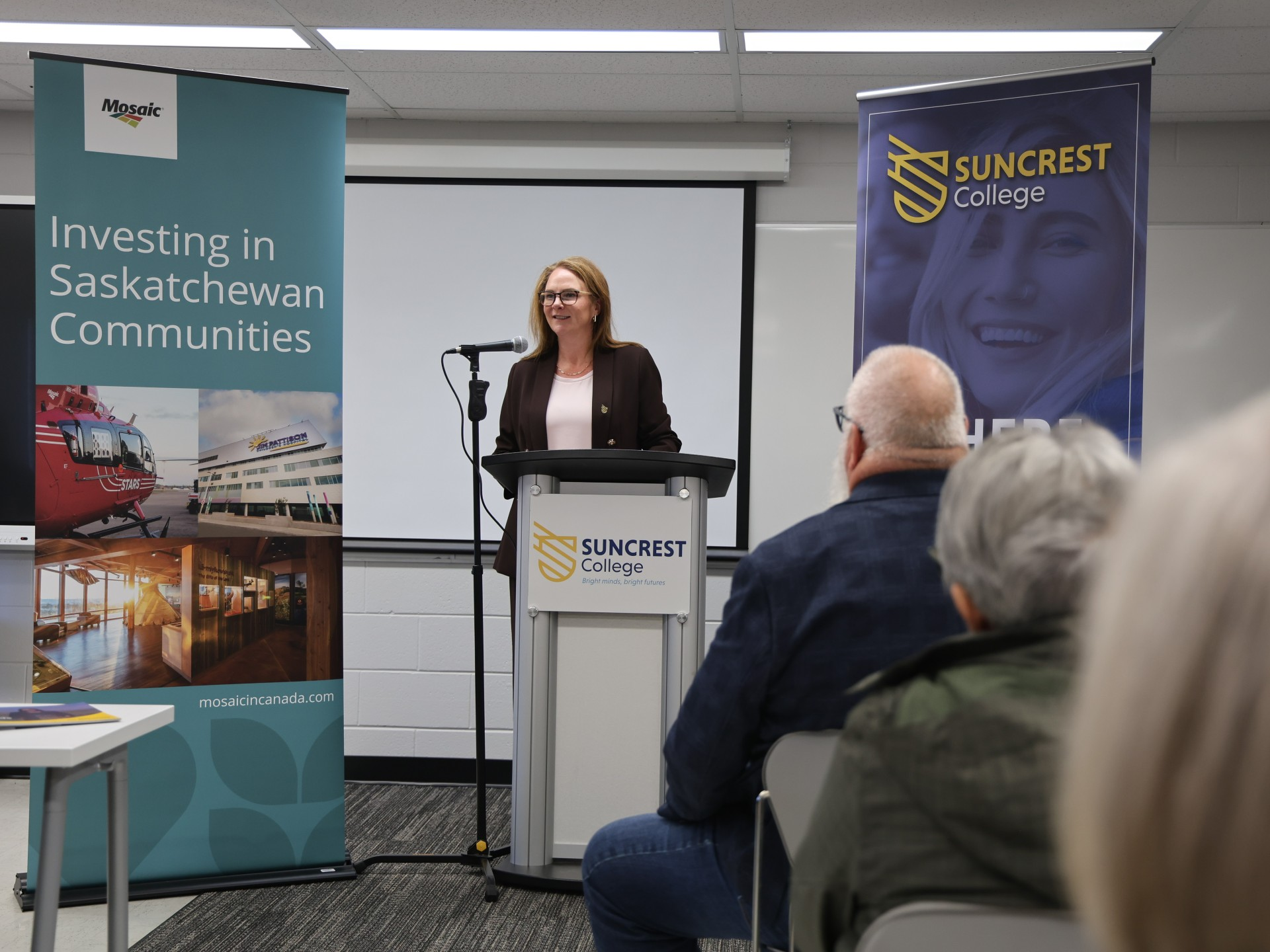
Suncrest College opens mechanics training facilities, expands scholarship programs
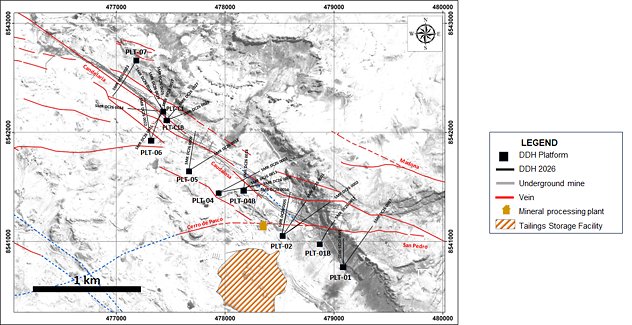
Caudalosa mine restart evaluated as as Silver Mountain reports 569 g/t silver hit
Rock Tech kicks off exploration program at the Victory project
October 22, 2026
Rock Tech kicks off exploration program at the Victory project
Liberty Gold stretches Black Pine’s reach in Idaho
October 22, 2026
Liberty Gold stretches Black Pine’s reach in Idaho
Mining history: A beginner’s guide
October 22, 2026
Comments