Time for a mineral-first industrial strategy
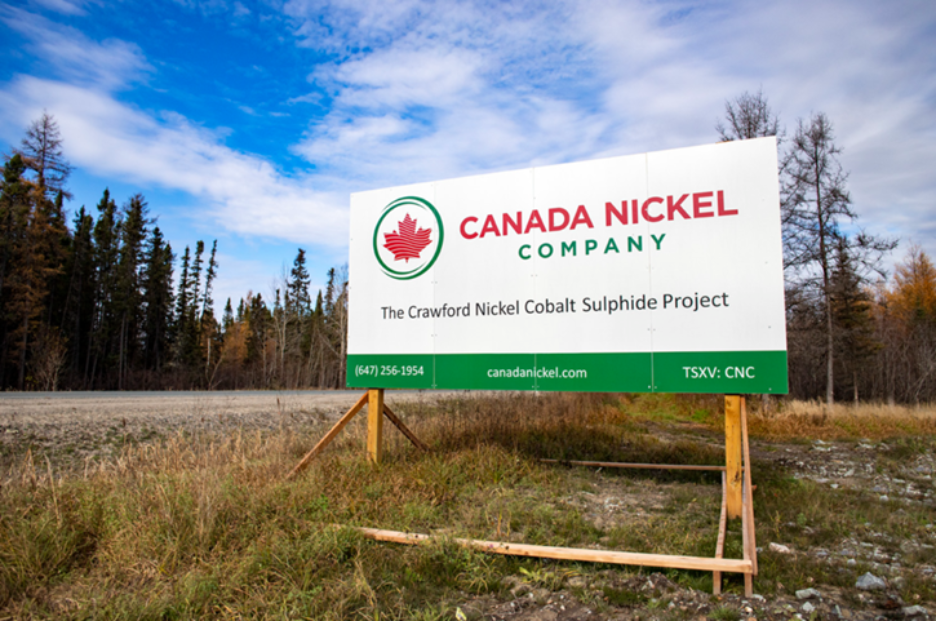
The paradox of Ontario’s modern industrial strategy is vividly apparent from the window of an airplane flying north from Toronto.
Look down at the grid of Southern Ontario, and you will see the glittering blueprints of a twenty-first-century industrial renaissance: sprawling commercial and industrial investments in electric vehicle (EV) battery gigafactories, clean-energy corridors and advanced manufacturing hubs heavily fortified by billions of dollars in taxpayer subsidies. Such megaprojects are routinely heralded by policymakers cutting ribbons as the new crown jewels of economic sovereignty, national defence and industrial pride.
But fly further north, where the asphalt dissolves into the dense, Precambrian rock of the Canadian Shield, and the narrative fractures. Here lies the quiet origin of the entire apparatus. Every battery cell, every advanced semiconductor and every defence system is entirely captive to the raw mineral inputs buried beneath this earth.
Yet, in an era defined by deep geopolitical volatility and a structural reset of global trade routes, Western leaders are suffering from a dangerous, systemic blind spot. Canada, and Ontario’s political class have spent decades enthusiastically financing the capital-intensive, glamorous end of the supply chain while systematically starving its origin. For nearly a generation, the critical early-stage mineral exploration ecosystem has struggled to raise capital and faced significant inertia.
While Ontario historically rested on its laurels atop regional mining indices, global competitors have radically accelerated. If Ontario is to remain a viable player on a fiercely competitive global stage, its leadership must undergo an immediate conceptual shift. Greenfield exploration, the discovery of entirely new, unmined deposits, can no longer be viewed through the outdated lens of speculative market gambling. It must be treated as the foundational research and development (R&D) that sets up the advanced manufacturing economy for success.
The innovation pipeline
To understand how an economy loses its competitive advantage, one must look at how its regulatory structures define risk. In the halls of government, mineral development is too often treated as a single, heavy-industrial monolith to be managed with uniform, slow-moving caution.
Mineral development is a highly phased, high-risk innovation pipeline. Advanced mine development — the multi-year process of engineering, building and operating an established deposit — is a massive capital-expenditure undertaking that requires rigorous environmental oversight. But before a mine can be built, a discovery must be made.
This is the domain of grassroots exploration: a world occupied by independent prospectors and junior mining issuers. Their work is a form of scientific frontierism: ground mapping, hand sampling and localized geophysics. It is a world of staggering statistical odds, where perhaps only one in 10,000 projects matures into a commercial mine. It is also, by its very nature, an inherently low-impact pursuit, relying on a minimal physical footprint to test unproven geological theories.

When policymakers treat non-intrusive geoscientific fieldwork with the same administrative complexity as constructing a full-scale chemical processing facility, the pipeline chokes. If we remain unwilling to invest in the fundamental steps, we will forever be reliant on other foreign powers who will control price and distribution of essential minerals based on increasingly fragile geopolitical models.
Consider a parallel to the pharmaceutical sector: a biotech startup requires a nimble, flexible regulatory runway to validate a molecule in a petri dish long before it ever faces human clinical trials. Similarly, a prospector needs to rapidly test geological anomalies without years of upfront bureaucratic delay. Early-stage exploration is the pre-commercial innovation engine that generates the options for tomorrow’s economy. Without it, the entire downstream industrial strategy is built on sand.
The erosion of the moat
While Ontario possesses some of the most extraordinary geologies on the planet, geology is no longer destiny. Over the past decade, Canada’s share of global mining investment has shrunk dramatically. Capital is notoriously skittish, and global institutional investors are increasingly fleeing jurisdictions burdened by administrative labyrinths.
The global race for critical minerals is no longer a future scenario; it is an active theatre of geopolitical warfare. Sophisticated state actors are deploying public capital at the discovery stage to de-risk frontier terrains, which in turn mobilizes massive waves of private equity. Ontario is losing ground to jurisdictions that move at commercial speed, such as the following examples:
- Western Australia: For decades, the state has co-funded innovative private drilling campaigns through its Exploration Incentive Scheme (EIS). This targeted injection of early-stage public capital has yielded an extraordinary economic multiplier, generating an average of A$5.50 in direct exploration spending for every single public dollar invested. We know that other jurisdictions equate an even higher multiplier for investment.
- Saudi Arabia: Operating with immense fiscal agility, the Kingdom has compressed its exploration licensing timelines to under thirty days, backed by a multi-billion-dollar sovereign investment vehicle explicitly designed to fast-track frontier discoveries.
- Quebec: Within Canada’s borders, Quebec has aggressively outpaced Ontario by deploying targeted research funds, offering superior flow-through tax incentives and building strategic infrastructure to create a seamless, vertically integrated value chain. And while the market has changed for Quebec in the past year, the infrastructure that drives investment in that province remains ready and in place.
When exploration capital is delayed by sequential, siloed ministry reviews in Ontario, it does not sit static. It leaves. Financial mechanics demonstrate that a single year of administrative delay on a major discovery destroys hundreds of millions of dollars in net present value (NPV) long before a single shovel hits the ground. Ontario is actively trading its natural competitive moat for institutional paralysis.
The urgency of early-stage capital
The capital starvation plaguing early-stage exploration is not merely a localized challenge; it is an economic emergency. Greenfield exploration is uniquely dependent on high-risk venture capital. Unlike downstream manufacturing plants, which can secure debt financing based on predictable cash flows, junior explorers rely entirely on equity markets to fund the initial drilling that proves a deposit exists.
Today, that capital is dried up, diverted by macro headwinds and a regulatory framework that artificially extends the time-to-discovery. The financial implications of this delay are severe. In mining economics, the time value of money dictates that the value of a future cash-flow stream diminishes exponentially the further into the future it is pushed.
When regulatory stagnation adds years to the front end of an exploration timeline, the investment consequence grows, and NPV for a project collapse for investors. Consequently, international capital flows toward jurisdictions like Australia or Latin America, where the path from permit to drill bit is measured in weeks, not years. Distraction we can no longer afford for our own economic and mineral sovereignty.
Furthermore, the geological lifecycle of Ontario’s existing mines is reaching a critical inflection point. The tier-one assets that currently sustain the province’s mining GDP were discovered decades ago. As these mature deposits face natural depletion, the grade of extracted ore declines, driving up operating costs and reducing margins.
To feed the battery gigafactories currently under construction in the south, Ontario needs a continuous influx of new, high-grade discoveries. Relying on recycled discoveries or expanding legacy footprints will not suffice. The province faces a hard deadline: if new greenfield discoveries are not made within the next 24 to 36 months, the domestic supply chain will remain entirely dependent on foreign mineral imports, invalidating the core objective of economic sovereignty.
A blueprint for restoring velocity
Reclaiming Ontario’s premier investment position requires a disciplined, whole-of-government framework integrated directly into economic policy, rather than treating mining as an isolated environmental management problem. To restore operational velocity, the province must execute the following three structural reforms:
- Scale and bifurcate incentives
Programs like the Ontario Junior Exploration Program (OJEP) must be permanently expanded and structurally split. The operational needs of a junior public issuer are vastly different from those of an independent grassroots prospector. Separating these corporate tracks strips away burdens like excessive liability insurance and prohibitive registry outlays from independent prospectors. This structural bifurcation ensures that public funds flow directly into field geology and physical exploration rather than compliance overhead and administrative legal fees. Intensified public investment in early-stage exploration like this is necessary from the federal and provincial governments.
- Enforce administrative speed
The province must transition away from paper-heavy, siloed approvals and adopt coordinated digital dashboards that legally bind ministries to concurrent, rather than sequential, review calendars. Furthermore, operational timelines must align with the reality of Northern Ontario’s climate. Grant intakes must be permanently anchored to winter windows, ensuring that approvals are issued well before the brief summer field season begins. Finally, extending permit validities from three to five years would provide institutional investors with the long-term regulatory stability required to commit to multi-year exploration campaigns.
- Build progressive partnerships
Genuine resource sovereignty requires a proactive, business-oriented partnership with Indigenous communities. The current consultation framework is deeply flawed, often placing an unfair administrative burden on First Nations communities that lack the specialized geoscientific or legal staff to review hundreds of complex permits simultaneously. Even with initiatives like Ontario’s Aboriginal Participation Fund (APF), more must be done to realize the full potential of the potential of the province. By establishing direct-to-community consultation capacity frameworks funded by the province, Ontario can alleviate these technical bottlenecks. This shifts exploration from a source of friction into a predictable, mutually beneficial vehicle for shared, generational economic development.
The institutional imperative: The new vanguard
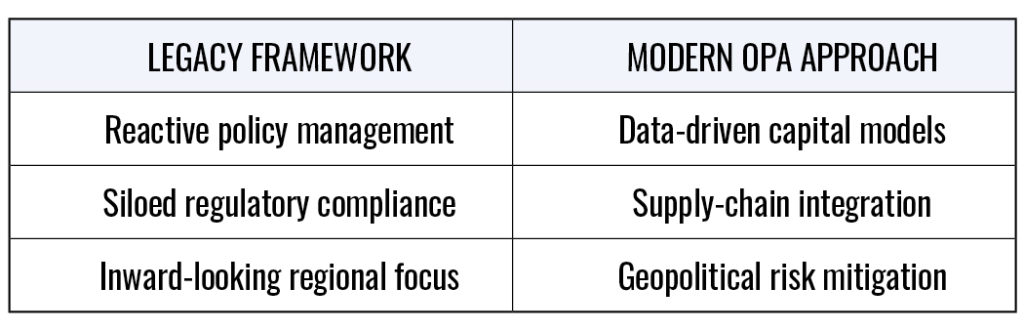
Navigating this hyper-competitive global landscape requires an institutional shift in how the mining industry communicates with centres of political and financial power. For too long, the narrative of mineral exploration has been delivered in the language of a bygone era, framed narrowly around regional employment or historical legacy. In the modern global economy, that language falls flat.
Today, the Ontario Prospectors Association (OPA) is fundamentally redefining that narrative. The OPA has emerged as a professional, solution-oriented advocate, translating complex geological and operational realities into the clear, quantifiable economic frameworks that senior political and corporate decision-makers demand.
By presenting data-driven models on capital destruction, global fund flows and regulatory velocity directly to ministerial leadership, the OPA is shifting provincial mining policy from a reactive afterthought to a central pillar of national economic sovereignty.
But an advocacy organization is only as powerful as the consensus it represents. For independent prospectors, junior issuers and mining service providers across the province, active participation in this collective voice is no longer just a matter of professional networking or passive support. It is a strategic necessity.
Ontario stands at a critical crossroads. The province possesses the rocks, the institutional history and the frontline expertise to anchor North America’s advanced industrial future. But tomorrow’s factories cannot be run on yesterday’s depleted discoveries. It is time for Ontario’s policy architecture to match the scale, speed and urgency of the global frontier.
Steve Virtue is the interim CEO of the Ontario Prospectors Association (OPA).

Related Posts
Suncrest College opens mechanics training facilities, expands scholarship programs
Caudalosa mine restart evaluated as as Silver Mountain reports 569 g/t silver hit
Rock Tech kicks off exploration program at the Victory project
October 22, 2026
Rock Tech kicks off exploration program at the Victory project
Liberty Gold stretches Black Pine’s reach in Idaho
October 22, 2026
Liberty Gold stretches Black Pine’s reach in Idaho

Mining history: A beginner’s guide
October 22, 2026
Comments