The Democratic Republic of Congo has reportedly moved closer to regain access to a trove of colonial-era geological records stored in a Belgian museum, as part of the African nation's ongoing efforts to unlock its vast untapped mineral wealth.
According to both the Luxembourg Times and the Financial Times, Congo's mining minister Louis Watum Kabamba recently met with Belgian and European Union officials to discuss the digitization and transfer of millions of documents tied to the African nation's history.
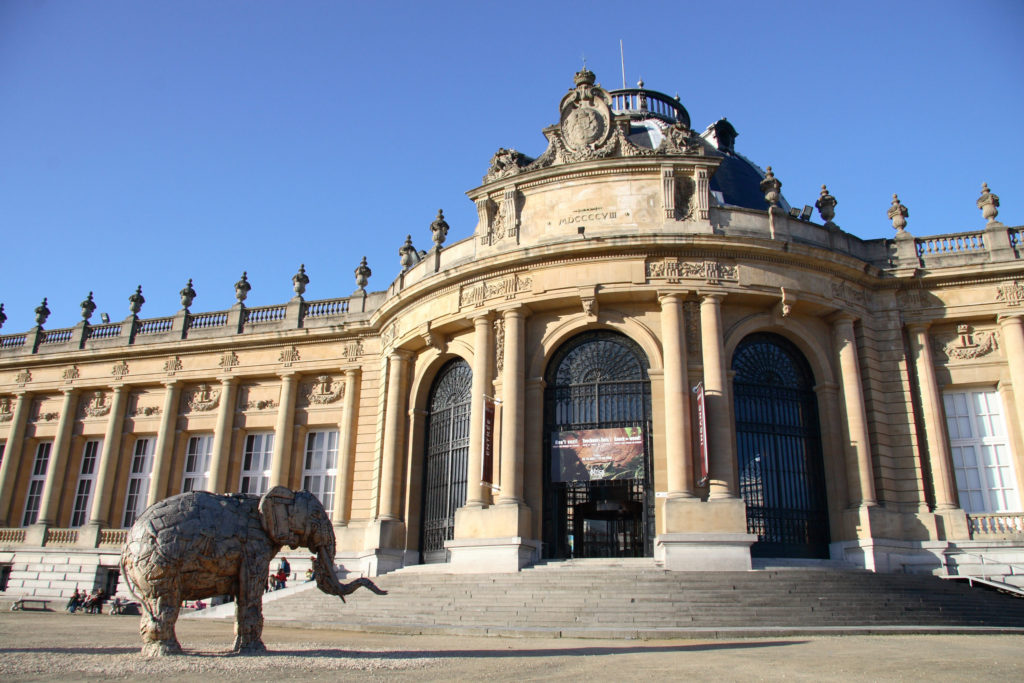
These records, housed at Belgium's Royal Museum for Central Africa in Tervuren, are said to contain decades of geological surveys, maps, drill logs and exploration reports compiled during Belgium's colonial rule over Congo between 1885 and 1960.
Congolese officials believe the documents could provide clues to undiscovered deposits of copper, cobalt, lithium and other critical minerals used in electric vehicles, renewable energy systems and advanced technologies.
"A very large part of DR Congo has not yet been explored," Congo's mining ministry told the FT, underscoring the government's belief that the archive could help identify new mineral discoveries beyond the country's established mining regions.
The ministry also said that the digitization of records should move into the implementation phase, given the "need to accelerate the discovery of new mineral deposits."
Joint roadmap
Following the talks, the Congolese and European officials agreed to draw up a joint roadmap for the digitization and restitution of the records, as well as establishing a task force to oversee the process, the reports said.
A spokesperson for the Belgian government confirmed to the Luxembourg Times that the digitization project is underway with the support of EU funding. “Priorities are being set at the level of the Royal Museum for Central Africa associated with Congolese partners.
"Digital copies are being sent to the relevant Congolese authorities gradually,” they added.
Modern mining battle
The archive represents part of a broader debate over who controls geological information in one of the world's most resource-rich nations.
DR Congo is the world's second-largest copper producer and holds more than half of global cobalt reserves, while also hosting significant deposits of lithium, coltan, tin, tungsten, gold and uranium. The country has become a focal point in Western efforts to diversify critical mineral supply chains away from China.
The records have also become the subject of a separate dispute involving KoBold Metals, the US exploration company backed by Bill Gates and Jeff Bezos. The startup signed agreements with the Congolese government in 2025 to digitize historical geological data and make it publicly available as part of its effort to accelerate mineral discoveries using artificial intelligence (AI).
However, Belgian authorities and museum officials have resisted granting exclusive access to the records, arguing that public scientific collections cannot be handed over to a private foreign company. Instead, Belgium has insisted that the digitization process remain under public control, with digital copies gradually transferred to Congolese authorities.
KoBold is one of many companies looking to combine the use of data and AI technology for finding the next big mineral deposit. BHP (ASX: BHP), the world's largest public mining company, has been funding early-stage exploration companies with promising technologies. Eramet also recently partnered with a tech firm and the French national geological service to boost its chances of making new discoveries.
Comments