In a move to strengthen its economic resilience amid shifting global trade dynamics, New Brunswick is actively refocusing on its mining sector. With a "trust but diversify" approach to trade, the province aims to unlock dormant resource assets and position itself as a safe haven for critical minerals. Once accounting for 7% of the provincial GDP, mining now contributes less than half that share, but the rising global demand for stable sources of key minerals presents new opportunities.
The province leverages its strategic advantages, including two deepwater ports, well-developed road access to mineral-rich regions, and one of Canada's fastest-growing container ports. An extensive network of 40,000 km of forestry roads provides logistical benefits, enabling efficient resource extraction and transport. Additionally, close collaboration with Indigenous communities—whose participation is prioritized—further supports plans for renewed mining activity. These factors combine to establish New Brunswick as a promising hub for responsible mineral development.
Upcoming mineral strategy to drive growth
Minister of Natural Resources John Herron is leading efforts to develop a comprehensive mineral strategy aimed at attracting investment, fostering sector participation, and building strong Indigenous relations. The strategy will rest on three pillars: environmental responsibility, regulatory predictability, and genuine partnerships with First Nations. Projects will undergo rigorous environmental reviews, but the permitting process will be designed to be timely and reliable, making the province attractive to developers.
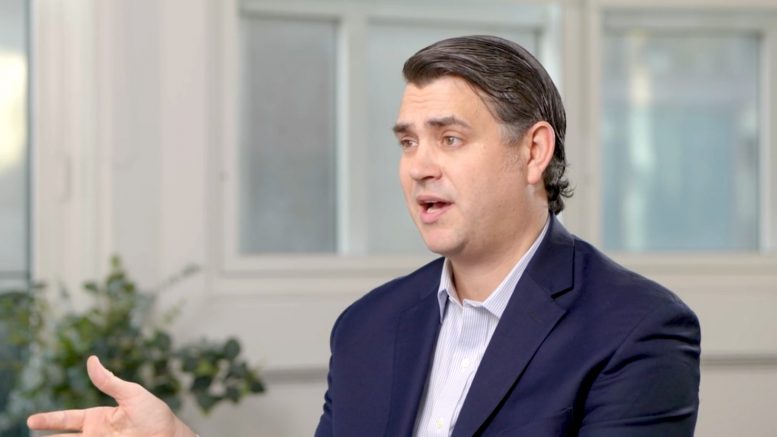
John Herron, minister of natural resources, Government of New Brunswick.
Herron has engaged with all 16 Indigenous leaders to ensure early collaboration and meaningful dialogue. The new framework will steer developers toward promising mineral opportunities—such as copper, zinc, antimony, indium, tungsten, and manganese—focusing on companies with the capital to move projects forward. A tailored, supportive approach will help distinguish between restarting old sites and developing greenfield projects while maintaining high environmental and social standards. The goal is to accelerate mineral development effectively without sacrificing responsible practices.
Strategic launch in October
The minister plans to unveil the new mineral strategy during the province’s annual Exploration, Mining, and Petroleum conference in October. This event will serve as a platform to deepen engagement with the mining sector, especially with mid-tier companies that possess the capacity and credibility to independently develop assets or attract larger partners.
Herron emphasizes a shift from passive exploration to proactive relationships, aiming to secure committed investors willing to develop projects rather than just hold claims. Strong regulatory frameworks, effective Indigenous partnerships, and a focus on responsible development will underpin New Brunswick’s strategy. The province’s aim is to position itself as a results-oriented, investor-friendly jurisdiction capable of unlocking its full mineral potential.
A bright prospect for future mining
Looking ahead, Herron believes New Brunswick’s untapped mineral potential exceeds its historical peak, when mining contributed 7% to the GDP two decades ago. Today's dormant assets present a broader and more diverse resource base, supported by robust logistics and port infrastructure—particularly around Belledune.
Several communities are receptive to mining development, which could catalyze a transformative era for the province’s economy. New Brunswick offers promising deposits of indium, antimony, molybdenum, tungsten, gold, copper, zinc, and potash. Its extensive road network and port facilities provide vital logistical advantages, while strong, proactive relationships with First Nations communities form a cornerstone of its investment appeal.
The upcoming strategy aims to strike a balance: implementing a rigorous yet efficient environmental regime that meets market demands for speed and certainty. With its relatively small size and focused support, New Brunswick aspires to become a leading, investor-ready jurisdiction that balances social license with unlocking its full mineral potential.
It would be great to see more jobs in New Brunswick’s mining sector. The horrors of British Columbia scare me. There’s lots of bad things that happen in and around mining. Pollution cover ups., poor government standards. Fallout to the environment.it must be strictly scrutinized .using cyanide and arsenic are not good and other bad chemicals. Responsible mining
Je suis ingénieur de mine et présentement je recherche un emploi dans la mine.je réside à New Brunswick.
Je souhaite avoir quelques conseils pour ma recherche d’emploi dans la mine même si c’est hors de New Brunswick.
I just reclaimed my old mining claims rich in gold and am hoping to attend the October mining conference and get investors, there’s lotts of claim blocks being held without development, I’ve returned to NB from BC after 14 years for mining in my province, this sounds like great news.
The NB eclaims website was offline over a month, am studying work reports in hopes of attracting pre pay investors to have EIA started this year but first some trenching AND there’s even diamonds on my claim i picked up feom an old time friend who found them so NB has wealth untaped.

4 Comments
Yves jean
Would be great for the province !
Peter cusack
It would be great to see more jobs in New Brunswick’s mining sector. The horrors of British Columbia scare me. There’s lots of bad things that happen in and around mining. Pollution cover ups., poor government standards. Fallout to the environment.it must be strictly scrutinized .using cyanide and arsenic are not good and other bad chemicals. Responsible mining
Patrice
Bonjour Monsieur
Je suis ingénieur de mine et présentement je recherche un emploi dans la mine.je réside à New Brunswick.
Je souhaite avoir quelques conseils pour ma recherche d’emploi dans la mine même si c’est hors de New Brunswick.
Kevin LeBlanc
I just reclaimed my old mining claims rich in gold and am hoping to attend the October mining conference and get investors, there’s lotts of claim blocks being held without development, I’ve returned to NB from BC after 14 years for mining in my province, this sounds like great news.
The NB eclaims website was offline over a month, am studying work reports in hopes of attracting pre pay investors to have EIA started this year but first some trenching AND there’s even diamonds on my claim i picked up feom an old time friend who found them so NB has wealth untaped.