Topics
Commodities
Regions
Tags
- capital costs
- dense media separation
- Economic/Feasibility Studies
- EDM Resources
- Equipment & Suppliers
- Exploration
- lead recovery
- lead-zinc mining
- Mine Development
- mine tailings
- Mineral Processing
- Nova Scotia mining
- Operating Mine
- ore sorting
- pre-concentration
- Resources/Reserves
- Scotia mine
- sensor-based sorting
- SGS Canada
- Steinert USA
- Sustainable Development
- technology and innovation
- XRF ore sorting
- zinc recovery
Companies
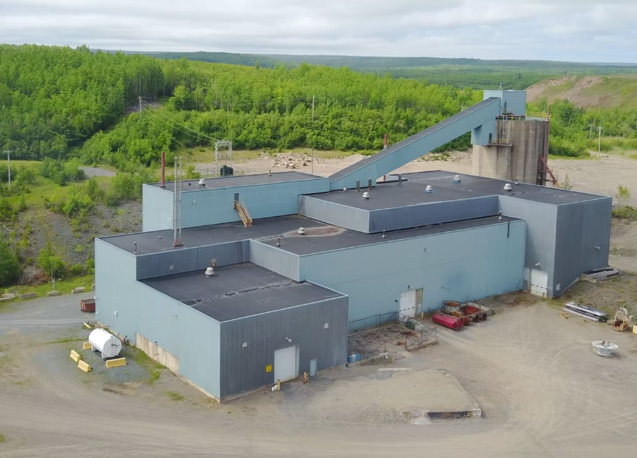
EDM Resources (TSXV: EDM; OTCQB: EDMFF) says ore sorting tests at its Scotia lead-zinc mine 62 km northeast of Halifax could more than cut the needed capital expenditures by more than half.
The tests were conducted by SGS Canada and Steinert USA laboratories on mineralized material from the mine. The work evaluated the potential for XRF sensor-based ore sorting with AI-assisted programming using Steinert ore sorting technology. The technology has the potential to reduce the mass of material that reaches the mill while upgrading the zinc and lead grades of the retained material.
Compared to earlier dense media separation (DMS) testing, XRF ore sorting carried a potential capital expense of $1.5 million, 57% lower than $3.5 million when using DMS.
The savings come from the lesser tonnage of material that would be fed to the mineral processing plant and from better zinc recovery (+6.7%) and a zinc concentrate grade increase (41.8%). Lead recovery was estimated to decrease slightly (–4.1%), but the overall lead grade went up substantially (+16.7%).
There are other potential benefits as well. The need for energy, reagents and material handling needed per unit of contained metal could be reduced. This would effectively increase the capacity of the 2,700-t/d plant. The quantity of tailings would also be reduced as would the need for additional processing and subsequent management. Further engineering, metallurgical assessment and economic evaluation will be needed to quantify such benefits.
EDM cautioned readers that the ore sorting and DMS results were generated from different test work programs using different feed samples and operating conditions and should therefore not be interpreted as a direct like-for-like comparison. Rather, the results demonstrate two potential methods of pre-concentrating Scotia mine ore prior to downstream processing. The DMS process separates mineralized and waste material based primarily on differences in density, whereas sensor-based ore sorting evaluates individual particles using detectable physical or compositional characteristics.
More detailed comparison of the two options – XRF ore sorting or DMS – as well as details of the Scotia project are available on the website www.EDMResources.com.

Comments