Great Pacific Gold (TSXV: GPAC; US-OTC: GPGCF) is tightening its focus on Papua New Guinea and advancing drilling at its Wild Dog gold-copper project after completing a year of portfolio restructuring and early-stage technical work.
“Wild Dog is a large-scale, high-grade project with tremendous exploration potential,” CEO Greg McCunn said. “The geology at Wild Dog and Papua New Guinea is incredible, which is obvious from the mining operators in the area.”
The company spent 2025 divesting its Australian assets and rebuilding its technical team to operate in PNG. Great Pacific also raised $16.8 million (US$12.3 million) last year, with institutional investors accounting for $12.5 million of the financing.
Papua New Guinea hosts long-running gold mines operated by major producers including Newmont (NYSE, ASX: NEM) at Lihir and Barrick Mining (TSX: ABX; NYSE: B) at Porgera, highlighting the country’s established mining framework. At Wild Dog, Great Pacific holds an exploration licence that permits road building, drill pad construction and advanced exploration work, with a separate mining lease required at the construction stage.
McCunn said the framework provides a clear pathway for advancing projects while maintaining regulatory oversight. With infrastructure in place and funding secured, the CEO said Great Pacific is now positioned to focus on drilling and resource definition.
“We’ve got the team, we’ve got the money, we’ve got the pipeline of targets — the drill rigs are there, even the people are in place,” McCunn said. “So it’s really now just an execution story.”
McCunn said 2025 was focused on early-stage technical work at Wild Dog, including road construction, infrastructure installation and camp development. The company also completed airborne geophysical surveys, including Mobile MT and LIDAR, and consolidated historical datasets across the property.
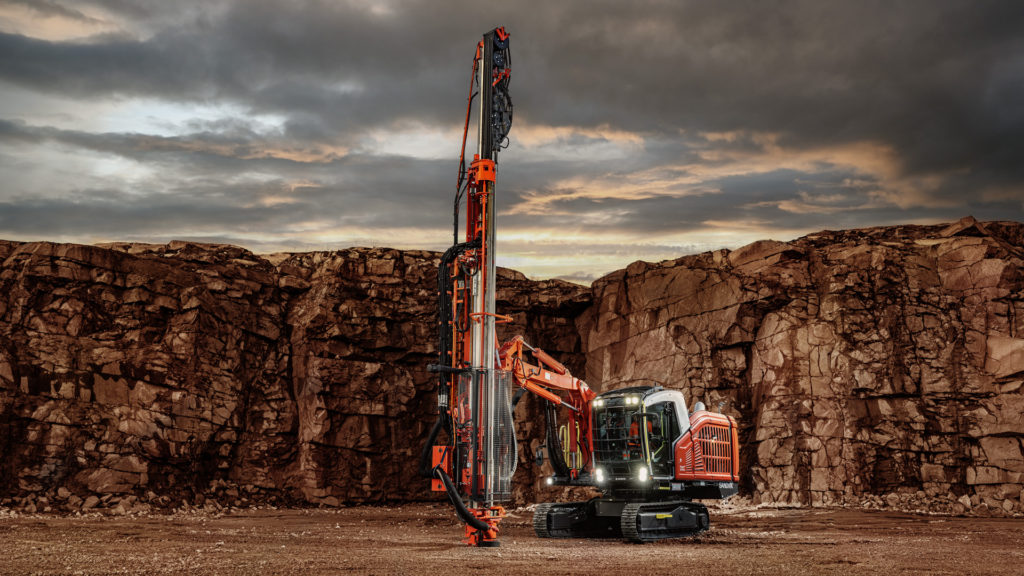
Initial drilling began in May and wrapped up in December, testing roughly 10% of the 15-km epithermal corridor. Highlights included 8.4 metres grading 46.46 grams gold per tonne and 1.7% copper; and 9.5 metres grading 12.61 grams gold and 0.62% copper.
“We’ve drilled over 3,000 metres there now and hit gold and copper mineralization on every hole,” McCunn said.
Following the initial drill program, Great Pacific spent the second half of last year building a pipeline of follow-up targets along the Wild Dog corridor.
The company has identified more than 20 priority targets. Four are fully prepared for drilling, with pads, access roads and water supply in place, and are expected to support drilling through the first half of this year. An additional four areas are under construction.
Infrastructure development has also generated new exploration opportunities. Road construction towards a planned drill site exposed a previously unrecognized vein extending roughly 500 metres. Channel sampling returned values of up to 120 grams gold per tonne and 4.5% to 5% copper. “That’s the type of area that we’re working in,” McCunn said.
With a second drill rig now on site, the company expects to work through its target inventory over the next 12 to 18 months.
Wild Dog is located on New Britain Island, about 45 km from the nearest commercial airport and within reach of established agricultural and tourism infrastructure.
Access to the project includes paved and gravel roads, with the company completing a 12-km private access road into the site last year. The region also hosts a run-of-river hydroelectric plant producing roughly 7 MW, located about 20 km from the project.
McCunn said the facility could potentially be expanded to support future mining operations.
A deep-water port near Rabaul, about 50 km from the project, handles agricultural exports and could accommodate copper concentrate shipments if Wild Dog advances to production. “Wild Dog has incredible access to infrastructure,” McCunn said.
Community engagement is a central component of exploration in PNG, McCunn said, and Great Pacific began consultations with local landowners and government representatives before initiating drilling.
Wild Dog is located near a single primary landowner group, which simplifies engagement compared with more complex regions on the mainland. The nearest village has a population of about 800 people.
The company employs approximately 17 PNG national geologists and technical staff, along with about 150 local field personnel. McCunn said Great Pacific has benefited from a skilled local workforce developed by major operators active in the country and continues to engage regularly with community representatives.
“So far, we’ve enjoyed a strong social licence to operate, having established relationships with the local community early on” he said.
Great Pacific has not yet published a mineral resource estimate for Wild Dog, and McCunn said the timing will depend on drilling results and zone definition. He said the company expects to continue drilling through 2026 as it works towards defining mineralized zones and advancing technical studies.
Despite completing its portfolio reset and financing, Great Pacific continues to trade near a $70-million market capitalization.
“We missed a big re-rating that happened in 2025 with a lot of junior mining stocks because we were taking the strategic steps to get us to where we are now, in order to focus on advancing the Wild Dog project,” McCunn said. He said he expects the share price to increase as investors realize the project’s potential.
“The epithermal porphyry system that we’re working on at Wild Dog, you just don’t find those anywhere,” McCunn said. “A system of this type in Canada, would have been mined 30 years ago, and that speaks volumes about the potential we are seeing here.”
The preceding Joint Venture Article and video are PROMOTED CONTENT sponsored by Great Pacific Gold and produced in co-operation with The Northern Miner. Visit: https://gpacgold.com for more information.
Comments