New $200M wharf at Bécancour will handle larger bulk carriers serving mining industry
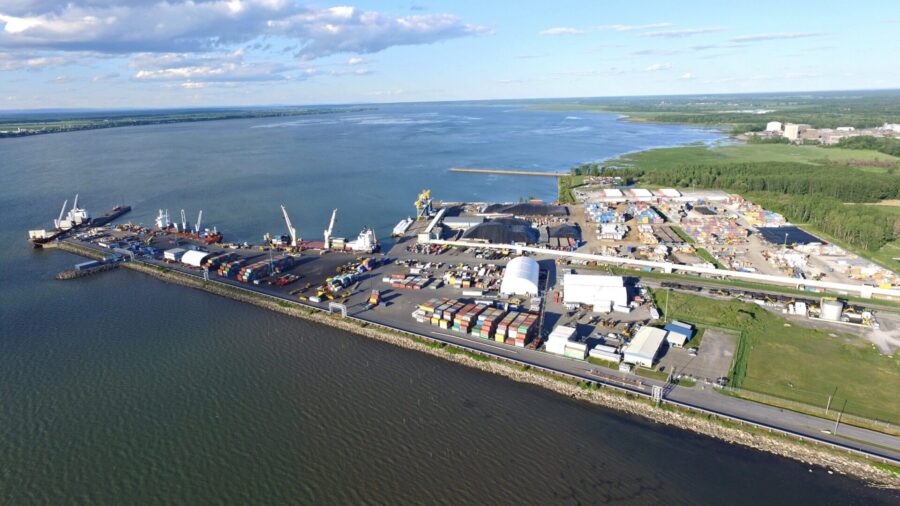
The Impact Assessment Agency of Canada has cleared a major port expansion project at Bécancour, Quebec, that will significantly boost Canada's capacity to export mining products to global markets.
IAAC completed its assessment of the Bécancour port terminal expansion project and determined that potential adverse environmental effects fall within existing regulatory frameworks, eliminating the need for further federal review under the Impact Assessment Act.
The agency engaged federal experts, stakeholders, Indigenous peoples, and the public during its 79-day review process before reaching its section 16 decision under the Impact Assessment Act.
Strategic mining export hub
The Port of Bécancour serves as a crucial gateway for Canada's mining sector, handling iron ore, aluminum, and other bulk commodities from Quebec's mineral-rich regions. The facility provides direct access to the St. Lawrence Seaway system, connecting Canadian mining operations to global markets including Europe, Asia, and South America.
Industry analysts estimate that Canadian mining companies export approximately $15 billion worth of products annually through St. Lawrence Seaway ports, with Bécancour playing an increasingly important role as mines expand production to meet growing global demand for critical minerals.
The port's strategic location allows mining companies to reduce transportation costs compared to alternative routes through eastern Canadian ports, providing a competitive advantage in international markets where freight costs significantly impact profitability.
New wharf targets larger vessels
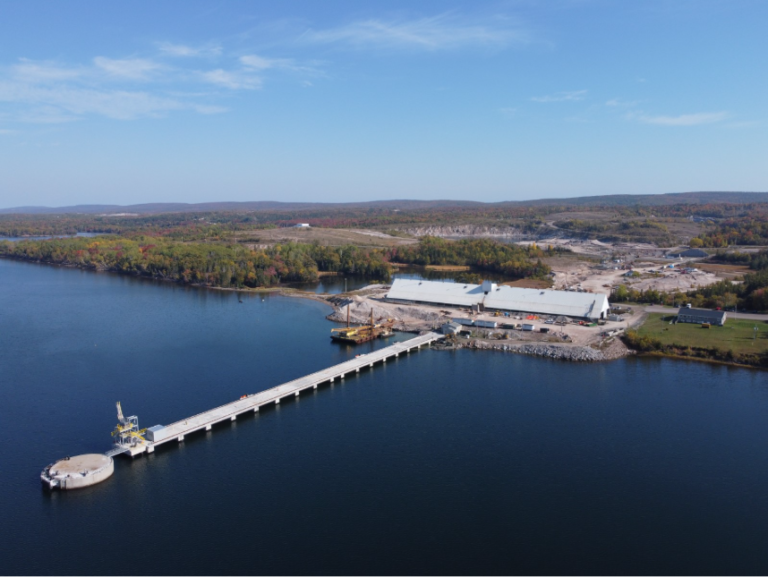
Société du parc industriel et portuaire de Bécancour plans to construct a new 390-meter wharf capable of accommodating ships exceeding 25,000 deadweight tonnage. The B6 wharf will include one berth designed specifically for larger bulk carriers that mining companies increasingly use to reduce per-ton shipping costs.
The project includes dredging activities and construction of expanded storage areas to handle increased cargo volumes from mining operations across Quebec and eastern Canada.
Modern bulk carriers used in the mining trade typically range from 40,000 to 80,000 deadweight tons, making the new facility essential for Canadian mining companies competing in global markets where vessel size directly impacts transportation economics.
Regulatory framework sufficient
IAAC determined that existing federal and provincial laws adequately address potential environmental impacts from the expansion. The agency cited the Fisheries Act, Species at Risk Act, Canadian Navigable Waters Act, Pilotage Act, and Migratory Birds Convention Act among federal regulations governing the project.
Provincial oversight will occur under Quebec's Environment Quality Act, the Act respecting threatened or vulnerable species, the Act respecting the conservation and development of wildlife, and the Act respecting the conservation of wetlands and bodies of water.
The proponent must now obtain necessary federal and provincial permits and authorizations before beginning construction.
Mining industry growth driver
The expansion comes as Canadian mining companies face increasing demand for critical minerals essential to clean energy technologies. Quebec produces significant quantities of iron ore, aluminum, lithium, and rare earth elements that require efficient transportation to processing facilities and end markets.
Port capacity constraints have become a limiting factor for some mining operations, particularly as global shipping has shifted toward larger vessels to achieve economies of scale. The Bécancour expansion directly addresses this bottleneck for mining companies serving international customers.
The federal government has identified critical mineral exports as a key economic priority, with port infrastructure playing a central role in Canada's strategy to become a reliable supplier to allied nations seeking alternatives to Chinese-controlled supply chains.
IAAC noted that decisions like this ensure Canada's impact assessment process operates efficiently by determining early whether projects require comprehensive federal review, allowing economically important infrastructure to proceed when environmental safeguards are already in place.

Comments