• Treasure Hunt
  • Digital Edition
  • Jobs
  • Press Releases
  • Buyers’ Guide
  • TNM Maps
  • Buy Gold & Silver
  • Profile
  • Sign out
  • Regions
    • Canada
    • United States
    • Australia, NZ & South Pacific
    • Mexico and Central America
    • North America
  • Commodities
    • Gold
    • Copper
    • Diamonds
    • Silver
    • Zinc and Lead
    • Nickel
    • Uranium
    • Iron Ore
  • Commentary
    • Commentary
    • Editorial
  • ESG
    • Indigenous Issues
    • Sustainability
    • Environment
  • Suppliers & Equipment
    • Machinery and Equipment
    • Machinery and Equipment Maintenance
    • Technology & innovation
  • Events
    • Submit an Event
    • Upcoming Events
    • Canadian Mining Symposium | October 12 + 13, 2023 | London, UK
    • Superior Glove Webinar | August 15, 2023
  • Contact
  • Subscribe
    • Magazine
    • Newsletter
  • Advertise

Modernizing mining in Ontario: Recent regulatory shifts with Bill 5

Michael D. Schafler and Ekin Cinar | March 19, 2026 | 12:56 pm
Michael D. Schafler and Ekin Cinar

In 2025, the landscape of Ontario’s mining sector underwent its most significant transformation in decades. Following the introduction and enactment of Bill 5, known as “the Protect Ontario by Unleashing our Economy Act, 2025,” the provincial government moved to overhaul the regulatory framework governing resource extraction and infrastructure. This legislative package, which received Royal Assent in June 2025, aims to accelerate the development of critical minerals, such as nickel, lithium, and cobalt, while simultaneously introducing sweeping powers to protect the “strategic national mineral supply chain.”

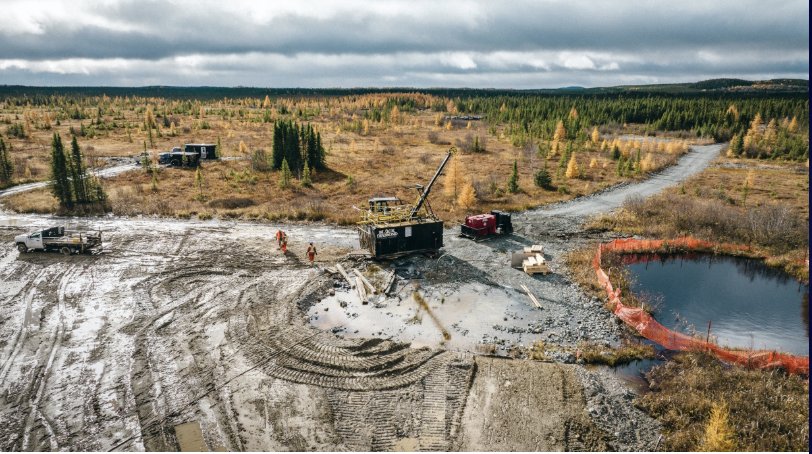
Australian miner Wyloo owns the Eagle’s Nest nickel-copper project and various chromite deposits in the Ring of Fire area in Ontario. Credit: Wyloo

A new era of expedited permitting

At the heart of the 2025 reforms is a shift toward a “one project, one process” permitting model designed to reduce the time it takes to bring a mine into production. The legislation amended the “Mining Act, R.S.O. 1990, c. M.14” to allow the Minister of Energy and Mines to establish a mine authorization and permitting delivery team for specific designated projects.

Once a project is designated, a team lead from the Ministry of Energy and Mines is appointed to coordinate with other ministries to expedite application reviews and decision-making. The stated objective is to reduce review timelines substantively. To enforce this, the reforms introduced service standards for government reviews; if these standards are not met, proponents may be entitled to a refund of their permit fees.

Strategic supply chain protections and national security

While the reforms prioritize speed, they also introduce discretionary powers for the province to intervene in mining tenures for security reasons. The Minister of Energy and Mines is now empowered to deny the issuance of leases, restrict access to the mining lands administration system, or even cancel unpatented mining claims and leases if such actions are deemed “desirable for the protection of the strategic national mineral supply chain.”

These decisions are guided by factors including risk assessments from the Ministry of the Solicitor General and the economic interests of Ontario. Crucially, the legislation contains provisions that extinguish causes of action against the Crown regarding these decisions, meaning proponents are generally barred from seeking compensation or damages if their tenure is revoked for supply chain security reasons. This shift reflects a growing concern regarding foreign influence.

The enactment of special economic zones

A pillar of the 2025 reforms is the “Special Economic Zones Act, 2025.” This legislation authorizes the Lieutenant Governor in Council to designate specific areas of the province as “special economic zones.” Within these zones, the government can designate “trusted proponents” and specific “designated projects” that are granted exemptions from various provincial acts, regulations, and even municipal by-laws.

The government expects these zones to facilitate projects of strategic importance, such as those in the Ring of Fire region. In December 2025, the province established the criteria for identifying these zones.

Overhauling environmental oversight

The 2025 reforms also fundamentally changed how mining projects interact with environmental protection. Bill 5 repealed the “Endangered Species Act, 2007,” replacing it with the “Species Conservation Act, 2025.” This new act introduced a “registration-first” approach, allowing most activities that were previously subject to lengthy permit processes to proceed via a new “Species Conservation Registry.”

Furthermore, the legal definition of “habitat” was narrowed. For animal species, it is now limited to physical dwellings, such as dens or nests, and the area immediately around them, essential for rearing or hibernating. This change is intended to provide greater certainty for developers by reducing the scope of areas protected under species-at-risk legislation. In another move to streamline northern development, the province revoked the Eagle’s Nest multi-metal mine agreement, terminating a previous environmental assessment framework to make way for the new coordinated processes.

Mineral recovery from mining waste

Ontario also implemented a new regulatory pathway for the recovery of minerals from tailings and mine waste, which took effect on July 1, 2025. This framework allows companies to reprocess waste rock and tailings to extract valuable minerals without the requirement to file a full mine production closure plan.

Under this system, applicants must submit a “Recovery and Remediation Plan,” demonstrating that the land will be restored to a condition “comparable to or better than” its state before the recovery activity. This initiative is designed to reduce legacy mining liabilities while providing a low-carbon source of minerals for green technologies.

Responses and Indigenous consultation

The 2025 reforms have met with significant opposition from Indigenous organizations. Several First Nations of Treaty 9, which covers the Ring of Fire, noted that Bill 5 may be used to accelerate development by reducing or bypassing environmental assessment requirements and limiting consultation with affected Indigenous communities.

In response to this opposition, the government amended Bill 5 to include provisions addressing the duty to consult. Indigenous organizations have nonetheless continued to call for the suspension of Bill 5, maintaining that the amendments do not adequately protect their rights or address the substance of their concerns.

Conclusion

The mining reforms of 2025 represent an aggressive effort by the Ontario government to position the province as a global leader in the critical minerals market. By integrating the northern mining economy with southern manufacturing through expedited permitting and special economic zones, the province aims to “unleash” its economic potential. However, the success of these reforms remains contingent on navigating geopolitical risks and addressing the concerns raised by Indigenous communities regarding land sovereignty and environmental stewardship.

Michael D. Schafler is a partner in Dentons’ Toronto office and is a member of the firm’s global arbitration steering group. He previously co-led both the global and national Litigation and Dispute Resolution groups. Ekin Cinar is an associate dual-qualified arbitration and litigation lawyer in the Litigation and Dispute Resolution group in Dentons’ Toronto office.


Related Posts

Northwestern Ontario seeks second highway that could unlock mining riches

March 19, 2026

Northwestern Ontario seeks second highway that could unlock mining riches

PDAC JV Video: GoldInxs readies Fishpot in BC for drilling, market debut

March 19, 2026

PDAC JV Video: GoldInxs readies Fishpot in BC for drilling, market debut

PDAC JV Video: Alkane plans merger cash flow for more M&A

March 19, 2026

PDAC JV Video: Alkane plans merger cash flow for more M&A

TNM Podcast: ‘The bottleneck is people’ — Franco-Nevada CEO Paul Brink on mining education

March 19, 2026

TNM Podcast: ‘The bottleneck is people’ — Franco-Nevada CEO Paul Brink on mining education

JV article: Amex advances Perron towards feasibility study 

March 19, 2026

JV article: Amex advances Perron towards feasibility study 

Comments

Cancel reply

Your email address will not be published. Required fields are marked *

Subscribe
Digital Edition

Editions

  • Subscribe
  • Digital Editions

About

  • Media Kit
  • Contact Us
  • Policies and Terms

The Northern Miner Group

  • TheNorthernMiner
  • Mining.com

Canadian Mining Journal provides information on new Canadian mining and exploration trends, technologies, mining operations, corporate developments and industry events.

Funded by the Government of Canada
© 2026 The Northern Miner Group, All Rights Reserved