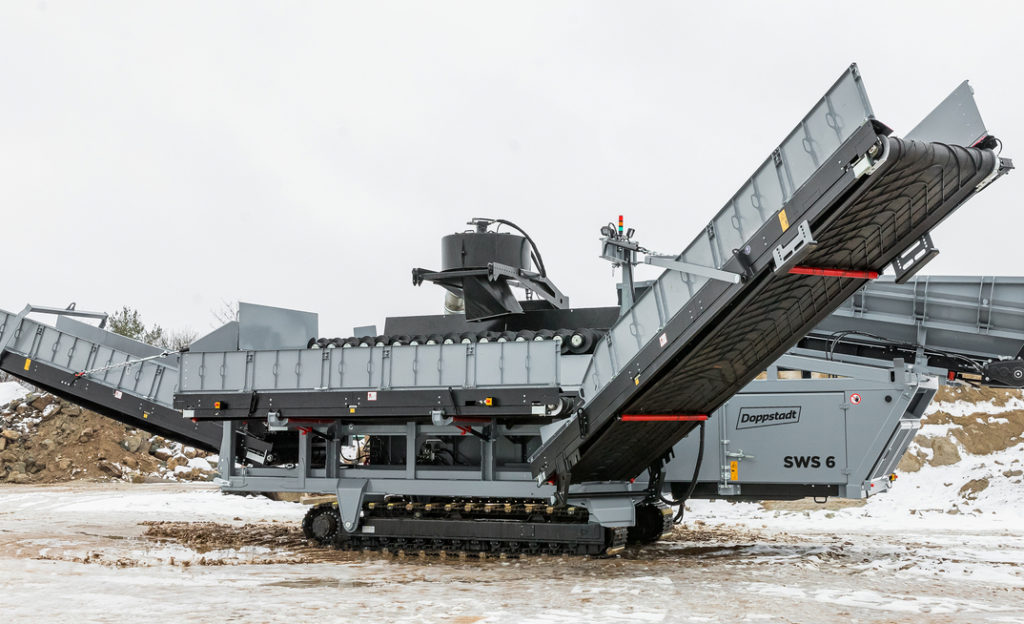
Doppstadt has selected Caterpillar's battery electric power unit (BEPU) to drive its SWS 6 spiral shaft separator, marking a significant step forward in sustainable recycling equipment. The companies will unveil this innovative collaboration for the first time at IFAT 2026 in Munich, Germany, which runs between May 4-7.
"Doppstadt have a long history of innovation and work to support their customers' sustainability goals. This is an exciting trial of an electrified variant of their SWS 6 Spiral Shaft Separator, which delivers zero-exhaust emissions and low noise when in operation," Andy Curtis, customer solutions director at Caterpillar industrial power systems division, explained.
"The Cat BEPU has enabled the rapid development of this option alongside their diesel variant, with minimal engineering effort. Its intermittent duty cycle, suitability for indoor use, and access to low-power grid energy make the BEPU an ideal fit, with an on-board battery buffering simplifying energy management for end users."
Caterpillar designed the Cat BEPU as a practical answer to electrification challenges, giving equipment manufacturers a straightforward way to offer electric alternatives without completely redesigning their machines from scratch.
Drop-in tech simplifies electric transition
The BEPU delivers a compact, plug-and-play approach that manufacturers can install in the same space where diesel engines traditionally sit. Engineers built all essential components—battery, motor, inverter, onboard charging, cooling systems, and controls—into one integrated unit. This design allows manufacturers to keep using their existing chassis platforms while transitioning from diesel to electric power.
The technology addresses several key manufacturing challenges. Manufacturers can maintain one core machine design instead of developing separate diesel and electric versions, which streamlines engineering, parts sourcing, and customer support. By packaging complex electrification technologies into one unit, the BEPU eliminates the need for manufacturers to invest heavily in specialized engineering projects, reducing development time and improving returns.
With fewer redesign requirements and engineering obstacles, manufacturers can bring electric options to market sooner, responding rapidly to changing customer demands and regulations. The streamlined approach helps manufacturers deliver the benefits customers want—zero emissions, reduced noise, new application possibilities, and potentially lower operating costs through eliminated fuel use and reduced maintenance needs.
Real-world partnership drives innovation
Caterpillar and its dealer partner Zeppelin Power Systems have spent the past year collaborating with Doppstadt, a recycling solutions leader, to accelerate the company's electrification efforts while maintaining the performance standards of diesel-powered equipment.
Doppstadt chose Caterpillar based on the proven reliability of Cat products and strong support from the global dealer network, particularly local dealer Zeppelin Power Systems. The partnership demonstrates how established relationships can drive innovation in emerging technology sectors.
Working together, teams from all three companies successfully integrated the BEPU into Doppstadt's SWS 6 Spiral Shaft Separator, creating a zero-emission solution specifically designed for indoor, urban, and heavily regulated operating environments.
Industry showcase and future testing
Visitors to IFAT Munich can see the prototype machine at Doppstadt's booth FM.709/1 in the outdoor area throughout the show. Caterpillar industrial power system division representatives will be stationed at the Doppstadt stand to discuss the BEPU technology, while Zeppelin Power Systems will host a detailed technical session on May 5.
After the exhibition, Doppstadt plans to begin comprehensive field trials using the BEPU-powered separator. These real-world tests will provide crucial performance data and help shape future development of the solution.
The collaboration represents a growing trend in industrial equipment electrification, where established partnerships between manufacturers, dealers, and customers are driving practical solutions that meet both environmental goals and operational requirements.
Learn more at www.Caterpillar.com

Comments