Quebec’s Bill 11: streamlining the Mining Act to accelerate project development
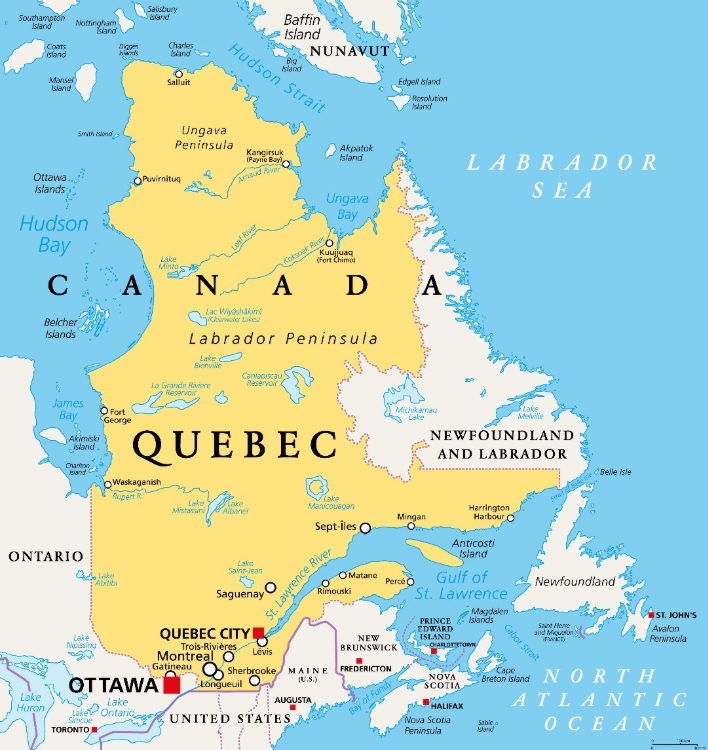
On June 11, 2026, Quebec’s National Assembly adopted Bill 11, An Act to amend various provisions mainly for the purpose of reducing the regulatory and administrative burden. This omnibus legislation encompasses 63 measures from 15 departments and agencies, spanning sectors as diverse as construction, transportation, municipal affairs and the environment. Of relevance to the mining industry, Bill 11 introduces several amendments to the Mining Act and its implementing regulation, building upon Bill 63 (adopted in Nov. 2024 and now in force), which replaced “claims” with “exclusive exploration rights” (EER) and tightened conditions for obtaining and renewing them. According to the government, the combined measures are expected to generate recurring annual savings of approximately $81.9 million for businesses across the province.
Yet, behind this promise of administrative efficiency lies a certain tension. Quebec seeks to accelerate mining development and reduce regulatory burden, but critics contend that doing so comes at the cost of transparency and environmental safeguards. This article examines the key mining provisions of Bill 11, their interaction with the recent Bill 63 amendments and the practical implications for exploration and exploitation companies operating in the province.
Key mining provisions of Bill 11
Prior to Bill 11, the Mining Act’s administrative framework imposed several procedural requirements on exploration and exploitation activities. Impact-work authorizations were subject to variable validity periods, requiring companies to track differing renewal timelines. Annual reporting obligations for exploration work added to the compliance burden, as operators were required to submit detailed expenditure and activity reports each year. Furthermore, the minister was required to provide written reasons when renewing mining leases, a transparency mechanism to ensure public accountability. While these requirements served regulatory oversight purposes, industry stakeholders increasingly characterized them as creating unnecessary delays in project development.
The mining component of Bill 11 amends and repeals several of these provisions. Among the most significant measures is the harmonization of the validity period for impact-work authorizations at a fixed three-year term, eliminating the previous variability that complicated planning and renewal cycles. This standardization enables exploration companies to align their work programs with predictable authorization timelines.
The bill also eliminates annual exploration-work reporting obligations, a measure that forms part of the government’s announced abolition of 55 government reports. This change removes the requirement for exploration permit holders to file yearly activity summaries, although periodic reporting tied to renewal applications remains in effect.
Furthermore, Bill 11 removes the minister’s duty to provide written reasons for mining lease renewals. The elimination of this obligation has drawn criticism for reducing public transparency and ministerial accountability, as renewal decisions may now proceed without documented justification.
The bill’s most contentious provision concerns the Horne Smelter in Rouyn-Noranda. Introduced by way of amendment during the parliamentary process, this provision extends the smelter’s ministerial authorization until Mar. 15, 2033, and postpones the deadline for meeting an annual ambient-air arsenic limit of 15 ng/m³ from 2027 to 2029. Following the bill’s adoption, the facility’s operator announced that it would resume approximately $300 million in atmospheric emission reduction projects. This provision proved divisive, attracting significant opposition from public health advocates.
Industry and civil-society reactions
Industry stakeholders generally welcomed the bill. Association minière du Québec (AMQ) emphasized that “regulatory and administrative relief is one of the main levers available to the government to support economic development in the sector.” Fédération des chambres de commerce du Québec (FCCQ) considered these measures welcome but “insufficient given the international context and the need to accelerate the development of critical and strategic minerals.” Canadian Federation of Independent Business (CFIB) called the bill “promising for SMEs.”
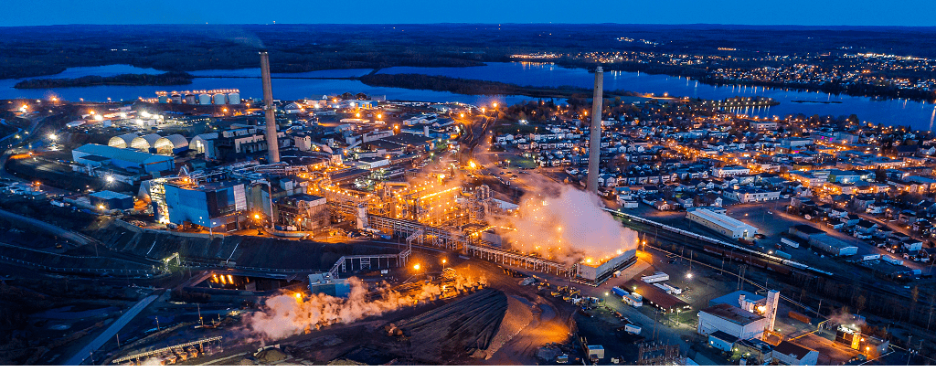
Civil-society organizations raised concerns that the bill favours industry interests over environmental protection. Regarding the provisions affecting the Horne Smelter, medical committee IMPACTE and advocacy group Mères au front criticized the additional time granted to the facility’s operator to meet the arsenic limit, citing public health concerns.
Practical implications for mining companies
For exploration-stage companies, Bill 11 translates into a concrete reduction in administrative burden: the fixed three-year impact-work authorization validity period reduces the frequency of renewal applications, and the abolition of annual exploration reports frees up resources. The CFIB estimates that “cutting red tape stimulates the economy” and fosters innovation and productivity.
However, the removal of the written-reasons requirement for mining lease renewals may introduce uncertainty for host communities: in the absence of public justification, the predictability of ministerial decisions diminishes, which could indirectly affect a project’s social licence. Companies planning EER transfers during the initial three-year term must also ensure compliance with Bill 63’s minimum work requirements. Specifically, completion of at least 90% of required expenditures before any renewal or transfer is permitted.
Conclusion: Looking ahead
Bill 11 is part of a broader regulatory acceleration movement in Quebec. It complements Bill 5, An Act to accelerate the granting of authorizations required to carry out priority national-scale projects, tabled in Dec. 2025, which centralizes the decision-making process for major projects. It also aligns with the Stratégie québécoise pour la valorisation des minéraux critiques et stratégiques 2025-2031, backed by an $88.1 million budget. The provincial election expected in the fall of 2026 may shape the future direction of Quebec mining policy, as parties assess the balance between regulatory efficiency and transparency mechanisms.
David Gravel is a partner in the Corporate group in Dentons Canada’s Montreal office.
Related Posts
Agnico Eagle grows in Quebec: Becomes world’s second largest gold miner

Trelleborg launches pressure-activated sealing solution
October 7, 2026
Trelleborg launches pressure-activated sealing solution

NMG, McGill University partner on low-emission battery coating process
Generation completes exploration program as Marathon construction commences

1911 Gold hits 5 metres of 7.55 g/t gold, stock lifts
October 6, 2026
Comments