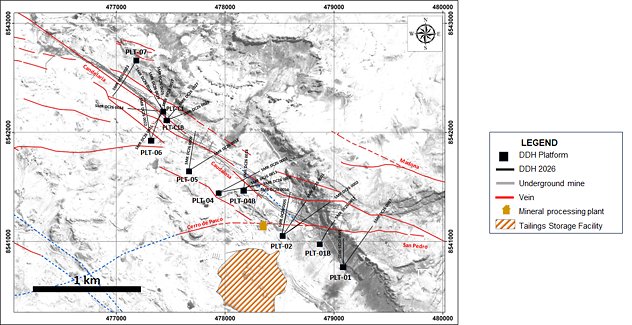
Silver Mountain resources (TSX: AGMR) says drill results from its Caudalosa underground silver-polymetallic mine in Peru indicate potential mineralization beyond the area covered by the historical mineral resource estimate. The company says it will evaluate the potential for an earlier mine restart.
The campaign targeted two veins, Paulinita, Caudalosa and Cerro de Pasco. Paulinta was led by hole SMR-DC26-0019, which returned 3.3 metres grading 569 grams of silver per tonne and 3.11% copper. At Caudalosa, hole SMR-DC26-0008 returned 3.3 metres at 172 grams of silver per tonne and 2.39% zinc. Lastly, SMR-DC26-0005 at Cerro de Pasco intersected 1.15 metres of 240 metres silver per tonne and 3.34% lead.
Alvaro Espinoza, Silver Mountain’s CEO said the results “exceeded” the company’s initial expectations, “with high grades and mineralized intervals intersected across multiple veins.” He added that Silver Mountain intends to test the mineralization through further drilling.
“The identification of high-grade mineralization at shallow depths is particularly encouraging because, with our processing plant already operating, we intend to evaluate whether Caudalosa could be advanced on an accelerated basis to provide an additional source of mill feed,” he added.
The company says further technical evaluation will be required to determine whether a restart of Caudalosa is feasible and on what timeline.
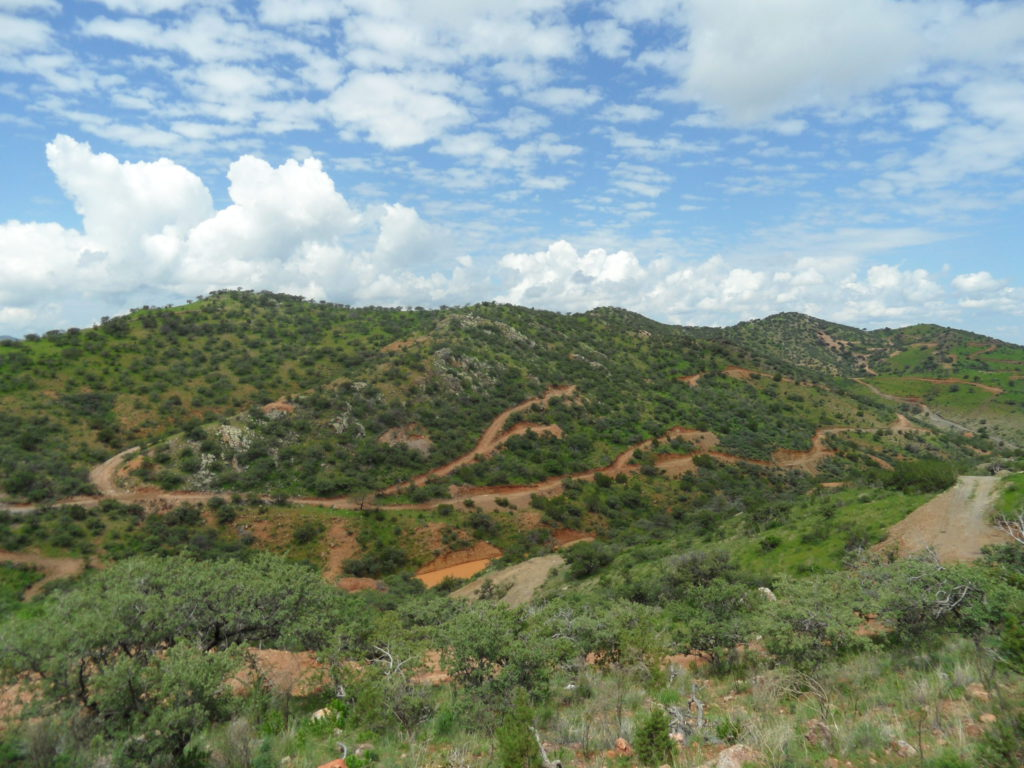
Located in central Peru, the Caudalosa mine is a past-producing silver-polymetallic mine. The site holds an inferred historical estimate of 1.55 million tonnes of ore.
Despite the strong results, Silver Mountain’s shares dropped 5.48% Thursday afternoon in Toronto. Although, this downturn is likely disconnected from the drilling data and instead linked to broader resource market fluctuations.

Comments