Mining history: A beginner’s guide
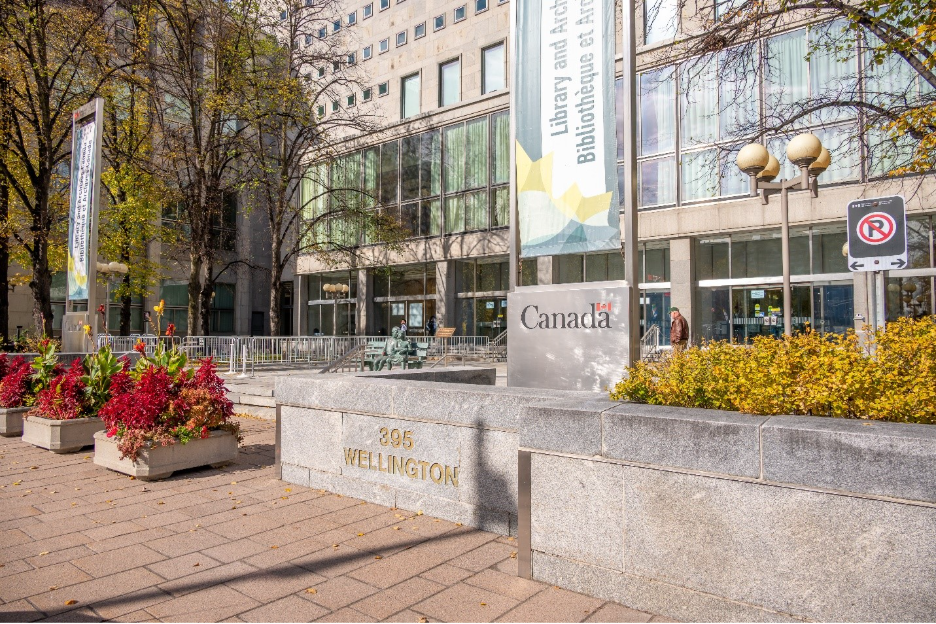
Much like exploration geologists, university-based historians do much of their field research in the summer months. Limited more by the demands of the teaching calendar than seasonal weather, historians have for decades converged on archives in Ottawa and other large cities in the summer months. Legend has it that earlier generations of professional historians would often meet on the transcontinental train as it wound its way from city to city toward Ottawa’s national archive.
Having recently returned myself from a fruitful research trip to the Library and Archives Canada (LAC), I thought it useful to provide the readers with a brief rundown of how historians do their work, hopefully inspiring at least some readers to take on their own mining history projects. While the prospect might seem intimidating, anyone can do mining history, a field that stands out for its reliance on contributions from non-professional historians (geologists, journalists, local history societies, museum curators and former miners or company officials have all made important contributions). Indeed, my research for the book entitled: Mining Country: A History of Canada’s Mines and Miners, relied very heavily on popular books and articles. While some academics might sneer about these being the works of amateurs, I was impressed by the high quality of the research and the obvious passion of the authors.
Where, then, does an aspiring mining historian begin? Historians often rely heavily on government documents because, unlike corporate records, the law demands that they are catalogued and available to the public (in some cases privacy restrictions will require researchers to navigate complicated and time-consuming access to information requests). Provincial, territorial and the LAC maintain records about individual mines, but also broader policy issues such as mine safety, occupational health, environmental issues or labour relations.
One challenge for researchers is that mining records can be spread across many different record groups. For example, at the Ontario Archives, file groups on mine safety can be found in parts of five distinct record groups. The archive also maintains substantial collections of documents from non-governmental organizations such as the Ontario Mining Association and the Mine Accident Prevention Association of Ontario. It is a lot to sort through, but most archives maintain detailed inventories known as finding aids, which provide enough information about individual files to allow the researcher to sift the valuable nuggets from the silt, so to speak.
An even greater challenge is that collections on individual mines may be spread over several archives, often thousands of kilometers apart. When I was researching the history of the Con, Giant and Pine Point Mines, I had to consult substantial record collections at LAC (because the federal government controlled resource development in the NWT until the early 1970s), but also vast collections at the NWT Archives in Yellowknife.
Researchers can also find mining records in smaller archives, museums and libraries. There is a large collection of Cominco records, for instance, at the Trail City Archives; the Cominco company magazine is housed at the University of British Columbia’s Okanagan campus library; and Cominco records related to Con Mine can also be found at the Yellowknife Historical Museum (in addition to a substantial collection of Giant Mine material). Because most archives do not have the capacity to process bulk copying orders, or they must charge very high page fees to provide such services, there really is no alternative to logging the miles if you want to access the relevant records.
It all sounds really daunting, but working with original historical documents often yields delightful and unexpected rewards. On my recent LAC trip, the long days spent with union records opened a large window on the lives of Canadian miners. The newspapers of various union locals were particularly rich, featuring not only the expected political advocacy of the local or national office, but also extensive reporting on the sports, cultural events, recreational camps, annual picnics and outdoor recreation (hunting, fishing, boating, etc.) that contributed to the social fabric of mining towns. The newspaper of one Sudbury local revealed changing gender roles in Canada, as the pin-up girl featured monthly in the 1960s gave way to advocacy for women to enter the workforce and pay equity in the 1970s. For years, the same newspaper ran a feature on the “mining family of the month,” providing a close look at the home lives of the men who work in the nickel mines.
The travel and time costs of archival research can be greatly reduced with some advance planning and simple equipment. It is always best to do your homework, using online search tools and finding aids to assemble file spreadsheets which can then be used to track progress in the archive. It is never a bad idea to consult with an archivist prior to arrival, if possible. They can often point you to hidden corners of the archive, or unique files (such as newspaper clipping files) that they have assembled.
When you do obtain records, the most efficient way to process them is to digitize on site. I use a camera to do this; my students more often use their cell phone, and some archives have scanners for physical documents and microfilm. I photograph all relevant documents in an individual file (shooting first, and asking questions later), download them to my computer, and then bulk convert them to single PDFs with file names that match the original. The result is a digital file structure the mirrors exactly that of the paper archive, making it easy to keep track of everything. With digitized material, you can also make notes directly in the documents when you read them more carefully back at home. While some researchers still savour the opportunity to read original documents at the archive, for most, digitization in the archives saves weeks, perhaps even months of travel costs.
If you cannot travel, there are still ample opportunities to conduct research close to home. Some archives have digitized portions of their collections and there are incredibly valuable online repositories such as www.canadiana.ca and heritage.canadiana.ca that host vast collections of digitized historical documents, including a wealth of mining-related material. When archives were shut down during Covid-19 pandemic, I discovered that the Ontario government has posted online detailed mine accident reports from 1891 to 1971, which can be accessed through a text search at https://www.geologyontario.mines.gov.on.ca/. Local libraries often have newspaper collections, government documents and manuscript collections that can be building blocks for historical work.
While some mining histories occur at the national or international scale (think about the large-scale gold rushes of the 19th century), local mining places and people will always be a key focus for historical researchers. The history of many, perhaps the majority, of Canadian mines remain undocumented, so many hands are needed — professionals and “amateurs” alike — if we want a reasonably complete history of such a significant industry
John Sandlos is a professor in the Department of History at Memorial University of Newfoundland. His latest book is The Price of Gold: Mining, Pollution and Resistance in Yellowknife — co-authored with Arn Keeling and published by McGill-Queen’s University Press.
Related Posts
Rock Tech kicks off exploration program at the Victory project
October 22, 2026
Rock Tech kicks off exploration program at the Victory project
Coal-fired power plant transition: why early planning changes every pathway

Cracking the mine closure cost recovery code
October 21, 2026
Cracking the mine closure cost recovery code
Magna targets late-2027 ore sales at Crean Hill
October 21, 2026
Magna targets late-2027 ore sales at Crean Hill

Weir names new president of minerals division
October 21, 2026
Comments