Preventing the transformation of groundwater into mine water
Underground water management may not sound difficult in concept: pump out the water, treat it at surface and hope the treatment plant is large enough for late mine life. But that is not really water management. It is a treatment strategy, and an expensive one if every litre entering the mine is allowed to become mine-affected water.
Groundwater acquires a geochemical signature from the rock through which it moves. In many Canadian settings, groundwater is relatively dilute. However, mineralized, saline or naturally acid water may be present. Where its quality is suitable, water intercepted before entering the workings may be discharged, reused or reinjected without conventional mine-water treatment. Once it enters an active mine, that opportunity can quickly disappear.
Mining changes both the pathway followed by water and the materials it encounters. Blasting creates fractured surfaces, broken muck and fines, increasing surface area and accelerating rates of sulfide oxidation. Blasting also adds explosive residue. Through material handling, reaction product residues are dispersed through the mine. This process creates new pathways for groundwater to transform to mine water.
Flow and transformation
Water finds a way, but it does not move randomly. The pathway matters because water does not travel directly from an inflow to a sump. It may pass through active and inactive workings, flow over fractured walls, infiltrate residual muck and fines and mix with water from other parts of the mine.
Along the way, relatively clean groundwater can acquire dissolved metals, acidity, alkalinity, sulfate, nitrogen compounds, suspended solids and petroleum-related constituents. Its final chemistry reflects the reactivity of the exposed materials, the respective loads and dilution and contact with explosive residues and equipment fluids. In reality, a mine is more than a collection of openings and pumps. It is a connected flow path in which groundwater progressively becomes mine water.
The impact of mineral dispersion
Blasting dislodges reactive minerals from working faces. Mucking does not remove all material. Residual material remains on working floors, and traffic can crush and disperse it through stopes, drifts and haulage corridors. The result is a distributed inventory of reactive material lying directly in potential drainage pathways.
Keeping this material dry limits the transport of acidity, salts and metals, but does not remove the source. Oxidation can continue where sulfide-bearing material is exposed to air and moisture, while later wetting may mobilize accumulated reaction products. As a result, reactive material present in the underground may contribute significant loading.
Rock near the orebody carries significant residual geochemical risk. Low-grade ore tends to be stockpiled, creating additional surface exposure pathways for reaction products. Waste rock tends to possess higher sulfide content and increased risk of acidification and metal leaching.
Rock left underground may offer different closure options. Flooding can restrict oxygen transport and suppress sulfide oxidation, although it does not eliminate stored reaction products. During operations, the objective remains straightforward: reduce unnecessary exposure and keep water away from reactive material wherever practicable.
Water and ANFO
Blasting introduces a distinctly non-geological source of contamination. Ammonium nitrate and fuel oil (ANFO) is commonly used in mining. The challenge arises in ANFO’s highly porous and hygroscopic nature. Water can dissolve the nitrate prills, separate the oxidizer from the fuel oil and reduce blasting efficiency. Spillage and incomplete detonation leave soluble nitrogen residues on exposed rock and in blasted muck.
In addition to spillage control and explosive management, groundwater control can effectively mitigate exposure. Advance drainage, groundwater interception and localized dewatering can help keep blast holes dry while reducing contact-water volumes. Where wet conditions persist, water-resistant explosives may outperform ANFO. These measures improve blasting efficiency while reducing uncontrolled nitrogen residues and loading that follows the rock out of the mine.
Biological treatment can remove nutrients such as nitrate and ammonia. However, preventing that load through practical explosive management and groundwater controls is often more economical than treating exposed water.
Organic chemical signatures
Underground equipment operates in confined, physically demanding conditions. Loaders, haul trucks, drills and support vehicles depend on diesel, lubricants, hydraulic oils, coolants and transmission fluids. Hose failures, damaged fittings and leaking equipment are foreseeable operational risks, but the fluids released do not remain neatly where the failure occurred. They can enter floor material, drainage channels and sumps, adding petroleum hydrocarbons, glycols and other organic constituents to mine water.
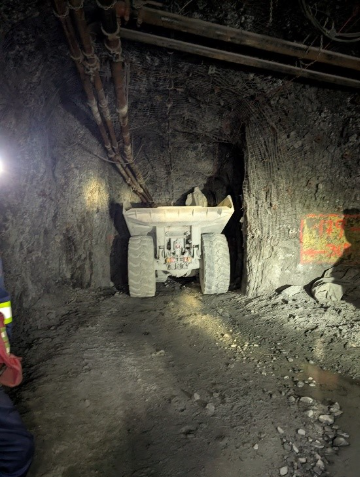
It is easy to treat each leak or spill as an isolated maintenance event. In a connected underground drainage system, however, repeated small releases can become a persistent water-quality load. Once mixed with groundwater and other mine water, these fluids may cause visible sheen, increase organic loading and introduce treatment requirements that would not otherwise exist. Excavating does not disconnect the mine from the surrounding natural system; it creates new pathways through which operational contaminants can move.
The controls also improve equipment performance: preventive maintenance, leak inspection, rapid spill response, good housekeeping and removal of contaminated floor material. Maintenance and refuelling areas should also be located away from active drainage wherever practicable. Equipment integrity is therefore more than a reliability or safety concern. It is another form of source control — and one more opportunity to prevent a treatment problem before it is created.
Not every change is deterioration
As a university student, I investigated arsenic source terms at a discharging mine adit. Near the upwelling, the water contained elevated dissolved iron and arsenic under low-oxygen conditions. Only a few metres downstream, dissolved oxygen had increased while iron and arsenic concentrations had fallen sharply. As iron oxidized and precipitated, the newly formed solids provided surfaces for arsenic adsorption. The flow path had significantly improved the dissolved water quality.
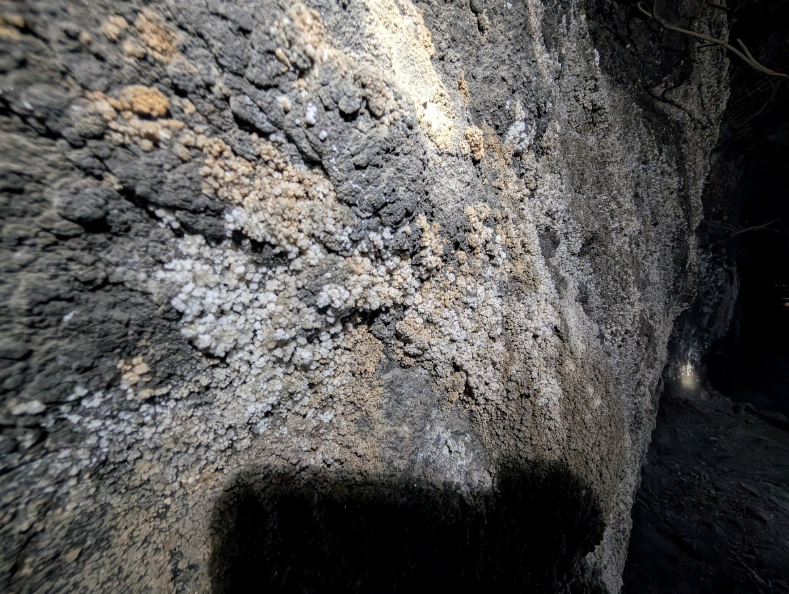
Secondary mineral accumulations provide visible evidence of ongoing reactions among rock, mine water and underground air. Where carbonate minerals are present, uptake of carbon dioxide can promote carbonate dissolution and add alkalinity to mine water. This buffers acidity and can limit the mobility of some metals through pH control, sorption and mineral precipitation. These effects help explain why underground mine water does not inevitably deteriorate as it moves through the workings. The mineralogy and geochemical conditions determine the outcome.
Beneficial reactions still have operational consequences. Attenuated metals do not disappear; they may accumulate in precipitates, scale or sump solids requiring monitoring and management in closure.
Keeping clean water clean
The highest-value mine-water control is not incremental improvement in treatment. It is preventing groundwater from becoming mine water in the first place. Advance dewatering and groundwater interception can reduce inflows to active workings, while localized drainage can improve conditions at the blasting face. Where intercepted water remains suitable, it may be discharged, reused or reinjected without conventional mine-water treatment.
I view this as a form of water accounting. Groundwater entering the workings becomes a potential liability: it must be pumped, stored and possibly treated. The same water intercepted before contact may instead become a manageable asset. It can reduce underground pumping requirements, lower the design capacity of surface infrastructure and avoid years of treatment and sludge-management costs.
Not every inflow can be eliminated, and interception must account for groundwater drawdown and receiving-environment effects. But the economic hierarchy remains clear: prevent contact first, reduce contaminant loading second and treat the residual water that remains.
Treatment is the last control
Underground mine-water management is complex, but its governing principle does not need to be. Intercept groundwater before it enters the workings. Reduce contact with reactive rock, explosive residues and equipment fluids. Keep different water-quality streams separate where practical. Then, treat the residual water that cannot be avoided.
These controls can improve blasting performance, reduce equipment downtime and limit the volume and complexity of water requiring treatment. They can also reduce both the capital cost of treatment infrastructure and the operating burden carried into closure.
Practical mine-water managers look upstream, understand why the treatment requirement exists and control the cause before designing around the consequence. Before designing a larger treatment plant, we must ask the essential question: how much water could be prevented from requiring treatment?
Roald Strand, P.Geo., R.P.Geo, is a geochemistry technical lead at NewFields Canada Inc.
Related Posts
New Aggreko generators target mining, data centre growth in Canada
November 5, 2026
New Aggreko generators target mining, data centre growth in Canada
Rio Tinto IOC’s first responder program wins railway safety award
November 4, 2026
Rio Tinto IOC’s first responder program wins railway safety award
Vizsla Copper completes 2026 field season in Alaska
November 4, 2026
Vizsla Copper completes 2026 field season in Alaska
Friedland’s Ivanhoe slashes copper outlook again
November 4, 2026
Friedland’s Ivanhoe slashes copper outlook again
Osisko selects new VP to oversee Cariboo construction
November 4, 2026
Comments