Beyond the deposit: Turning Quebec’s mineral wealth into lasting economic advantage
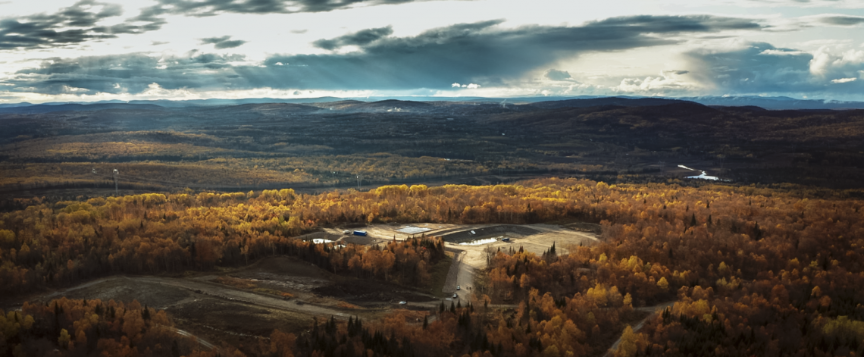
Quebec’s mining sector has long been defined by its geological wealth. Today, its influence extends further. As governments and industries seek reliable supplies of strategic minerals, the province sits at the intersection of the energy transition, industrial reshoring and supply chain security. With significant deposits of lithium, graphite, copper and nickel, Quebec can become an increasingly important partner in North America’s economic future.
Geological potential alone, however, will not secure investment or economic leadership. With capital increasingly selective, Quebec wields the strategic imperative to distinguish itself through efficient project development, enabling infrastructure and world-class operating performance.
From resource potential to strategic advantage
Critical and strategic minerals are now central to economic resilience and national competitiveness. Governments and manufacturers need stable, responsible sources of materials for electrification and advanced manufacturing, elevating Quebec’s role in continental supply chains.
La belle province combines significant mineral deposits with clean hydroelectricity, technical expertise and a mature mining ecosystem. Its predominantly renewable power can reduce the embedded emissions of energy-intensive mining and processing, strengthening the appeal of Quebec products to customers seeking resilient and responsible supply.
Importantly, the provincial government has also recognized the urgency of the moment with Quebec’s 2025-2031 Strategy for the Development of Critical and Strategic Minerals presenting its roadmap for accelerating projects and strengthening the full value chain through processing, recycling, innovation, circularity and partnerships.
Accelerating projects in a competitive world
Competition for mining investment is only intensifying further. Regulatory certainty, predictable timelines and a credible development path are essential to converting Quebec’s resource base into financeable projects.
Quebec mine development often extends well beyond a decade because of environmental assessments, permitting, infrastructure planning and stakeholder engagement. Recent efforts to streamline provincial and federal reviews are therefore welcome developments, provided they maintain rigorous environmental and consultation standards.
Infrastructure is equally important. Many deposits are in remote regions where transportation and energy connections determine project economics. Collaboration among governments, Indigenous communities and industry will be essential to develop infrastructure and advance projects responsibly.
The Matawinie graphite project of Nouveau Monde Graphite exemplifies this integrated approach by linking a planned mine and battery material plant with Quebec hydropower in a mine-to-battery-materials platform.
Operational excellence as a competitive advantage
Ultimately, long-term success will be measured by what happens after production begins. Operators face inflation, supply disruptions, in addition to rising expectations from investors, regulators and communities. Competitive advantage therefore depends not only on resource quality, but also on operating safely, efficiently and sustainably throughout the mine lifecycle.
Indeed, EY’s latest mining risk research identifies operational complexity as the sector’s leading challenge in 2026. For Quebec, this creates an opportunity to improve predictability and productivity through automation, advanced analytics and artificial intelligence.
But technology is not a silver bullet. Benefits depend on strong governance, workforce development and continuous improvement. Quebec’s leadership in resource development must therefore be matched by excellence in how those resources are produced.
Capturing value beyond the mine gate
The greatest economic opportunity lies not only in extraction, but also in converting minerals into specialized products for advanced industries. Processing, refining, material production, component manufacturing and recycling support higher-value activity, deepen expertise and create durable customer relationships. Quebec should retain commercially viable stages of the value chain while remaining connected to continental and global markets.
Recycling and circularity can supplement primary supply, reduce waste and strengthen feedstock resilience. Public support should remain disciplined, prioritizing projects with credible technology, secure inputs, qualified customers and a clear path to commercial scale.
Delivering on the critical minerals promise
Quebec has the essential ingredients to lead: significant resources, clean power, technical expertise and a growing downstream ecosystem. Realizing that potential will require coordinated action to get projects off the ground. The decisive issue is now execution — creating more predictable development, enabling investment in infrastructure, establishing strong, sustainable partnerships with Indigenous communities and maintaining high standards of operational performance. If stakeholders can come together to achieve these common goals, then the province can turn its bountiful mineral endowment into enduring competitive value.
But the window of opportunity will not remain open indefinitely. Jurisdictions around the world are competing for the same capital, talent and customers. Quebec must act with urgency and discipline to move projects into production, build commercially viable capabilities beyond the mine gate and earn a lasting place in strategic supply chains. If it does, the province will not simply export minerals: it will convert what lies beneath the ground into greater resilience, prosperity and opportunity for generations of Quebecers.
Patrick Bertrand-Daoust is the Mining and Metals East leader with EY Canada. A Certified Public Accountant (CPA) and CPA Auditor with more than 30 years of professional experience, he provides accounting, audit and consulting services for a wide range of clients in the mining industry across Canada.

Related Posts
The great Canadian white gold rush
October 9, 2026
The great Canadian white gold rush
Canadian mines need an AI decision log before automation scales
October 9, 2026
Canadian mines need an AI decision log before automation scales

Rock Tech closes $6M private placement
October 9, 2026
Rock Tech closes $6M private placement
New Schneider Electric series tackles AI, energy demand and sustainability
Comments