Lockheed Martin, Teck Resources and 5N Plus join forces on germanium
Canada plans to nearly double its recovery of germanium — a critical strategic mineral used in advanced electronics, semiconductors, fibre optics and defence applications — to secure the critical strategic minerals that Canada and the world need for economic sovereignty, the energy transition and national security.
Historically, China has controlled between 60% and 80% of global germanium production. However, the country recently tightened controls of its own domestic critical strategic mineral supply chains. This has left customers of global germanium supplies, like Lockheed Martin, looking for new contracts to procure new germanium supplies.
For over a year now, Lockheed Martin, a U.S.-headquartered global defence technology company, has been in negotiations with Teck Resources, a leading Canadian resource company, and 5N Plus, a Montreal, Quebec-headquartered leading global producer of specialty semiconductors, which would see Teck Resources and 5N Plus supply germanium to the leading aerospace and defence company. If a deal can be reached, it would help the U.S. strengthen its defence supply chains and eliminate its reliance on China for its germanium supply.
The specifics of this trilateral deal would see Lockheed Martin buying supplies of two critical strategic minerals — scandium from NioCorp’s Elk Creek critical minerals project in Nebraska and a zinc-germanium concentrate from Teck Resources’ Red Dog mine in Alaska, with the germanium concentrate then being smelted in B.C. This deal also includes Lockheed Martin receiving germanium supply from 5N Plus which would process the metal from recycled feedstock in Utah.
Lockheed Martin
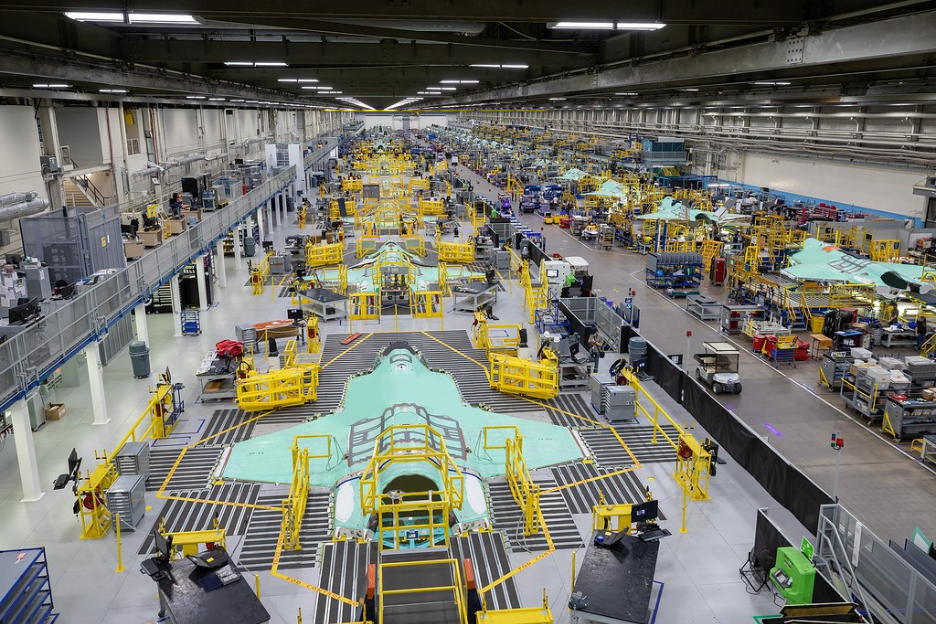
Founded in 1995 and headquartered in Bethesda, Maryland, Lockheed Martin specializes in defence technology, specifically, aeronautics; missiles and fire control; rotary and mission systems; and space. Most of the company’s business is with the U.S. Department of War and U.S. federal government agencies. Additionally, Sikorsky, a Lockheed Martin company, provides military and rotary-wing aircraft to five branches of the U.S. armed forces. Most notably, Lockheed Martin makes the F-35 Lightning II fighter jet, Patriot interceptor missiles and other weaponry. Germanium is used in infrared optics and solar cells across the aerospace and defence industry.
A Lockheed Martin spokesperson said of the trilateral deal, “We continuously assess the global critical minerals supply chain to ensure access to materials that support our customers’ missions.”
Teck Resources
Teck Resources is one of the world’s largest germanium producers and a major supplier of germanium to the U.S. Germanium is produced at Teck Resources’ Trail Operations in southern B.C., where it is recovered as a byproduct of processing zinc concentrates, including concentrate from Teck Resources’ Red Dog mine in Alaska.
Teck Resources’ Red Dog mine is one of the world’s largest zinc mines, located about 169 km north of the Arctic Circle in northwest Alaska, near Kotzebue. The Red Dog mine operates under an agreement between Teck Resources and the landowner NANA, a regional Alaska Native corporation owned by the Iñupiat of northwest Alaska.
The mine and concentrator properties are leased from, and were developed under, the agreement with NANA. Concentrates produced at the Red Dog mine are shipped to Teck Resources’ metallurgical facilities in Trail, B.C., and to customers in Asia and Europe. The current mine life, based on existing developed deposits, is expected to extend through 2031.
In 2026, Teck Resources, Canada Growth Fund (CGF) and Natural Resources Canada’s Canada Critical Minerals Accelerator (CMMA) signed a strategic investment agreement to support Teck Resources’ proposed Strategic Metals Initiative at its Trail Operations.
The agreement establishes a framework for an equity-like investment by CGF of up to $400 million, as part of up to $850 million in potential total investment by Teck Resources to sustain and enhance critical minerals processing capacity at its Trail Operations. The proposed initiative has the potential to double the Trail Operations’ existing production capacity for germanium and antimony and add gallium production capacity for the first time.
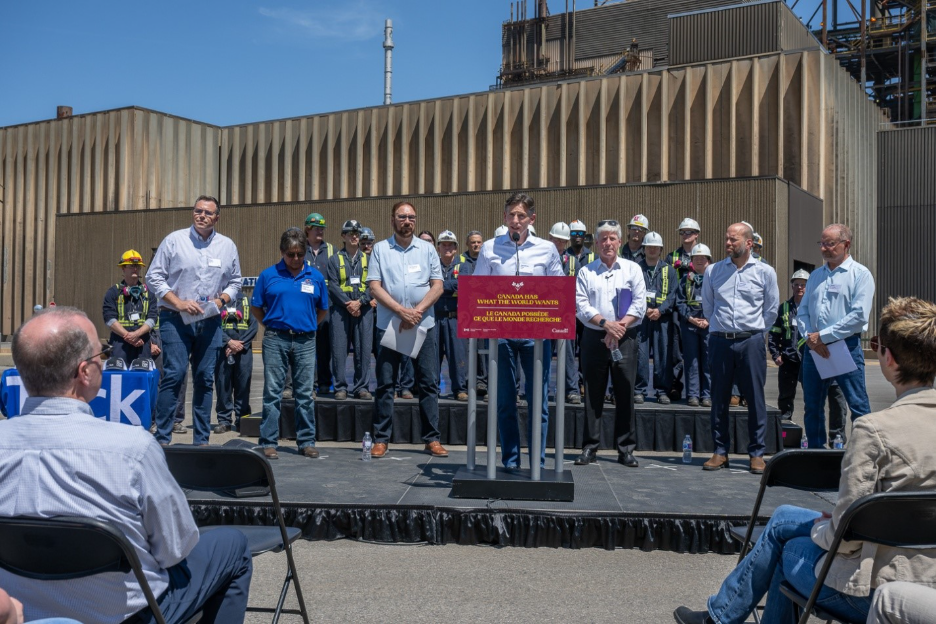
Dale Steeves, director of external communications and stakeholder relations, says, “Teck is a major global supplier of germanium, including to the U.S. We are examining options to significantly scale up production capacity for germanium, antimony and to add gallium production at our Trail Operations.”
5N Plus
5N Plus Inc., a leading global producer of specialty semiconductors and performance materials, deploys proprietary and proven technologies to develop and manufacture advanced materials that are often core components of its customers’ products, with Lockheed Martin being one of those customers.
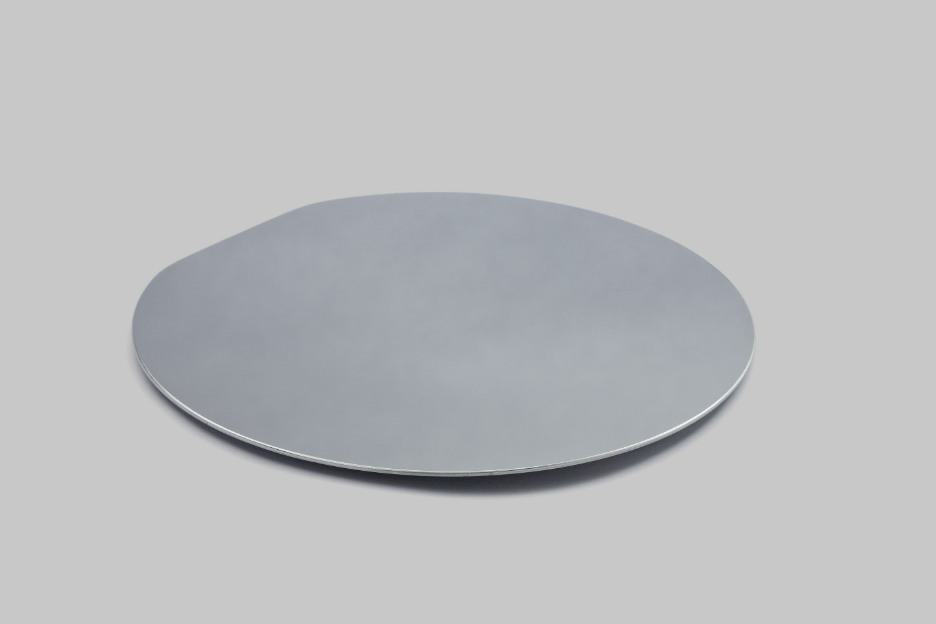
5N Plus’ products are used in key industries, including renewable energy, security, space, pharmaceuticals, medical imaging and manufacturing. The company manufactures and customizes high-purity, dislocation-free, electrically uniform germanium wafers in 100 mm and 150 mm sizes for space and land-based solar applications.
As part of the impending trilateral deal, 5N Plus has already received funding from the Pentagon to process germanium from its production facility in St. George, Utah.
In addition, 5N Plus was recently selected by the U.S. Department of War to receive a US$7.3 million award to establish domestic production of gallium arsenide components for defence applications.
With funding from 5N Plus’ existing capital expenditure plans and its recent awards from the U.S. federal government, the company plans to expand its Utah production facility by 50% which will allow the company to grow its advanced materials capabilities. Construction is expected to begin in the third quarter of 2026 and is expected to be completed by the second half of 2027.
Richard Perron, president and chief executive officer of 5N Plus Inc., says, “Expanding our existing St. George facility will create a capital efficient and scalable platform to increase our capacity in step with customer demand.”
According to a news release by Reuters dated Aug. 4, 2026, a deal has yet to be reached owing to negotiations among the three companies having faced delays spanning over a year because of persistent disagreements over contract lengths and higher western production costs compared to cheaper Chinese alternatives.
And although the specifics of this trilateral agreement — how many tonnes of germanium will be purchased per year, the price per tonne and the length of the contract — have yet to be determined, if a deal can be reached between these three companies, it will mean that the amount of germanium produced in Canada will almost certainly double, greatly increasing the total amount of critical strategic minerals that are mined and produced in Canada, which will build on Canada’s position as a reliable global supplier of critical strategic minerals.
Diane L.M. Cook is a freelance mining writer.
Related Posts

International investment law and dispute resolution in the mining sector
PDAC unveils 2027 award recipients
November 3, 2026
PDAC unveils 2027 award recipients
Cypher Environmental, Weyerhaeuser partner with First Nations on northwestern Ontario road upgrade

Federal government invests in mining careers program in Northern Manitoba

Comments