Super Saskatchewan: The need for critical minerals spurs uranium, lithium development
The environmental, economic and political realities of our times make the need for domestic sources of critical minerals more important than ever. The move away from fossil-based fuels has brought two of them — uranium and lithium — to the forefront in Saskatchewan.
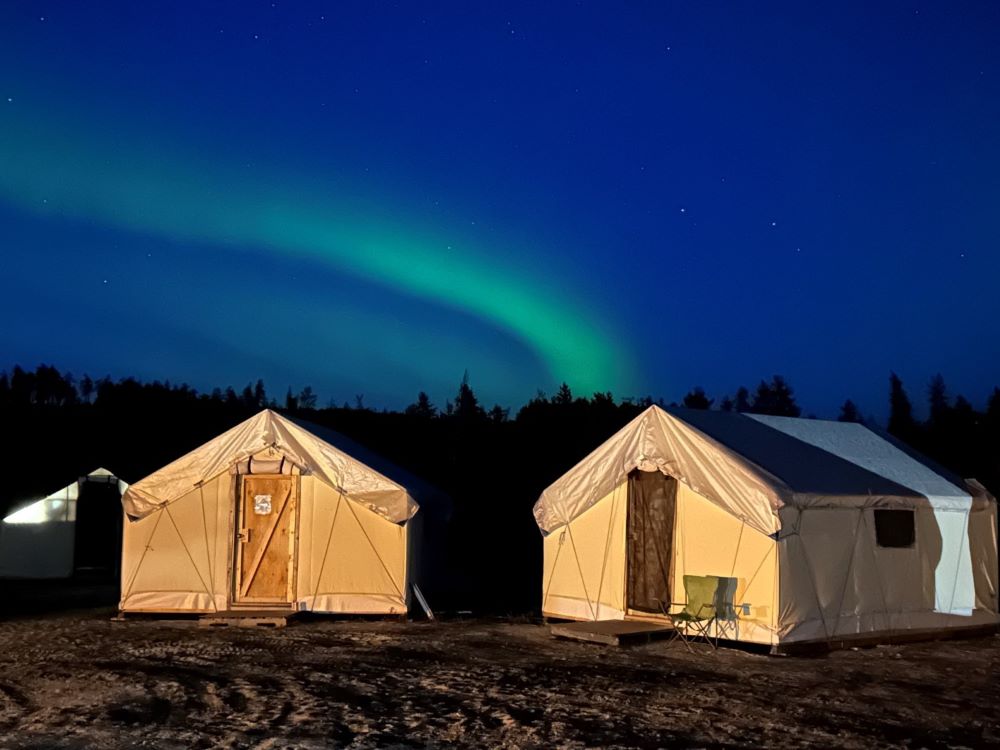
Long known for its success in the uranium sector, Denison Mines is currently working on the Wheeler River project near the southeast border of the Athabasca Basin. This flagship undertaking has two viable deposits — Phoenix and Gryphon. Together they are said to have the largest and highest-grade resources in northern Saskatchewan. They contain over 70 million lb U3O8, at estimated grade of 19.14% U3O8.
Denison made a final investment decision for in situ recovery (ISR) at Phoenix in March 2026 with a two-year construction period. Commercial production is expected in mid-2028. This is a $700 million investment (on a 100% basis) that includes $100 million for proof-of-concept work that began almost a decade ago. The preproduction capital expenditures (CapEx) is pegged at $420 million.
Phoenix is the first new uranium mine in Canada to win federal approval for construction in over 20 years and the first to adopt ISR in the Athabasca Basin. After taxes, and on a 100% basis, the base case NVP8% is $1.57 billion, and the IRR is 73%. A uranium price of between US$68.90 and US$78.36 per pound was used, at which point the project should pay for itself in about 12 months.
The Wheeler River mine life will be about 10 years, built on proven and probable reserves of 219,000 tonnes averaging 11.7% U3O8 and containing 56.7 million lb. In the first five years, 41.9 million lb. of U3O8 will be recovered, and during the last five years, 14.8 million lb. will be mined. The ASIC will be $244.92 per lb. or US$18.41.
The ISR plan is predicated on only proven and potential reserves. The Phoenix deposit has measured and indicated resources of 216 million tonnes averaging 8.3% U3O8 containing 70.5 million lb., plus an inferred resource of 5,600 tonnes grading 2.6% U3O8 containing 300,000 pounds.
The uranium-bearing solution will be processed at a new plant to be built at the Wheeler River site. The plant is designed to treat solution containing 22.6 g/L and is expected to reach a 96.5% recovery rate. Production is expected to begin in mid-2028.
Denison’s basement-hosted Gryphon deposit will be mined underground. This project has an estimated mine life of six years, during which time it will produce an average of 7.6 million lb. U3O8 annually (on a 100% basis). The probable reserve is 1.3 million tonnes grading 1.7% U3O8. Denison plans to set aside $737.4 million for the initial CapEx and create a mine with an AISC of $34.50 per lb. (US$25.47 per lb.) Yellowcake will be recovered at the nearby 22.5%-owned McClean Lake mill.
Rook 1: NexGen Energy (100%)
NexGen Energy is the latest company to receive federal approval for a uranium mine, and the company is in financing talks so that construction can begin as early as this summer on its Arrow deposit. The deposit is part of the Rook I project located on the southwest rim of the Athabasca Basin, not far from Patterson Lake.
The 2021 feasibility study outlined an underground mine for the Arrow vein type deposit, which is suitable for two shafts and longhole stoping. Nexen also plans to build a new processing system that includes ore sorting, grinding, leaching, liquid-solid separation, and yellowcake drying, calcining and packaging. A paste fill plant is also planned so that all tailings can be stored underground. Mine life will be 11 years.
The deposit contains 3.8 million tonnes of ore grading 3.10% U3O8 containing 256.7 million lb. in the measured and indicated categories. Proven and probable reserves were estimated at 4.6 million tonnes at 2.37% U3O8 containing 239.6 million pounds. The inferred resource is 4.4 million tonnes at 0.83% U3O8 containing 809.7 million lb. of metal.
NexGen has been hit with nearly 70% higher costs since the completion of the feasibility study, according to The Northern Miner. By August 2024, the capital cost had risen to $2.2 billion using a long-term uranium price of US$95 per pound. The after-tax NPV8% fell to US$6.3 billion and the IRR retreated to 45%.
To offset rising costs at Arrow, the company maintains a rigorous and successful exploration program at the nearby Patterson Corridor East (PCE) discovery, which is 3.5 km from the Arrow deposit. The company reported high grades in May, including 13.0 metres at 5.2% U3O8, 10 metres at 3.95% U3O8, and 6.0 metres at 2.4% U3O8, which confirm a high-grade subdomain.
A new high-grade subdomain 850 metres below surface was also confirmed. Drilling returned 4.5 metres at 4.8% U3O8, including 0.5 metre at 33.3% U3O8.
“The opening up of a new high-grade subdomain emphasizes significant growth potential remains at PCE. With the structural supply deficit in the market widening, and the impacts of the industry-wide underinvestment in the uranium supply chain for a generation, the urgency of finding and bringing online new, reliable uranium supply has never been greater,” NexGen founder and CEO Leigh Curyer said at the time the results were announced.
Patterson Lake South: Paladin Energy (100%)
Arguably, the brightest prospect in the Athabasca Basin is the Patterson Lake South (PLS) project on the southwest rim of the basin. The discovery was made in 2012 by Fission Uranium.
Exploration outlined the shallow, high-grade Triple R deposit. With investments by Canadian and foreign firms, Fission brought the project to the feasibility stage and targeted production for 2029.
Then in 2024, Australian-based Paladin Energy floated a $1.1-billion, all-share takeover offer for Fission Uranium and its PLS project. The deal was approved by the end of the year.
PLS is a shallow, high-grade deposit with significant potential for expansion. The company is in the permitting stage, the front-end engineering and design are being completed, and engagement with Indigenous partners is ongoing. Paladin may make a construction decision as early as 2027 with first uranium production in 2031.
A 1,000-t/d underground mine is planned, using 30-tonne trucks and load-haul-dumpers. The deposit sits in the basement rock, so ground freezing is planned. A matching processing plant and ancillary infrastructure will also be built at the site. The plant will accept a feed grade of 1.41% U3O8 and operate at a recovery grade of 97.0%.
The initial capital cost of the PLS mine and mill is estimated to be US$1.16 billion, plus an additional sustaining capital cost of US$325 million.
The 2023 feasibility study gave the Triple R deposit an NPV8% of US$1.2 billion and the IRR at 27.2% after taxes using a uranium price of US$90 per pound. Payback will occur after 2.4 years. The AISC is US$15.2 per pound.
The Triple R deposit has a probable reserve of 3.0 million tonnes, grading 1.41% U3O8 and containing 93.7 million lb. of metal. There is an indicated portion of 2.7 million tonnes grading 1.94% U3O8 containing 114.9 million lb., and an inferred portion of 635 million tonnes at 1.10% U3O8 containing 15.4 million pounds. The ore also contains a small amount of recoverable gold.
The total life of the mine will be 10 years. Production will be 90.9 million lb. U3O8 or 9.1 million lb. annually.
Dorado: Purepoint Uranium (50%)
Purepoint Uranium is one of the most active juniors in the Athabasca Basin with six wholly owned projects and six joint ventures with Cameco, Orano and IsoEnergy.
Purepoint and IsoEnergy have created a flagship, 50:50 joint venture at the Dorado project, located near IsoEnergy’s Hurricane deposit.
The Dorado project includes the former Turnor Lake, Geiger, Edge, and Full Moon properties, a land position covering more than 980 Km². The first major success was the discovery of the Nova uranium discovery. Hole PG25 07A returned grades of 8.3% U3O8 over 0.4 metre within a 2.1-metre length averaging 1.6% U3O8.
Purepoint began its 2026 drill program in January to follow up on the Nova discovery. The 10-hole, 4,300 winter program has returned a peak of 73,100 counts per second (cps) average over 1.8 metres. More importantly, it traced the strike length for at least a kilometre, and the structure is open in all directions.
Drilling will continue in July and August at Dorado to test priority targets with seven holes totaling about 3,150 metres. The unconformity depths are typically between 30 and 300 metres.
A MobileMT program of advanced 3D modelling has been completed by Expert Geophysics across three other Purepoint properties — Celeste East, Russell South and Tabbernor. The use of this technology will allow the planning of the upcoming drill programs with more confidence in the basement electromagnetic features.
Larocque East: IsoEnergy (100%)
IsoEnergy has a portfolio of highly prospective exploration projects in the eastern Athabasca Basin. The company is advancing its Larocque East property, which is home to the Hurricane deposit.
Hurricane hosts 63.8 million indicated tonnes grading 34.5% U3O8. That is believed to be the highest published grade for indicated resources anywhere in the world. The indicated portion contains 48.6 million lb. of U3O8. There is also a lower grade inferred resource of 54.3 million tonnes at 2.2% U3O8 containing 2.7 million pounds.
Strong radioactivity intersected along the Hurricane South trend confirms the continuity and expansion potential for Hurricane.
The deposit, only 325 metres below surface, is located 35 km northwest of Orano’s McClean Lake mine and mill, where ore could potentially be processed.
LITHIUM
Lithium production, too, may soon join the ranks of uranium and potash that have given Saskatchewan mines global prominence.
Prairie: Prairie Lithium (100%)
With all necessary permits in hand, the first lithium producer in Saskatchewan is likely to be Prairie Lithium. In Canada, the company is focused on the southeast corner of the province west of Estevan, where there is accessible infrastructure thanks to years of oil production.
So far, Prairie Lithium has chosen three pad locations, the first of which is permitted. The first phase will go into production using a commercial-scale direct lithium extraction (DLE) unit producing 150 t/y lithium carbide equivalent (LCE).
The technology involves drilling production wells into the Duperow Formation. A processing plant on the surface will pre-treat lithium-enriched brine to raise the lithium content. Disposal wells will inject the lithium-depleted brine into a separate underground formation.
Prairie Lithium wants to start production quickly, and by producing an intermediate product, the company reduces both costs and operational complexity. DLE is also more efficient, sustainable and environmentally responsible than traditional evaporation ponds, says the company.
Indicated resources of 4.6 million tonnes LCE grading 98 mg/L have been established to underpin the start of production.
The concentrated brine will be upgraded to battery grade lithium carbonate at a South Korean refinery with which Prairie Lithium has a 10-year offtake agreement in place for 150 t/y LCE.
A non-binding offtake agreement has also been signed for a North American refinery with a capacity of 6,000 t/y LCE.
Three wells have been drilled to service pad #1, two have been drilled at pad #2, and one at pad #3. The goal is to build the project on a pad-by-pad basis, eventually numbering as many as 10 pads. The first production from pad #1 is expected by the end of this year.
Prairie Lithium is headquartered in West Perth, Western Australia. It is also working on an early stage, similar project in New Mexico.
Aurora: EMP Metals (100%)
EMP Metals is also focused on southeastern Saskatchewan near Viewfield, notably the Aurora project in the Duperow Formation. Test wells drilled at the Viewfield project outlined an estimated indicated resource of 931,038 tonnes LCE with an average concentration of 141 mg/L, and an inferred resource of 488,493 tonnes LCE averaging 107 mg/L. A test hole at Mansur has an inferred resource of 628,786 tonnes at 116 mg/L.
Aurora will roll out in three phases. Phase 1, the demonstration plant, will operate this year and next at a continuous flow rate of 10 m3/day. The objectives are to validate the engineering, optimize process flows, and produce high-purity lithium chemicals.
In May, EMP received the first seven truckloads of equipment for the demonstration plant from Saltworks Technologies.
The second phase will boost production to commercial levels by enlarging on the techniques of the demo plant. After financing is secured, construction could begin next year and take 24 months.
From 2029 onward, EMP anticipates a full basin rollout planned in multiples of 1,500 t/y spokes feeding into 6,000 t/y hubs. The company plans to use a scalable, repeatable leveraging modular skid technology.
The lithium brine here requires drilling to only about 1,800 metres and has higher grades, 125 mg/L to 259 mg/L, than Leduc, EMP noted. Plus, it is remarkably clean — no hydrogen sulfide or residual oil and low contaminants.
The way forward
Saskatchewan is going to be one of the world’s premier uranium producers well into the future, as new projects are developed. But it will also be a significant domestic source of lithium, which is increasingly necessary as electric vehicles and for the storage of renewable energy.
Marilyn Scales is a freelance mining writer.
Related Posts
Power Metallic builds a polymetallic district at Nisk
October 8, 2026
Power Metallic builds a polymetallic district at Nisk
From pit to platform: Why mining’s value still lags tech and how Canadian law can help close the gap
Critical One plans ‘Critical Two’ spin-out for Kenora and Namibia

TCG, Indigenous Nations partner on Ontario mining initiative
October 8, 2026
TCG, Indigenous Nations partner on Ontario mining initiative
Dynasty concludes Thundercloud drill campaign
October 8, 2026
Comments