Why Canada’s critical minerals strategy must start with enabling infrastructure
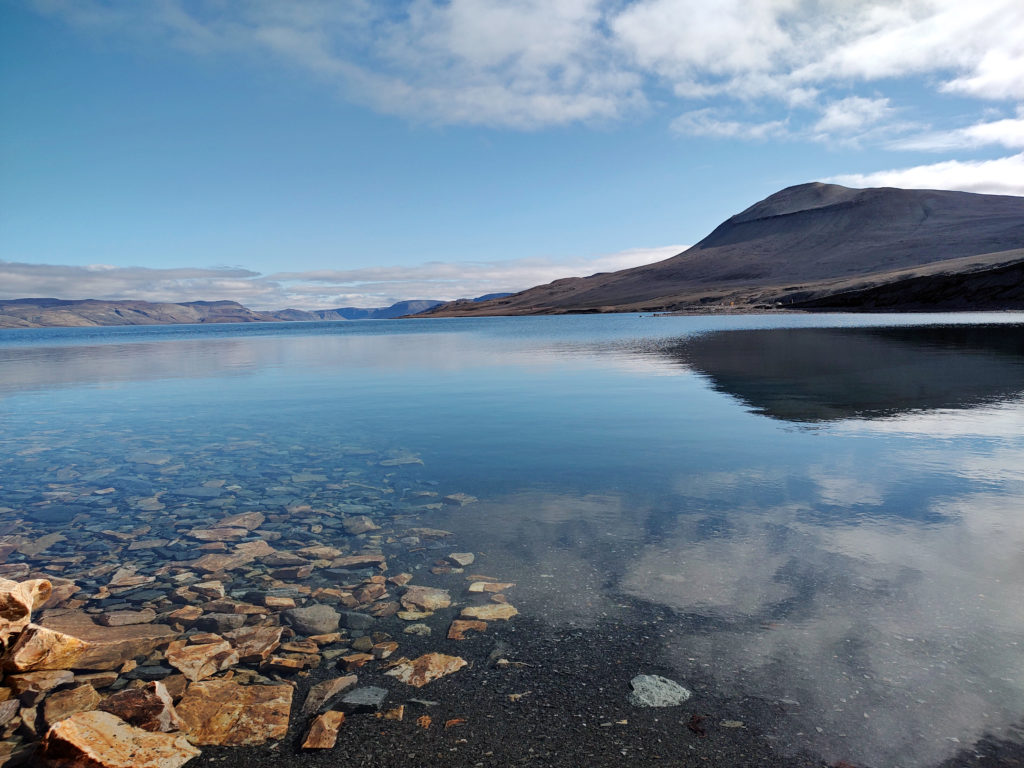
Canada’s mineral wealth has always been a strategic asset. With global demand rising for materials like copper, nickel, lithium, graphite, and rare earth elements (REEs), Canada is well-positioned to play a central role in the mining industry and the reshaping of global supply chains. But as the conversation around critical minerals evolves, it is becoming increasingly clear that the real differentiator will not be only what is on the ground, but it will also be how we build the systems that support sustainable, reliable production.
Recent years have brought a surge of interest in critical minerals, driven by the global push toward electrification, sustainability goals, and national security. Yet despite this momentum, the investment climate has become more complicated. Prices for some battery metals have faltered because of shifting policy and free market manipulation. Exploration activity has been slow to rebound from decades-long lows. And many projects have struggled to move forward into construction. The reasons are varied and complex. But one factor stands out: the lack of foundational and trade-enabling infrastructure that attracts investment and allows projects to scale with confidence.
Looking to the North
In many parts of Canada, particularly North of 60, the infrastructure needed to support mining development remains limited or non-existent. Lack of all-season roads, long distances to grid connections, and permitting uncertainty all contribute to higher costs and longer timelines to construct and operate mines. While many projects have recently been referred to the Major Projects Office (MPO), such as the Iqaluit Nukkiksautiit Hydro Project and Arctic Economic and Security Corridor, barriers remain. These barriers do not just affect individual projects — they shape the entire investment landscape.
Recognizing this, the federal government has started taking meaningful steps. The Critical Minerals Infrastructure Fund (CMIF) is already supporting dozens of energy and transportation projects across the country. More recently, the First and Last Mile Fund were introduced to address the specific infrastructure gaps that often determine whether a project can move from concept to construction. These programs are designed to reduce risk, improve predictability, and enable Canada’s mineral potential to be translated into real-world outcomes.
Nowhere is this more important than in the Canadian Arctic. The region is home to a diverse wealth of the country’s grassroots, advanced exploration, and shovel-ready projects. But it also faces some of its most significant infrastructure challenges. In March 2026, the federal government announced a $35-billion commitment to Arctic defence and northern development. This investment includes support for key projects like the Mackenzie Valley Highway, the Taltson Hydro Expansion, and the Grays Bay Road and Port — a timely economic bonus for the region as the Northwest Territories braces for diamond mine closures.
While these initiatives will strengthen Canadian sovereignty, they are also about creating the conditions for long-term economic development in regions that have historically been underserved.
What is emerging is a more integrated approach to infrastructure planning — one that sees roads, ports, and power infrastructure as ”connective tissue” that can serve multiple purposes. When designed with intention, these systems can support both national defence and resource development, while also delivering lasting benefits to local communities.
Forming strong partnerships with Indigenous communities and local stakeholders
But infrastructure is only one part of the equation. Canada’s ability to lead in critical minerals will also depend on how we engage with Indigenous partners, build trust, and develop projects that align with community priorities and creates lasting value.
Across the country, Indigenous governments and organizations are playing a more active role in shaping the future of resource development. Projects that are developed in partnership with Indigenous communities tend to move more smoothly through regulatory processes, attract stronger investor support, and deliver more durable outcomes. The CMIF’s Indigenous Grants program is intended to further support in this area by providing Indigenous groups with the resources necessary to actively engage on, participate in, and benefit from critical minerals development. The grant program will support governance initiatives, knowledge gathering and sharing, and early engagement activities, which may potentially lead to meaningful equity participation, supporting Indigenous ownership in major projects like Selkirk First Nation ownership in the Minto Mine.
In the Territories, for example, co-management frameworks rooted in modern treaties are providing a model for how development can proceed in a way that respects Indigenous rights, reflects local values, and establishes the foundation for generational wealth creation. The Grays Bay Road and Port project, being developed through an Inuit-owned partnership, illustrates how infrastructure can be designed and delivered in a way that serves both national and regional interests.
Navigating the global environment
At the same time, Canada is working to strengthen its position in global supply chains. As a rule-of-law jurisdiction with transparent regulation and strong environmental and social oversight, Canada offers predictability. That matters to investors and downstream buyers. That credibility is reinforced by the Mining Association of Canada’s “Towards Sustainable Mining” program, a made-in-Canada standard requiring site-level measurement, public reporting, and independent verification. The framework is now adopted in other leading mining jurisdictions like Australia.
Together, these foundations have helped Canada mobilize allied capital, including more than $12.1 billion committed through the G7 Critical Minerals Production Alliance, reinforcing its role as a stable, responsible supplier.
Still, there is work to do. Processing capacity remains limited in Canada. And permitting timelines, while improving, continue to be a source of uncertainty. The federal government’s two-year permitting target, introduced through the MPO, is a step in the right direction. But timelines alone will not solve the problem. Mines require a mix of federal and provincial authorizations to proceed to construction, and progress will depend on how well those processes align. Encouragingly, provinces are moving in parallel. For example, Ontario’s “One Project, One Process” framework is designed to coordinate provincial approvals, reduce duplication, and provide clearer pathways for advanced exploration and mine development.
For operators and developers, this means thinking differently about how projects are sequenced and structured. Infrastructure planning should begin well before permits are in place, with early engagement of utilities, regulators, and funding programs. Processing and market access should be treated as core components of project economics, not as downstream considerations. And Indigenous partnership should be embedded from the outset — not only because it is the right thing to do but also because it is essential to building the trust and certainty that investors and communities expect.
Canada can be a global leader in the critical minerals industry
The federal government has made it clear that critical minerals are a national priority. Through investments in infrastructure, permitting reform, and international partnerships, Canada is laying the groundwork for a more resilient and competitive domestic mining sector. But the success of this strategy will depend on how effectively we connect the dots: between policy and project delivery, between infrastructure and investment, and between economic development and community benefits.
Canada has “the goods” and the opportunity to be a leader in producing the critical minerals that the world needs. However, leadership will require unity amongst stakeholders and Indigenous communities, accountability to action, and a willingness to do the hard work of building systems to ramp up responsible critical mineral production in the best interest of all Canadians.
Cody Ryckman is innovation & technology lead and Scott Trusler is vice-president and mining sector lead at Stantec.
Related Posts
Sponsored video: Canagold nears build decision at New Polaris
October 9, 2026
Sponsored video: Canagold nears build decision at New Polaris
Sponsored video: Westhaven and Dundee eye a new B.C. gold camp
October 9, 2026
Sponsored video: Westhaven and Dundee eye a new B.C. gold camp
The great Canadian white gold rush
October 9, 2026
The great Canadian white gold rush
Canadian mines need an AI decision log before automation scales
October 9, 2026
Canadian mines need an AI decision log before automation scales
Comments