Sustainable solutions for end-of-life mining tires
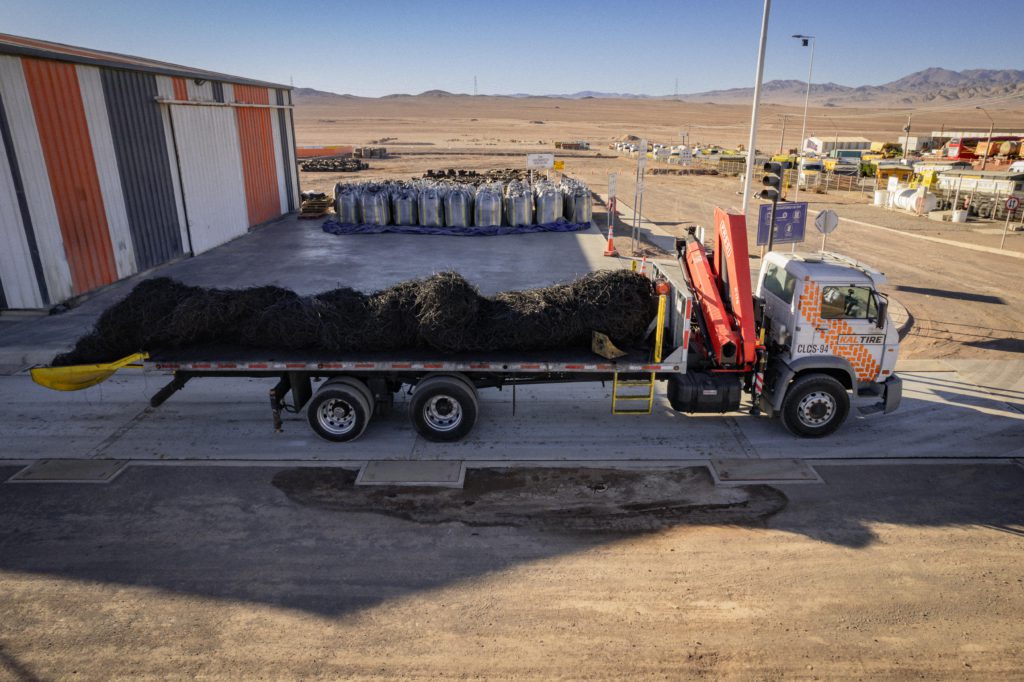
Every year, mining trucks generate hundreds of thousands of tonnes of end-of-life tire waste — and yet, traditional disposal leaves the valuable resources within scrap tires locked away, while stockpiling only delays cleanup. At mines that have been operating already for 10 or 20 years and will go on to operate for another 10 or 20 years, the scale of the challenge is clear. Fortunately, sustainable solutions exist — and, as Kal Tire shares, it is not just an environmental responsibility; it is an operational advantage.
Kal Tire’s Mining Tire Group had already been serving mines across commodities on five continents for decades when it recognized that truly supporting the full lifecycle of a tire required a sustainable solution for end-of-life management. That realization drove the development of a tire recycling solution designed to meet the industry’s growing demand for environmental responsibility.
Stakeholders are expecting mines to lower their environmental impact, and mining companies want the same, but for change to happen their needs to be sustainable, commercially viable alternatives.
In many regions, mines have limited options for managing scrap tires and are left to stockpile, incinerate, or send scrap to shredding facilities that produce rubber crumb that is often turned into products such as rubber mulch or playground surfaces. For several reasons, shredding is increasingly seen as a lesser solution.
Those recycled rubber products still end up in the landfill, it just takes longer to get there, so shredding just delays that outcome. Plus, once a tire goes to a shredding facility, tracking becomes difficult and often the chain of custody is lost, which has become increasingly important in stakeholder reporting and compliance. Instead of seeing end-of-life tires as waste — and eventual landfill waste — mines are beginning to see them as an opportunity to move forward in line with their sustainability charters.
There are valuable commodities that can be recovered from end-of-life tires. Recycling end-of-life tires in the most sustainable way is not just the right thing to do for the environment; it can give mines a practical long-term advantage.
How many tires in Canada and around the world could be sitting in stockpiles, awaiting a sustainable recycling solution — and what is at stake if mines wait to act? Mines are also facing increasingly stringent environmental, social, and governance (ESG) policies, and in many regions, recycling legislation is looming.
Many years ago, Chile, home to some of the world’s largest copper mines, was about to introduce tire recycling legislation. That step inspired Kal Tire to explore a process that could do more than shredding and even promote a circular economy.
At the time, reclamation of tires prior to mine closure was a relatively new idea — but now it is being encouraged in many places, including in Canada. Recycling end-of-life tires is a perfect example of how to get a head start on reclamation throughout the life of a mine.
In Canada, the federal government and some provincial governments — and the International Council on Mining and Metals (ICMM) — are promoting the benefits of a “progressive mine closure approach” that reduces closure risks and leads to best environmental outcomes. We are in a place, in Canada, where the knowledge about what is best is here, stakeholder demand is here, and now we just need practical, sustainable end-of-life tire recycling solutions to be brought here.
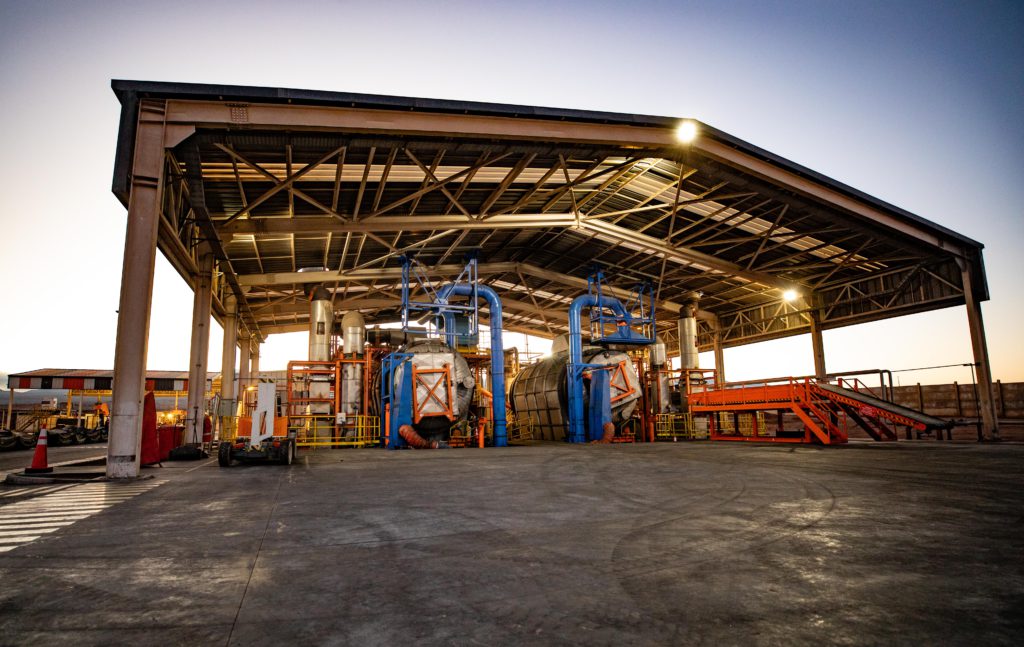
It took years of research and development to bring to life the thermal conversion technology that would give recycled tires their highest and best use. Today, at Kal Tire’s thermal conversion facility in northern Chile, transforming end-of-life tires into valuable commodities is something that happens nearly every day. The process starts when tires are received and logged for traceability. The facility is an ISCC (International Sustainability and Carbon Certification) PLUS and ISCCEU-certified, so that accountability along the way means downstream markets have validation that our outputs are 100% circular.
Next, tires are cleaned, cut, and prepared for processing. Then, they are ready for the reactors. Thermal conversion is an advanced process that uses heat in the absence of oxygen to convert tires to their base elements. Five 63-inch tires going through the reactors, a full load, generates 8,000 kg of carbon ash, 6,500 litres of oil, and 4,000 kg of steel — and enough syngas to fuel the plant for several hours.
All this high-value feedstock — virtually 100% of the tire — can be reused. The high-grade steel can be used in new steel products, the recovered oil can be refined into fuels or petrochemical feedstock, and the carbon ash, once refined into recovered carbon black (rCB), is a sustainable alternative to virgin carbon black in the production of tires and other rubber products. Recovered CB is particularly interesting as manufacturers look to lessen the use of virgin materials and their carbon footprint. However, getting carbon ash to the high-quality state of rCB that manufacturers require, would require taking Kal Tire’s innovation a step further.
The company has developed proprietary technology to refine and upgrade its carbon ash to create rCB that meets tire manufacturers’ specifications. Instead of using flame or steam for this step, Kal Tire worked with a Canadian engineering firm to design a first-of-its-kind technology to process, purify, and upgrade it. It takes about four hours for a full load of carbon ash to go through the upgrading process of heating, milling, pelletizing, and cooling.
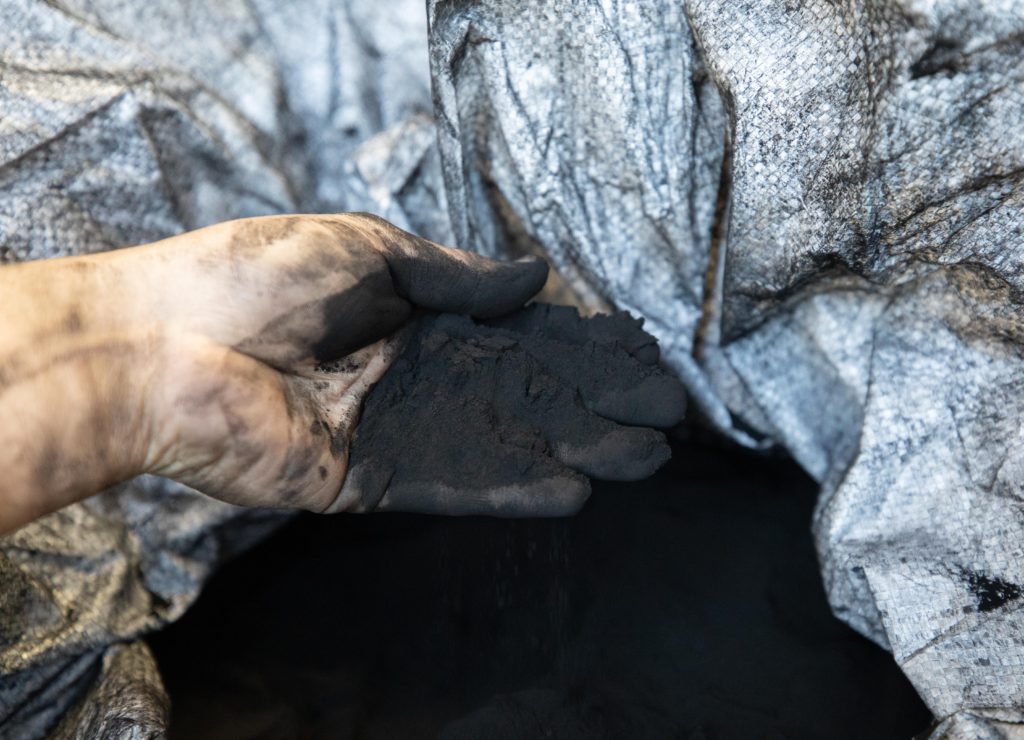
The results have been promising, meeting and, in some cases, exceeding the material specs of Tier 1 tire manufacturers.
When we transform these giant mining tires, the materials generated are for the highest and best use. We certainly could have designated the carbon ash for tire-derived-fuel, but this principle has been our guide when we approach the technical challenges around designing a facility to meet the growing demand for sustainable materials. Tire makers and the rubber industry are being especially proactive about creating more sustainable products. Transforming end-of-life mining tires into new materials that can be utilized in mines is really an opportunity for mining companies to be sustainability leaders.
The benefits of pursing sustainable end-of-life tire recycling solutions are significant. There is a tendency to see end-of-life tires as just another headache — large, heavy, costly, difficult to deal with, and something that can get put off until closure. But the reality is that it is a chance to create value today. Adding beyond regulatory compliance, reducing the carbon footprint of a mine and advancing ESG goals is another outcome that really makes the environmental case. Mines are looking for high-impact ways to live up to their sustainability charters.
The two questions that Kal Tire is often asked as we share how thermal conversion is making a huge impact for end-of-life tire stockpiles in Chile are How do we get it here, and how do we pay for it?
The first thing we tell folks in the industry: engage with recycling partners early. Do not treat recycling as an after thought, think about how it fits into your progressive reclamation strategy from the start. It takes time, and it takes close coordination across stakeholders. Also, think about responsible closure planning as not just another line item on the profit and loss (P&L) statement — recycling your tire stockpile does not need to come from an operating budget. Mines already set aside funds for closure and reclamation, and that is where thermal conversion belongs. It is part of a responsible progressive reclamation strategy.
Being a part of a growing industry shift toward sustainable mining operations by recycling end-of-life tires is not an ESG initiative; it is an operational advantage that benefits mines, communities, and the environment. 
Terry Galvin is vice-president, recycling services, Kal Tire’s Mining Tire Group.
Related Posts

Northwestern Ontario seeks second highway that could unlock mining riches
PDAC JV Video: GoldInxs readies Fishpot in BC for drilling, market debut
PDAC JV Video: Alkane plans merger cash flow for more M&A
March 19, 2026
PDAC JV Video: Alkane plans merger cash flow for more M&A

TNM Podcast: ‘The bottleneck is people’ — Franco-Nevada CEO Paul Brink on mining education
JV article: Amex advances Perron towards feasibility study
March 19, 2026
Comments