The fire triangle on heavy equipment: Why prevention alone is not enough
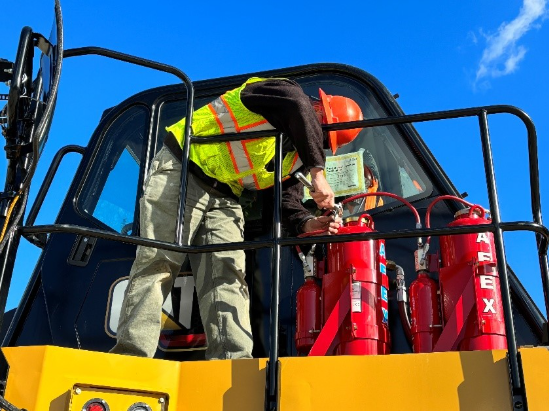
The fire triangle — heat, fuel and oxygen — is one of the simplest concepts in fire safety. It is especially important for heavy mining equipment because all three elements are present during normal operation. Engines, exhaust components, turbochargers, brakes and electrical systems generate heat. Diesel fuel, hydraulic fluid, lubricants, hoses, wiring insulation and debris provide fuel, while air supplies oxygen. Inspections and maintenance reduce ignition risk, but failures still occur. Mining operations need prevention and protection.
For mining operations, the strongest strategy is not prevention or fire protection. It is both.
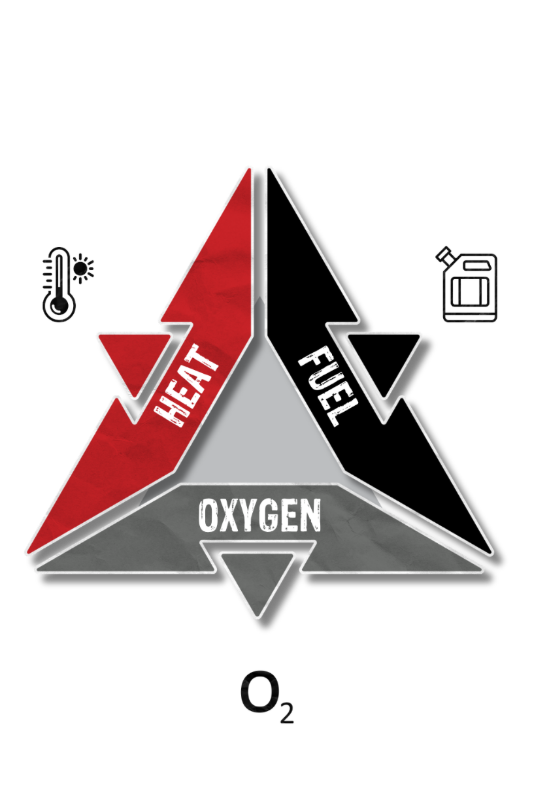
Understanding the fire triangle on heavy equipment
Fire requires heat, fuel and oxygen; removing one prevents combustion. On mining equipment, however, heat-producing systems and combustible materials share compact spaces. Wear, damage, debris, maintenance changes or component failure can increase risk. Leaking hydraulic hoses, damaged electrical insulation and accumulated oil or debris can complete the fire triangle. Because equipment ages and operating conditions change, fire risk must be reassessed throughout the machine’s life.
Heat sources are already part of the machine
Heavy equipment is designed to generate and manage significant heat. Engines, exhaust manifolds, turbochargers, brake systems and other components routinely operate at elevated temperatures. In most cases, that heat is expected and controlled.
The concern begins when combustible material reaches an area where it was never intended to be. A damaged hose or fitting can allow hydraulic oil, diesel fuel or another combustible fluid to contact a hot component. Electrical faults create another possible ignition source. Damaged wiring, loose connections, short circuits and deteriorated insulation can generate heat or arcing capable of igniting nearby material.
Vibration makes these hazards particularly relevant in mining. Constant movement can cause wiring, hoses, fittings, clamps and mounting hardware to loosen, rub or deteriorate. Inspections should therefore consider more than whether a component still functions; they should also ask whether its condition, support, clearance or location has created a fire hazard.
Fuel is more than diesel
Diesel is only one combustible material on mining equipment. Others include hydraulic fluid, oils, lubricants, grease, hoses, belts, electrical insulation and plastics. Pressurized hydraulic fluid can travel beyond a ruptured hose to hot surfaces. Dust, coal fines, oil-soaked dirt, vegetation and debris can accumulate near heat-producing components, increasing fire risk.
Housekeeping is fire prevention
Keeping equipment clean is one of the most straightforward ways to reduce combustible material around heat sources. Perfect cleanliness is unrealistic in a mine. The objective is to prevent dangerous accumulation in high-risk areas and clean equipment often enough that developing problems can still be seen.
A machine covered in oil, dirt or debris can hide leaking fittings, deteriorated hoses, damaged wiring, missing shielding or signs of excessive heat. Cleaning frequency should reflect the machine, application and environment.
Inspections should look beyond mechanical reliability
Pre-shift inspections and maintenance can interrupt the fire triangle before ignition. Personnel should identify leaks, worn hoses, damaged wiring, loose components, chafing, debris and overheating, including service-related hazards. Bad hose routing, lost wiring clearance, misplaced shielding or missing clamps can connect heat and fuel. Fire prevention belongs to preventive maintenance.
Why prevention alone cannot eliminate fire risk
Strong maintenance and housekeeping programs can significantly reduce fire risk, but they cannot eliminate every possible failure. Components can fail suddenly. Hoses can rupture between inspections. Electrical faults can develop unexpectedly. Conditions can change during a shift.
That does not mean prevention has failed. Prevention reduces the probability of ignition. A complete fire strategy must also address what happens if ignition occurs anyway.
At that point, the priority shifts to protecting people and limiting consequences. Early detection, operator training, onboard fire suppression and emergency response procedures become important.
Early detection supports a faster response
Time matters during a heavy equipment fire. A fire identified close to its point of origin presents a different challenge from one that has already spread to additional hoses, fluids, wiring or combustible components.
Operators may not immediately see where a fire begins. Many hazards are located inside engine compartments, belly pans or other areas with limited visibility from the cab. An operator may first recognize a problem through smoke, an unusual odor, a warning signal or a change in machine performance.
Automatic fire detection can add another layer of protection by identifying fire conditions in designated hazard areas and alerting the operator. Depending on system design, detection can also initiate automatic suppression.
Fire suppression is a response layer
Onboard fire suppression systems deliver agent into hazard areas after ignition and may activate automatically, manually or both. Their objective is protecting people, not keeping operators near burning equipment. Procedures should prioritize safe shutdown, evacuation, accountability and emergency response. Suppression complements maintenance because each addresses different stages of the risk.
Layered fire protection is more effective
A complete strategy combines safeguards rather than relying on any single one. Housekeeping reduces combustible buildup. Inspection helps identify leaks, wear and abnormal conditions. Preventive maintenance corrects developing problems. Operator training helps personnel recognize hazards and respond appropriately. Detection helps identify a developing fire sooner. Suppression provides a response after ignition. Emergency procedures guide shutdown, evacuation, communication and accountability.
This layered approach matters because no individual safeguard can address every situation. If a hose fails unexpectedly despite preventive maintenance, other protective layers remain. If a fire begins in a concealed area, detection may provide warning before the operator sees it directly.
Mining conditions raise the stakes
Mining equipment often operates far from fixed firefighting resources. Large surface mines can cover significant distances, while underground operations create different access and evacuation challenges.
These conditions make the initial response especially important. A developing equipment fire may depend heavily on the operator, nearby personnel, site procedures and the protection already installed on the machine.
The risk is also not limited to the equipment itself. A fire can threaten the operator first, but it may also spread to nearby equipment, combustible material, infrastructure or other personnel. Depending on where a machine is operating, a localized equipment fire can become a broader site event. That wider view matters when evaluating fire risk. The question is not only, “What could happen to this machine?” It is also, “What and who could be affected if a fire spreads?”
Evaluate fire risk machine by machine
Mining equipment presents different hazards depending on design and operating conditions. A machine-specific fire risk assessment identifies where prevention, detection and suppression should focus, considering heat, fuel, debris, visibility, component routing and potential fire spread. Protection works best when tailored to each machine, its specific application and actual operating environment.
Prevention reduces probability; protection reduces consequences
The fire triangle helps explain heavy equipment fire risk. Removing combustible debris, repairing hydraulic leaks, correcting damaged wiring and maintaining proper clearances can prevent heat and fuel from combining. However, risk cannot be eliminated: equipment works long hours in demanding environments, components wear, conditions change and failures occur. A complete strategy combines fire prevention with early detection, well-designed, maintained suppression, operator training and emergency procedures. The fire triangle explains how a fire begins. A layered fire protection strategy helps determine what happens next.
Kevin Kroll is the president of operations at AFEX Fire Suppression Systems.
Related Posts
Superior installs Titanium Sealers in all idlers
October 9, 2026
Superior installs Titanium Sealers in all idlers

Caterpillar, Wheeler Machinery to feature at Red Bull Rampage
October 8, 2026
Caterpillar, Wheeler Machinery to feature at Red Bull Rampage
Vizsla Copper logs high-grade silver at Alaska project
October 7, 2026
Vizsla Copper logs high-grade silver at Alaska project
TowHaul breaks ground on Montana facility expansion
October 6, 2026
TowHaul breaks ground on Montana facility expansion
Westwin Elements to build $502M nickel refinery in Mississippi
October 6, 2026
Comments