Transforming the landscape with mine reclamation
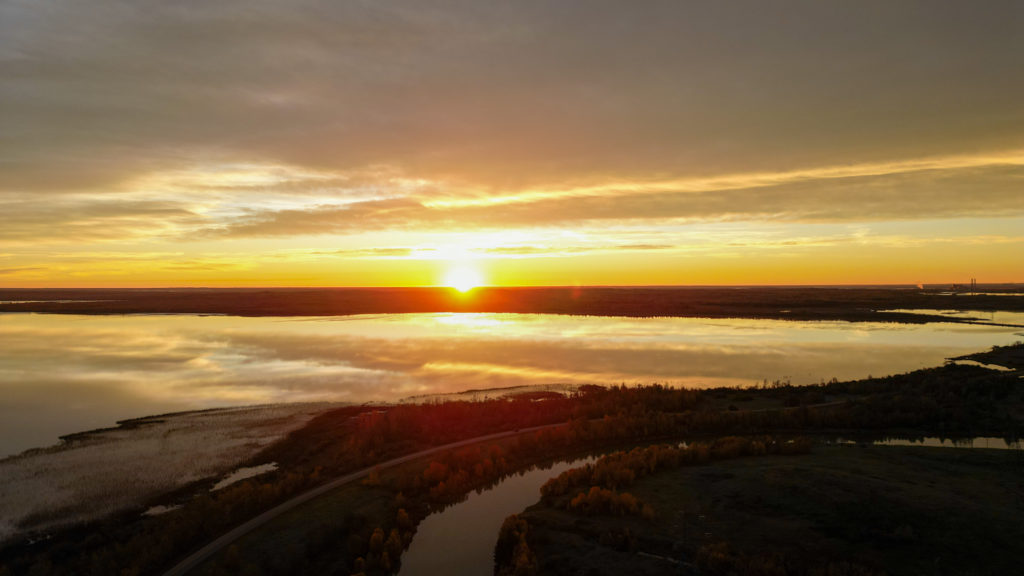
Landscapes can take many forms after a strip mine has been decommissioned and the land reclaimed.
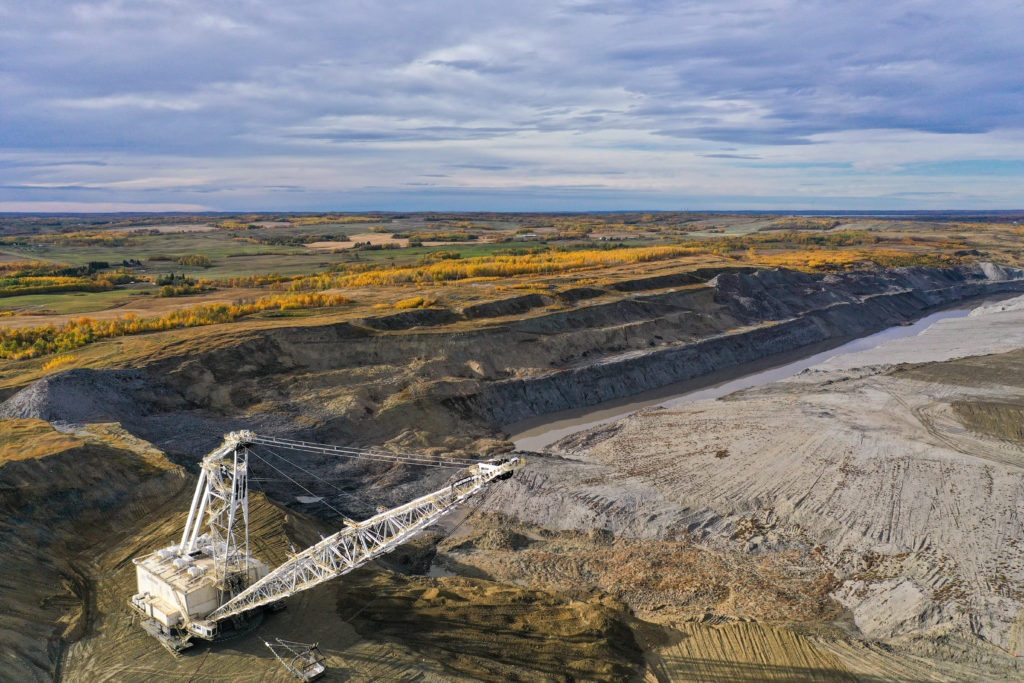
An example of an energy company that is transforming previous mine sites into stunning landscapes is TransAlta. Their former Whitewood mine, located 65 kilometres west of Edmonton, Alta., was decommissioned in 2010, and they spent the next five to 10 years returning the land to its natural state.
Five kilometres southwest, TransAlta is doing it again, on a much bigger scale. For 51 years, their Highvale mine was the largest surface strip coal mine in Canada. It covered more than 120 km2 and exposed over 463 million tonnes of coal. TransAlta decommissioned the mine at the end of 2021 and ceased using coal to generate power in Canada to help advance their environmental, social, and corporate governance goals.
“As an energy company, we are responsible to return all areas disturbed by mining operations to a state that is equal to or better than its pre-disturbed condition. Part of that is looking at more sustainable technologies as well as reclaiming the footprint of the old mine,” said Brandon Stewart, senior manager of energy transition at TransAlta.
Stewart estimated that the Highvale reclamation project will take about 20 years. “There are a variety of different classifications of land that we are reclaiming, so there is a lot of work to be done,” he added.
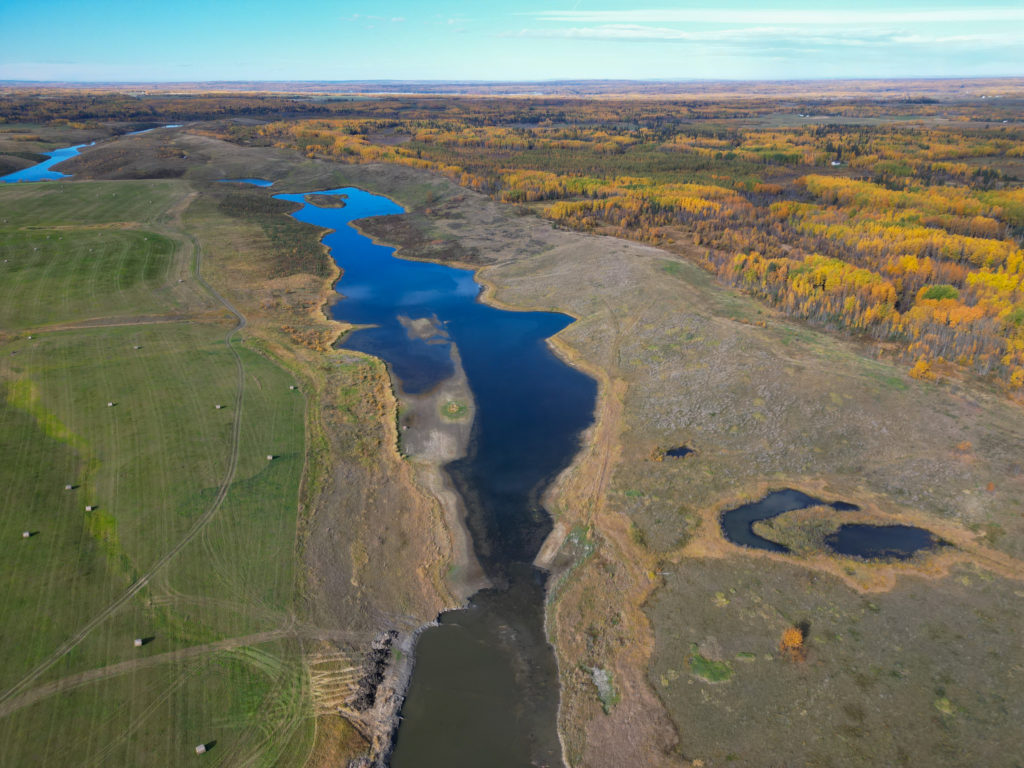
A significant obstacle for the project is the mine’s depth. “When we were uncovering the coal, it ranged from about 10 to 90 metres below the surface, which means some of the areas we are dealing with are extremely large. As part of the reclamation, we will be developing pit lakes, wetlands, forests, and agricultural land,” Stewart explained.
Jacob Harris, project coordinator at TransAlta, explained how it is done: “We start by leveling all the spoils, then we contour the lakes. The subsoil and topsoil go on, and we set up for establishing the vegetation. Then we decide what the vegetation cover will be, from native grasses to agricultural to trees.”
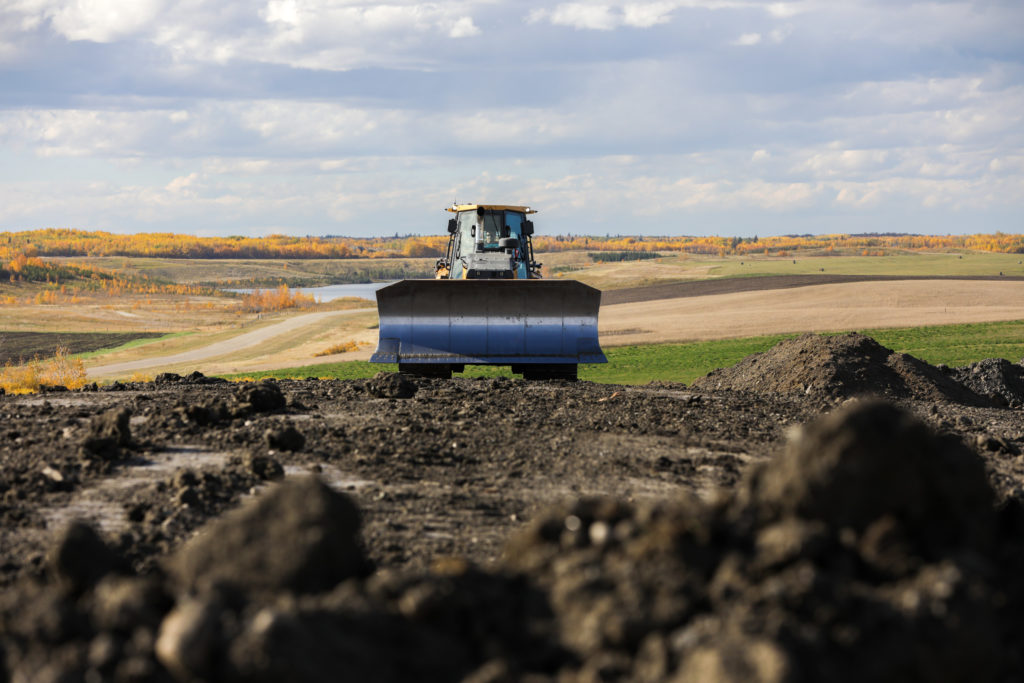
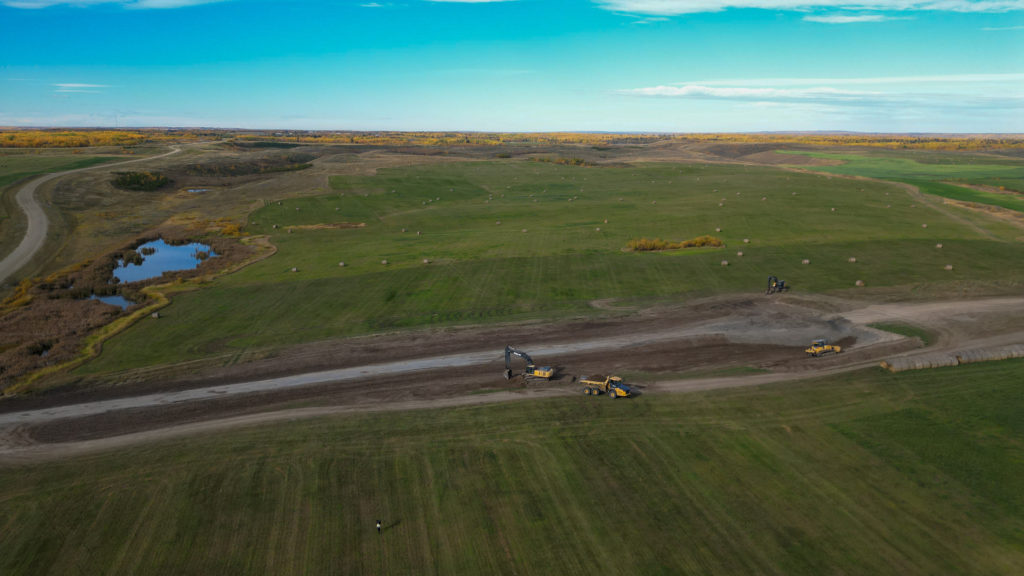
There are seven pits that need to be reclaimed — there is currently everything from open pits to partially reclaimed strips to fully reclaimed areas in agriculture production. “In some areas, we have still got a lot of work to do, and others, we have got a good start and are just about completed. This is shaping up to be a beautiful environment,” said Dustin Norgard, mine manager at the Highvale mine.
Most of the bulk earth moving is done with draglines, truck/shovel, scrapers, and dozers. Then, they bring in smaller, low-ground-pressure equipment to do the more sensitive work. There are 30 pieces of equipment on site, with the majority being the machines previously used in mining the pit. “It is getting to be an older fleet, and with the size of the fleet, we require parts and service to keep it up and running. Everything we do here is based on the equipment — if it is not running, we cannot properly do the reclamation work. The reclamation is something we are passionate about, but we must make sure we keep our costs under control. If we are struggling with the equipment, then we start having challenges with costs,” said Stewart.
During the mining process, the equipment was running 24/7, so it was not stopping and starting. In reclamation, operators are doing straight days, so the equipment is turning on and off quite a bit more. Stewart noted that this can take a toll on the machines: “It is working in both in-situ ground as well as disturbed ground, so that can also be rough on the equipment,” he explained.
With that equipment comes the suppliers and their sales and service agreements. “Equipment breaks down. It is not going to run 100% of the time, but what we need to count on is that when we need parts, that parts are available, when we need service, we need that support and need to know our vendor is there to help. It does not matter if we are in reclamation or production, we still need the same support and service,” Stewart said.
Credit: Brandt
“With projects of this size and nature, there is a lot at stake, so there is no room for delays in service and support. When you get a call, you need to jump and make sure they have everything they need to keep working,” said Jim Thompson, vice-president of sales mining at Brandt. “It may also be acting as a sounding board and bouncing ideas back and forth, providing suggestions, advice, and troubleshooting to help solve the problem. It needs to be a true partnership,” Thompson added.
Stewart agreed. “What we look for in a vendor is one that cares about us as a company, about our equipment, no matter what size we are. It makes it easier for me as the manager not to have to worry about the smaller details,” he said. “We appreciate regular check ins—sometimes, you do not know what you need until they ask the question, because you’re so caught up in the day-to-day operations. Having that break point and being able to sit down, have a quick discussion, and see where a vendor can potentially fill a void is essential from a customer service perspective. We need them to check in with us when things are going well, so big problems don’t build up.”
The reclamation efforts run year-round. Norgard explained, “We have got to manage the seasons as much as we manage our equipment. One of the challenges we face is with some of the softer material, like in swampy areas. You cannot perform reclamation there during the summer, so you must wait until the winter months when frost is in the ground and work on those areas during that time.”
Efficiency is key when it comes to mine reclamation, and the latest technology is essential to ensure the project is on time and on budget. TransAlta’s newer machines are equipped with remote troubleshooting software. When an error code comes up, the machine’s information is transmitted to a technician at Brandt, who diagnoses the problem and either addresses it from afar or sends someone out to fix it. “The onsite technician was able to get the equipment up and running a lot quicker than if that information had not been communicated to them first,” said Stewart.
“People are always a little bit apprehensive about new technologies at the start, but they can see the benefits very quickly,” said Harris. “On one of our machines, some codes came up, and they were able to save us from engine failure,” he added.
The reclamation team also uses positioning technology to reduce the onsite survey and the number of passes the dozers need to push — this is particularly helpful in remote areas where reliable cell service is a problem. Machine control is also installed on one of the excavators and a few of the dozers to make work go even more smoothly and efficiently.
What are the plans for the land once it is reclaimed? There are a variety of options, such as being donated and opened to the public for use, sold back to the original owners of the property (before it was a mine), re-purposed to support local economic development, or made available for the public to purchase. TransAlta has also donated more than 12 km2 of reclaimed land to the Alberta Conservation Association (ACA).
“ACA is very pleased with the partnership that has been developed with TransAlta.
These lands will continue to support the almost 100 wildlife species already documented on the site and, once fully certified, will be opened to the public for low-impact recreation. This partnership is an excellent example of how industry and conservation organizations can work together for the benefit of Albertans,” said Lance Angley, ACA’s manager of special projects.
Fish biologists from ACA collected water temperature and dissolved oxygen profiles and did macroinvertebrates sampling to ensure the lakes on the reclaimed land would be a good environment for salmonoids (a classification of fish that includes salmon, trout, chars, and whitefishes). They found the water quality to be suitable for this kind of fishery. “It is really exciting to see the potential that is here from a fisheries and outdoor recreation perspective,” said Harris. “I am lucky I have been able to be a part of closing this mine out and getting it set up and sent to a conservation group. It is very meaningful for me to see that this property is going to be set aside for everybody to use. It will be a place that I can come to, as I move into retirement, and my kids and grandkids one day can use this place and know that I was a part of it,” he concluded. 
Sabrina Cataldo is a multiple award-winning senior copywriter at Brandt.
Related Posts
Canadian Mining Hall of Fame announces 2027 inductees
October 1, 2026
Canadian Mining Hall of Fame announces 2027 inductees
EMP, Saltworks host lithium-demonstration-plant tour
October 1, 2026
EMP, Saltworks host lithium-demonstration-plant tour
Mayfair lines up $310M for Fenn-Gib gold project in Ontario
October 1, 2026
Mayfair lines up $310M for Fenn-Gib gold project in Ontario

TNM reveals latest bonus prize Treasure Hunt clue
September 30, 2026
TNM reveals latest bonus prize Treasure Hunt clue
Gold refining goes electric
September 30, 2026
Comments