What have you done today that did not involve a mineral?
Part 7: Household waste; the mine waste we ignore
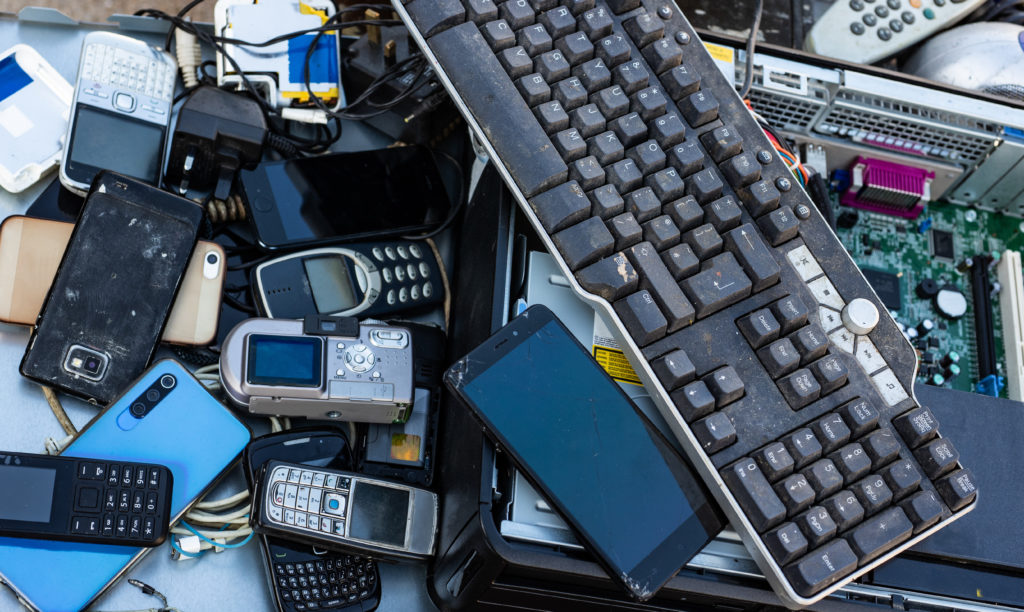
Mining is often portrayed as the villain in conversations about environmental degradation. Tailings storage areas, waste rock piles, and open pits dominate public perception. Yet mining contributes only a fraction of the total waste generated by humans. The truth is far more uncomfortable: society’s twaste problem begins with mining, but it does not end there. Although this article focuses on base metal extraction, petroleum-based resource development also produces significant plastic-derived waste.
When companies exploit naturally formed mineral deposits, they extract the valuable and economic components such as gold and copper and discard the rest. The waste-to-product ratio can be astonishing. For example, an ore containing 10 grams of gold per tonne, which means 10 out of 1,000,000 grams, is considered economic. This results in storing 999,990 grams of waste to produce a very small amount of gold. In contrast, aggregate used in road construction and concrete may produce almost no waste at all, because nearly everything mined is used.
Even with this range, mining is often singled out as a main producer of waste. But in reality, the story does not stop at the mine gate. Everything society manufactures from mined materials eventually ends up somewhere, and very often that somewhere is a municipal landfill. These landfills are, in effect, concealed mine waste created not only by mining companies, but also by people who demanded the mined commodities in the first place. In the present era, this can be classified as anthropogenic waste material.
The statement, “Everything that is not grown is mined” is often repeated within the mining industry but not widely understood outside it. Every phone, appliance, plastic container, toy, shovel, wire, pipe, and metal tool began with minerals. When people throw these items in the garbage, they are participating in the same process that mining companies carry out at mine sites. They are creating mined waste.
Society needs a shift in how waste is categorized. Today, landfill management incorporates the concept of valorization, emphasizing recycling and composting. However, these efforts only address a fraction of what is discarded, and enormous volumes of waste remain unprocessed. The message “What have you done today that did not involve a mineral?” could easily be expanded to ask, “What did you do today that did not create a mined waste?”
Mining companies are now reassessing the value locked in their tailings. These are opportunities to improve circularity because the ore is already mined and ground. Reprocessing can often be done with existing technology. Potential benefits include reducing tailings volume, increasing stability, reclaiming land, and extracting metals that were previously unrecoverable.
This raises an important question. If mining companies excel at excavation and mineral separation, why stop at their own tailings? Could they also process municipal landfills? According to the Government of Canada, 97% of waste requiring final disposal goes to landfills and only 3% is incinerated. In 2022, only 27.1% of solid waste generated in Canada was diverted, while 72.9% was disposed of. Residential sources contributed 40.2% of all disposed solid waste. The average Canadian generates roughly 700 kg of solid waste per year. Consistent national waste tracking only began in 2002. By 2022, disposal reached its highest recorded level of 26.6 million tonnes. The total volume since 1867, the year of Confederation, is almost unimaginable.
Consider the number of mines compared to other land uses in Saskatchewan. There are 544 mines listed in the Historical Canadian Mines Data Hub for Saskatchewan, many of which were small coal mines rather than the large mining operations most people picture. In 2013, the province also had approximately 500 active municipal landfills, nine industrial landfills, and 727 regulated sites including closed ones. This comparison shows that mining is only one of many land uses with a significant footprint. It also reminds us that wherever humans go, we leave behind waste, whether it is from mining, municipalities, or industry. One question that emerges is the total area and volume of these landfill sites, a number that does not appear to be publicly available.
Although landfills are out of sight for most people, their environmental impacts can be significant and often mirror concerns associated with mine waste. Decomposing organic waste produces methane, a potent greenhouse gas. While some sites capture this gas for electricity generation, others allow emissions to escape uncontrolled. Landfills without proper liners may alter groundwater geochemistry, with leachate capable of affecting drinking water sources, fish-bearing creeks, and wetlands. These sites may also contain toxic or improperly sorted materials that were never intended to be buried, posing long-term risks to ecosystems and communities. Subsurface and surface fires can smoulder for months, releasing toxic smoke and degrading surrounding soils. Recent news coverage of concerns surrounding the Cowichan landfill, an illegal dumping site, shows how quickly public awareness rises when landfill issues come to light. Despite these risks, landfills rarely receive the same scrutiny as mine waste facilities, even though the environmental consequences can be just as serious and, in some cases, even less controlled.
Remote towns across Canada often lack recycling infrastructure, leaving landfills as their only waste disposal option. Many of these communities also host mines with limited operating lifespans, which means local employment eventually declines as ore bodies are depleted. Re-excavating landfills to recover metals, plastics, and other materials could extend employment, reduce environmental impact, and allow modern engineered waste facilities to replace aging ones. Unlike large southern municipalities where recycling systems already extract much of the recoverable value, northern landfills contain a higher proportion of metals and plastics, simply because these materials were never diverted in the first place.
The layers of a landfill are like an archaeological record of human development, with each layer revealing the technologies and lifestyles of its time. Examples include the following:
- The rise of steelmaking from the late 1800s to the mid 1900s. Mass production methods made steel affordable. Landfills from this era show an increase in steel cans, tools, building components, and machinery parts.
- The expansion of plastics beginning in the 1950s. After World War II, petrochemical industries transformed consumer goods. Landfills show dramatic increases in disposable packaging, synthetic textiles, toys, and household products (i.e., diapers).
- The computer revolution of the 1980s and 1990s. Early personal computers left behind circuit boards, wiring, bulky monitors, and early generations of batteries. These layers contain metals and rare earth elements that future technologies may seek to recover.
- The smartphone era beginning around 2007. Modern landfills contain concentrated pockets of lithium-ion, zinc-alkaline and nickel-bearing batteries, rare earth magnets, copper wiring, and miniaturized electronics. These materials may become valuable resources to future generations.
As more natural and human-made waste is transported and deposited in landfills, these sites begin to behave like geological features. Over time, the layers of waste go through processes like those that form sedimentary rocks. Geologists refer to this emerging category of material as anthropogenic clastite, a man-made addition to the rock cycle. During this gradual human-driven lithification, new minerals can form depending on the materials buried within the landfill.
Canada has world-class engineering expertise, mining technology, and safety practices. Combined, these strengths could position Canada as a leader in landfill reclamation. Europe, with centuries of accumulated waste, offers a preview of the challenge. A BBC documentary that can be found on YouTube: “The Secret Life of Landfill – A Rubbish History” highlights the engineering and composition of both present day and historical landfills. Canada, with fewer people and more land, can develop the technologies, regulations, and risk frameworks that the world will eventually need.
Turning this concept into reality raises practical questions. We acknowledge that we are proposing mining companies take on this challenge. To follow standard Canadian protocols for defining a mining project, a resource estimate would be required. How could this be done? Options might include reverse circulation drilling, remote-operated drills for safety, or test pits like those shown in the documentary. Whatever the method, a landfill exploration program would need geophysical surveys, soil and water quality studies, and collaboration among geochemists, geophysicists, archeologists, mining engineers, and municipal engineers. Any opportunity for the mining industry to work visibly in the public’s backyard could increase awareness and strengthen its connection with society.
Mining of landfill sites should require a resource estimate to determine the types and quantities of materials present. A model of a landfill would identify the location of these materials, and there would be a nugget effect like that seen in tailings impoundments. Imagine preparing a NI 43-101 technical and resource estimate report for a landfill feasibility study. This would be fascinating and may require revisions to the 43-101 requirements and the CIM Estimation of Mineral Resources and Mineral Reserves Best Practice Guidelines. Just as with mining projects, landfill sites also require a reclamation plan that could mitigate ongoing environmental remediation.
The statement remains true: if it is not grown, it is mined. Even agriculture depends on mined tools, fertilizers, fuel, and machinery. Every landfill is therefore a repository of mined materials. Mining companies are not the source of this waste. People are. Human consumption, convenience, and modern lifestyles drive the accumulation of mined waste.
Though Canada is trying to fast-track mining projects and some community members and scientists worry about environmental impacts, just remember that landfill sites have similar environmental impacts. The real challenge is simple. What have you done today that did not involve a mineral? If you cannot find an answer, then much of your waste is ultimately mining waste. 
Connections within the industry can expand our collective knowledge. Donna Beneteau, an associate professor in geological engineering at the University of Saskatchewan, combines academic insight with mining industry experience. Bruce Downing, a geoscientist consultant based in Langley, B.C., brings expertise spanning research, education, geochemistry, and applied industry work. Bill Van Breugel is a mining engineer who began his career as a miner and now has more than 40 years of experience in the mining industry.
Related Posts
Canadian Mining Hall of Fame announces 2027 inductees
October 1, 2026
Canadian Mining Hall of Fame announces 2027 inductees
EMP, Saltworks host lithium-demonstration-plant tour
October 1, 2026
EMP, Saltworks host lithium-demonstration-plant tour
Mayfair lines up $310M for Fenn-Gib gold project in Ontario
October 1, 2026
Mayfair lines up $310M for Fenn-Gib gold project in Ontario

TNM reveals latest bonus prize Treasure Hunt clue
September 30, 2026
TNM reveals latest bonus prize Treasure Hunt clue
Gold refining goes electric
September 30, 2026
Comments