With a full U.S. ban on imported Russian enriched uranium set to take effect in 2028, Western utilities are moving to rebuild enrichment and conversion capacity. That shift is reshaping the economics of the nuclear fuel cycle and driving billions of dollars into new projects.
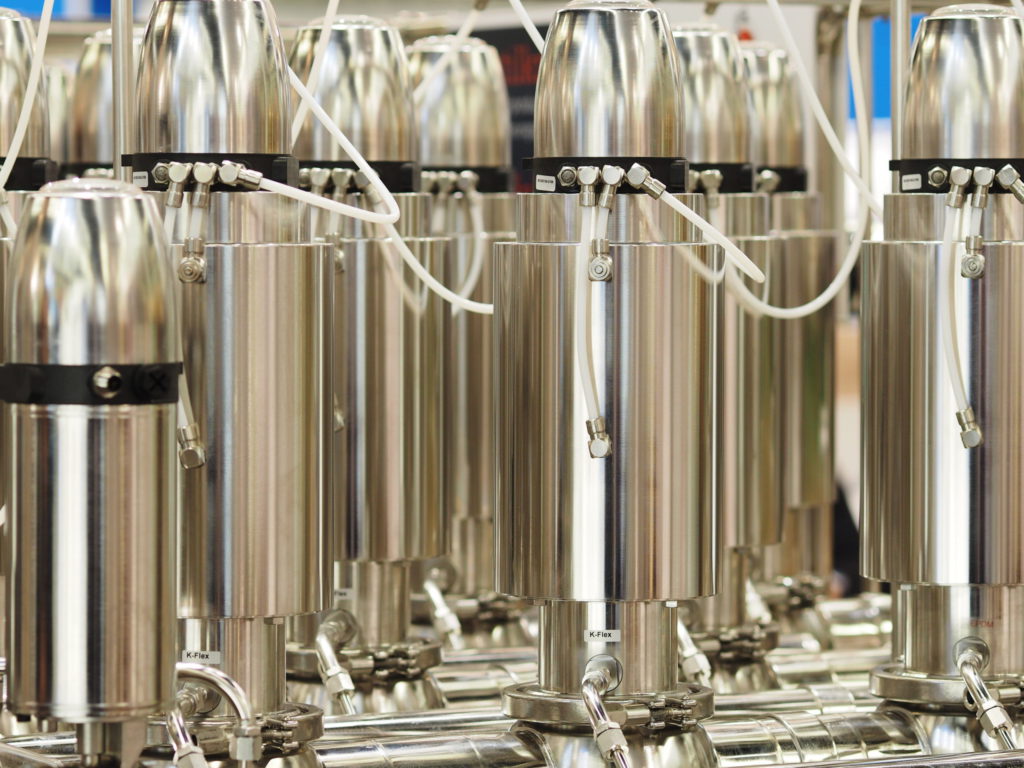
In April, Urenco, a global supplier of enrichment services, announced it had installed 350,000 separative work units (SWU) of new capacity at its New Mexico plant. The expansion is part of a plan to add 2.5 million SWU across the U.S., the Netherlands and Germany, including 700,000 SWU in New Mexico, the only commercial-scale enrichment plant in North America.
The total represents roughly $250 million to $470 million in annual enrichment value at current prices. It would be enough to fuel about 18 large reactors, capable of powering roughly 14 million homes.
“We’re building what the market needs,” Laurent Odeh, Urenco’s chief commercial officer, told The Northern Miner. “We are in a privileged situation that we can build faster than people build nuclear power plants, so when we have the firm commitment and the clear signals, then we can make the investment decision.”
The buildout marks a broader push across the West to reduce reliance on Russian supply, which still accounts for roughly 44% of global enrichment capacity and about 20% of conversion, according to data from the U.S. Energy Information Administration and the Department of Energy (DOE). Conversion involves turning mined uranium oxide (U3O8) or yellowcake into gaseous uranium hexafluoride (UF6) before enrichment into reactor fuel.
Russian supply
However, enrichment markets have been burned by overcapacity before. With multiple Western conversion and enrichment projects now competing for a limited pool of long-term utility contracts, analysts warn that the cycle could turn if Russian supply re-enters the market. A return of lower-cost Russian material could pressure prices and erode the economics underpinning new builds.
For years, Russian material flowed through the fuel chain at nearly every stage. Russia’s invasion of Ukraine in 2022 exposed the fragility of that system. When the U.S. Congress passed a ban on Russian uranium imports in 2024, with waivers in place through 2027, it underscored how limited domestic capacity had become.
The United States has one commercial enrichment plant, Urenco’s facility in New Mexico, and one conversion facility, Metropolis Works in Illinois, which was shuttered in 2017 and only restarted in 2023.
In Canada, Cameco (TSX: CCO; NYSE: CCJ) operates conversion capacity at Port Hope, Ont. supplying both domestic CANDU reactors and export markets. However, Canadian utilities avoid the limited enrichment market because CANDU reactors don’t require it, unlike most.
“There's been a scramble in Europe and North America to replace and expand both conversion and enrichment capacity,” William Freebairn, associate director of nuclear pricing at S&P Global Commodity Insights, told The Northern Miner.
Domestic investment
Governments are now stepping in to accelerate that buildout. In January, the DOE committed $2.7 billion over the next decade to rebuild domestic fuel cycle capacity, including funding for France’s Orano and U.S.-based enrichment players to expand production of both low-enriched uranium (LEU) and high-assay low-enriched uranium (HALEU) for next-generation reactors.
The spending echoes earlier energy security shifts. Freebairn points to the 1970s oil shocks, which drove France and Japan to scale up nuclear capacity, as a precedent for today’s policy response. “It has driven a lot of investor enthusiasm – you see it on the miner side and the physical uranium fund side,” he said.
That enthusiasm is now feeding through the fuel cycle. Prices for both conversion and enrichment services have surged in the wake of the Ukraine war, in some cases rising five to 10 times pre-2022 levels, as utilities move to secure long-term supply, Freebairn said. Enrichment prices have risen to roughly $160 per SWU, up from around $40 per SWU before 2022.
However, Urenco’s Odeh said current enrichment prices reflect the cost of rebuilding capacity rather than a short-term spike. He pointed to the last major buildout cycle around 2010, noting that when those prices are adjusted for inflation, they would exceed $200 per SWU today.
“Yes, the prices have increased sharply when it comes to enrichment,” Odeh said. “But this is what we need to sustainably reinvest in the business.”
Different bottleneck
The buildout has also exposed a second constraint: conversion capacity. Converters produce the UF6 feedstock required by enrichers, meaning both segments must expand in parallel to avoid creating new bottlenecks. Tightness in either market has pushed prices higher, reinforcing the incentive to bring new Western capacity online.
Urenco’s low-enriched uranium plus (LEU+), a longer-burning fuel used for more advanced modular reactors or the production of HALEU, requires a special deconversion process to be made into fuel. “At the moment, there is no deconversion facility ready,” Odeh said. “That could become a pinch point if people do not invest in that field.”
Not everyone is convinced that enrichment or conversion will be the limiting factor.
In March, Vancouver-based uranium miner NexGen Energy (TSX, NYSE: NXE) announced Canadian federal approval for its Rook I project, one of the largest undeveloped uranium deposits globally, in Saskatchewan’s Athabasca Basin.
“While there is concentrated conversion and enrichment facilities, all of our dialogue with the utilities does not suggest that it is actually a substantial bottleneck within the next five years,” Leigh Curyer, CEO of NexGen Energy, said in an interview. “There’s a bigger bottleneck brewing.”
He points to a lack of new mine supply. After more than a decade of underinvestment, few new projects are advancing fast enough to offset expected declines from existing operations. Alongside Rook I, Denison Mines (TSX: DML; NYSE-A: DNN) has begun construction on its Phoenix uranium project in Saskatchewan.
But even with new supply coming online, Curyer said the market may struggle to keep pace.
“Uranium prices still haven't reached the place they need to get to incentivize other sources of mine supply,” he said. “A lot of the other deposits that could get into production, even if they had the go-ahead today, will still take five years – those mines need $150-plus [per lb. uranium] to make it work.”


Comments