As opposition to uranium mining resurfaces in Nova Scotia, a provincial mining group is urging the government and public to look to other jurisdictions where uranium mining has been conducted safely.
Sean Kirby, executive director of the Mining Association of Nova Scotia (MANS), said: “Discussion about uranium needs to be based on science and facts, not myths and misconceptions.”
Kirby added: “Experts like the Canadian Nuclear Safety Commission say uranium mining is safe for people and the environment, and decades of experience in Saskatchewan prove it. There is clearly no health, safety or environmental reason to ban uranium.”
He continued: “If uranium actually caused the problems that some allege, the people of Saskatchewan would tell us so. Instead, 83% of people in Saskatchewan support uranium mining, according to polling. Uranium mining has bipartisan support in Saskatchewan. Both of the province’s main political parties, the Saskatchewan Party and the NDP, support uranium.”
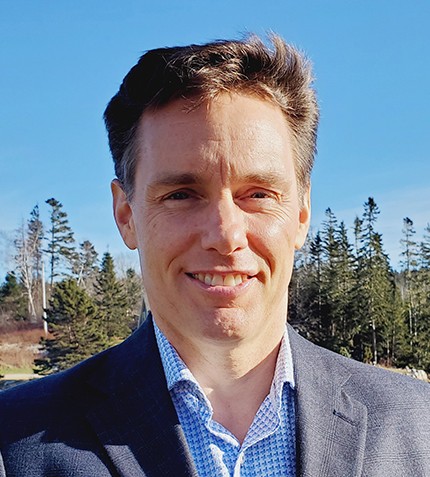
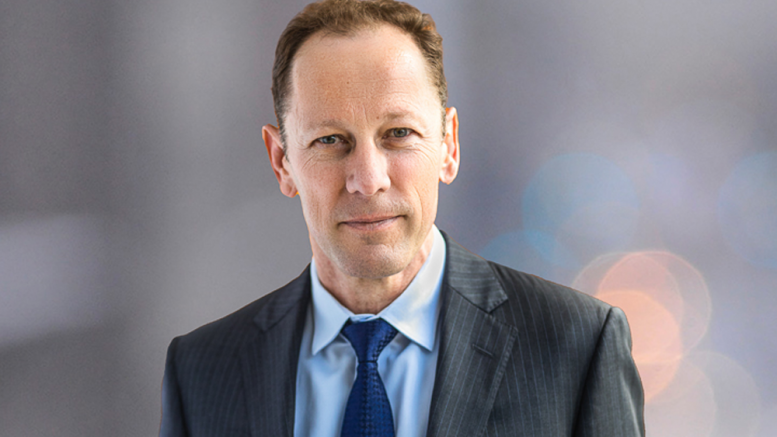
Sean Kirby, executive director of the Mining Association of Nova Scotia. PHOTO: Global Business Reports.
Nova Scotia made national headlines when the Houston government lifted the province’s decades-long ban on uranium exploration and mining, effective March 26, 2025. The province said the decision would open the door to new research and economic opportunities in the resource sector.
Anti-mining petition may not reflect popular sentiment
Not everyone agreed. A petition with 7,000 signatures was recently tabled in the Nova Scotia House of Assembly, calling for the ban to be reinstated. Petition organizer Sarah Trask Duggan said the initiative reflects frustration that the Progressive Conservative government removed the ban without community input. She contrasted that decision with the extensive consultation and scientific review that preceded the original ban in the 1980s, adding, “Nobody wants this.”
Kirby countered that polling commissioned by the mining association in 2024 showed 54% of Nova Scotians supported uranium mining, while only 22% opposed it.
He added: “And that was a year before public support for resource industries grew significantly in response to Trump’s attacks on Canada’s economy and sovereignty.”
These numbers suggest that organized anti-mining and environmentalist interests may be driving recent opposition much more than actual broad public sentiment.
After meeting with petitioners at Province House, Premier Tim Houston acknowledged these concerns and promised “fulsome consultation” and scientific review before any project moves ahead, while emphasizing that no uranium exploration proposals currently exist.
Province yet to receive exploration proposal
Since lifting the ban, most of Nova Scotia has reopened to uranium exploration. However, the province has taken a cautious approach in three areas with high uranium potential—Millet Brook, East Dalhousie, and Louisville. An open call for exploration proposals this spring drew no applicants, prompting the province to maintain restrictions in those zones and shift toward government-led research.
The Department of Natural Resources (DNR) said it is working with industry to ensure uranium exploration proceeds safely and responsibly. Companies must obtain an exploration licence and all other necessary permits before beginning work, whether on Crown or private land.
The Mining Association of Nova Scotia, which has long promoted safe and responsible mining in the province, says uranium could play a significant role in the province’s future.
It wrote: “We know from exploration done in the 1970s and 80s that Nova Scotia has potential for uranium. However, a ban, which was not based in science, prevented us from doing uranium exploration for almost a half century. The Government of Nova Scotia has done the right thing by repealing the ban this year. This will let us see whether our deposits are economically viable and whether we can contribute to global supply of this essential mineral.”
I hear both sides . Ban side has legitimate scientific references stating issue in N.S. due to the province environment and how it is different from Saskatchewan. There are valid reasons for N.S. to justify a ban. Science must be applied not just written .
NS has a population density of 10X that of Saskatchewan and is 1/10 the size. The uranium in NS tends to be at the top of watersheds, increasing downstream vulnerability if there is radioactive contamination of groundwater, streams and lakes.
Uranium mining in northern Saskatchewan is in a sparsely populated area. Even so it hashad adverse effects in wildlife and therefore on First Nations in the area who can no longer safely eat their traditional foods. In Nova Scotia half the population lives rurally and us widely distributed through the province. Most rural households rely on wells. Nova Scotia also sees far more rain than Saskatchewan and is particularly vulnerable to climate change linked extreme rainfall events. All in all, it is not valid to compare the risks of uranium mining to the population in Nova Scotia to that posed in Saskatchewan.
As a doctor I think the science and stats they are quoting is flawed. Even who they poll. Most Nova Scotians aren’t aware. The radius of the debris is 400km due to winds etc. Saskatchewan is uninhabited area. Come on this is health. I don’t trust Tim Houston nor the mining industry. The lung cancer rates are already the highest in the country. The health care system here is in shambles. That would be an understatement. This is about $ and they’re using scare tactics reactivity to trump and ego (wanting to be on the $ map) to try and convince Nova Scotians this is ok. The land is mikmaq. This is illegal immoral and I’m so tired of these unilateral conservative decisions that will put health at risk not to mention the environment. I consider the health risks associated significant enough to warrant bringing back the ban and people better wake up because health care providers will leave this province. Then we’ll have more lung cancer and less people to care for them. Not to mention birth defects.
I’m not sure how Sean Kirby can compare NS with Saskatchewan. With a population of 1 million people (50% of whom live in rural areas spread across the province) on a land mass that measures only about 80km by 500 km, the entire mainland of NS could fit into the sparsely populated area of Saskatchewan that is mined for uranium — that area of Saskatchewan has only about 2,000 people. NS water supplies, soils, and air could easily become contaminated and put populations at risk. Kirby is really comparing apples to oranges here.
5 Comments
Elizabeth Skelhorn
I hear both sides . Ban side has legitimate scientific references stating issue in N.S. due to the province environment and how it is different from Saskatchewan. There are valid reasons for N.S. to justify a ban. Science must be applied not just written .
David Cameron
NS has a population density of 10X that of Saskatchewan and is 1/10 the size. The uranium in NS tends to be at the top of watersheds, increasing downstream vulnerability if there is radioactive contamination of groundwater, streams and lakes.
Nina Newington
Uranium mining in northern Saskatchewan is in a sparsely populated area. Even so it hashad adverse effects in wildlife and therefore on First Nations in the area who can no longer safely eat their traditional foods. In Nova Scotia half the population lives rurally and us widely distributed through the province. Most rural households rely on wells. Nova Scotia also sees far more rain than Saskatchewan and is particularly vulnerable to climate change linked extreme rainfall events. All in all, it is not valid to compare the risks of uranium mining to the population in Nova Scotia to that posed in Saskatchewan.
Maria Patriquin
As a doctor I think the science and stats they are quoting is flawed. Even who they poll. Most Nova Scotians aren’t aware. The radius of the debris is 400km due to winds etc. Saskatchewan is uninhabited area. Come on this is health. I don’t trust Tim Houston nor the mining industry. The lung cancer rates are already the highest in the country. The health care system here is in shambles. That would be an understatement. This is about $ and they’re using scare tactics reactivity to trump and ego (wanting to be on the $ map) to try and convince Nova Scotians this is ok. The land is mikmaq. This is illegal immoral and I’m so tired of these unilateral conservative decisions that will put health at risk not to mention the environment. I consider the health risks associated significant enough to warrant bringing back the ban and people better wake up because health care providers will leave this province. Then we’ll have more lung cancer and less people to care for them. Not to mention birth defects.
Robert Bright
I’m not sure how Sean Kirby can compare NS with Saskatchewan. With a population of 1 million people (50% of whom live in rural areas spread across the province) on a land mass that measures only about 80km by 500 km, the entire mainland of NS could fit into the sparsely populated area of Saskatchewan that is mined for uranium — that area of Saskatchewan has only about 2,000 people. NS water supplies, soils, and air could easily become contaminated and put populations at risk. Kirby is really comparing apples to oranges here.