Canadian company powers Europe's push for homegrown lithium
Construction has begun on what could become a game-changer for Europe's electric vehicle ambitions: a massive lithium processing plant in Germany that will use Canadian technology to reduce the continent's dependence on imported battery materials. The partnership reflects Europe's urgent push to secure domestic battery material supplies as automakers accelerate electric vehicle production.
"Commencing construction on our central lithium plant is a defining moment for Vulcan and the European battery value chain," Cris Moreno, Vulcan Energy's managing director and CEO, said. "Our collaboration with NESI ensures our operations achieve the high-purity, low-impact outputs necessary to deliver the world's first integrated sustainable lithium and renewable energy business. We are proud to work alongside partners who share our vision for a decarbonized future."
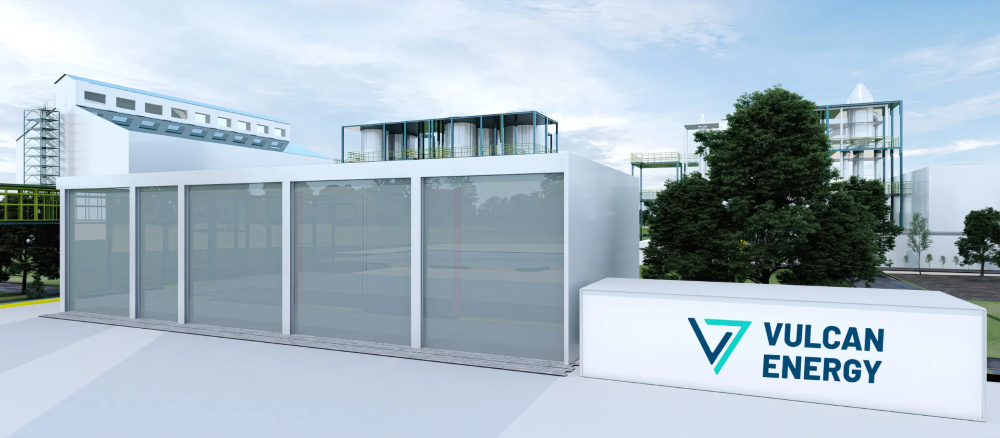
NORAM Electrolysis Systems, a Vancouver-based clean technology company, watched crews break ground this week on Vulcan Energy Resources' central lithium plant at Frankfurt's Infraserv Industrial Park. The facility represents the first major commercial deployment of NESI's electrochemical processing technology in the global battery supply chain.
The plant will use NESI's proprietary NORSCAND electrolysis system to convert lithium chloride into battery-grade lithium hydroxide monohydrate—a critical component in electric vehicle batteries. Once operational, the facility aims to produce 24,000 tonnes annually, enough material for roughly 500,000 EV batteries per year.
German officials attended the groundbreaking ceremony, including Boris Rhein, Minister-President of Hesse, and Frankfurt Mayor Mike Josef, highlighting the strategic importance of domestic lithium production as Europe races to build its own battery supply chain.
"This groundbreaking is a major validation of NESI's role in scaling cleaner electrochemical infrastructure for battery materials," Jeremy Moulson, NESI's president and CEO, said. "By integrating our NORSCAND technology into the Lionheart project, we are helping advance a cleaner, electrified approach to lithium refining at commercial scale. This milestone strengthens the German-Canadian partnership and places NESI's technology at the centre of Europe's lithium and battery materials buildout."
The project, part of Vulcan's broader Lionheart initiative, combines lithium extraction from geothermal brines with NESI's electrolysis-based conversion technology. Vulcan secured €2.2 billion in funding last December and targets commercial production by late 2028.
For NESI, the Frankfurt plant validates decades of electrochemical engineering work and positions the company as a key player in the global shift toward cleaner critical minerals processing. The technology promises to reduce emissions and waste compared to conventional lithium refining methods.
For more information on NESI’s electrolysis systems and the Vulcan partnership, please visit www.Nesi.tech.

Comments