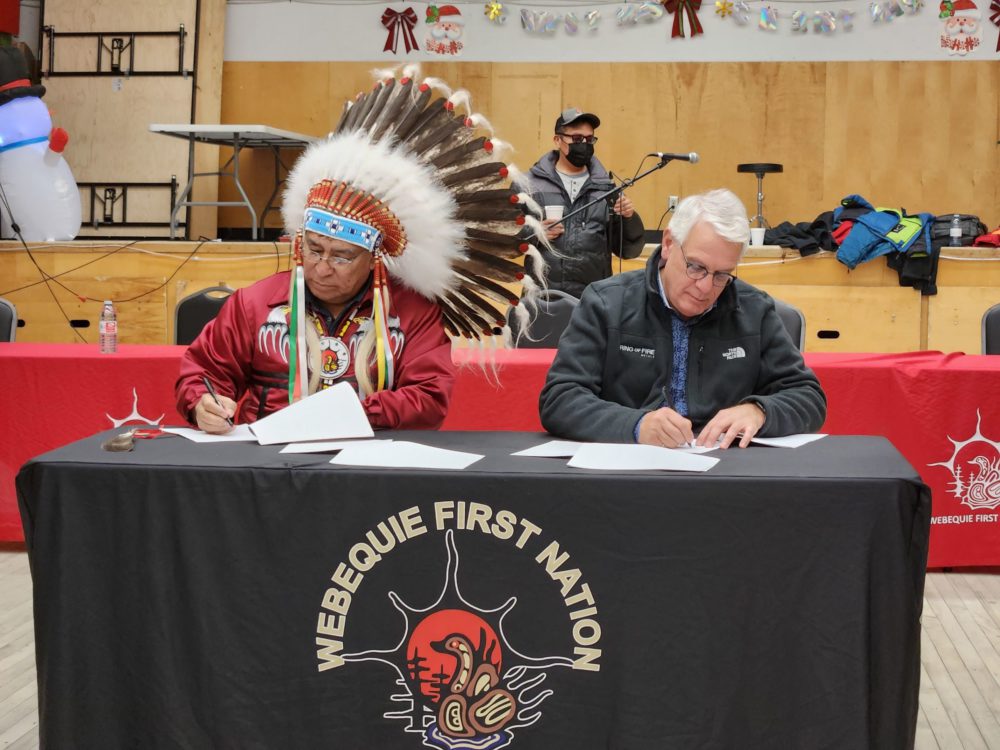
Ontario and Webequie First Nation have forged a $39.5 million agreement aimed at accelerating economic development and the construction of an all-season road to the Ring of Fire mineral-rich area in Northern Ontario.
Premier Doug Ford hailed the deal as a historic milestone, emphasizing its significance for Ontario's economic future, reconciliation with First Nations, and the prosperity of Northern Ontario. He highlighted the agreement's role in unlocking the potential of the Ring of Fire.
The funds will support community infrastructure and advance the development of the proposed Webequie Supply Road. The community has a deadline of January 2026 to submit its environmental assessment for the approximately 150 km road.
The province anticipates construction to begin in June 2026, pending approvals and consultations, and subject to the federal government concluding its impact assessments in the region.
The Ring of Fire, situated in the James Bay Lowlands about 500 km northeast of Thunder Bay, spans roughly 8,000 square kilometers. The area is rich in minerals crucial for modern technology, including nickel, cobalt, titanium, and lithium.
Cornelius Wabasse, chief of Webequie First Nation, expressed that the agreement represents more than just a road project. He described it as a pathway to opportunity and growth on their terms, supporting community well-being and creating lasting economic opportunities.
The funding will also address community priorities such as mental health support, social programs, and a new multipurpose facility. Additionally, it will contribute to local job creation, early road work, and upgrades to the community airport.
However, not all communities in the area support the project. Neskantaga First Nation, located near the mining claim area, has voiced strong opposition. Chief Gary Quisess criticized Ford's approach, viewing it as an attack on Indigenous rights and environmental safeguards.
Environmental concerns surrounding the project are significant. The Wildlife Conservation Society Canada notes that the James Bay Lowlands are a crucial peatland complex, absorbing substantial amounts of CO2 annually. Researchers warn of potential extensive damage to this sensitive ecosystem from mining activities and road construction.
The project faces multiple levels of review, including a federal impact assessment initiated in February 2020. This assessment aims to evaluate the cumulative effects of development in the Ring of Fire area and provide recommendations for managing potential impacts.
Ontario's recent passing of Bill 5, the Protect Ontario by Unleashing our Economy Act, has drawn criticism from First Nation leaders for its lack of consultation. The law includes provisions for "special economic zones," allowing the provincial government to bypass certain legislation to expedite major projects.

Comments