Gold refining goes electric
Western processors seek cleaner and more controlled melting processes
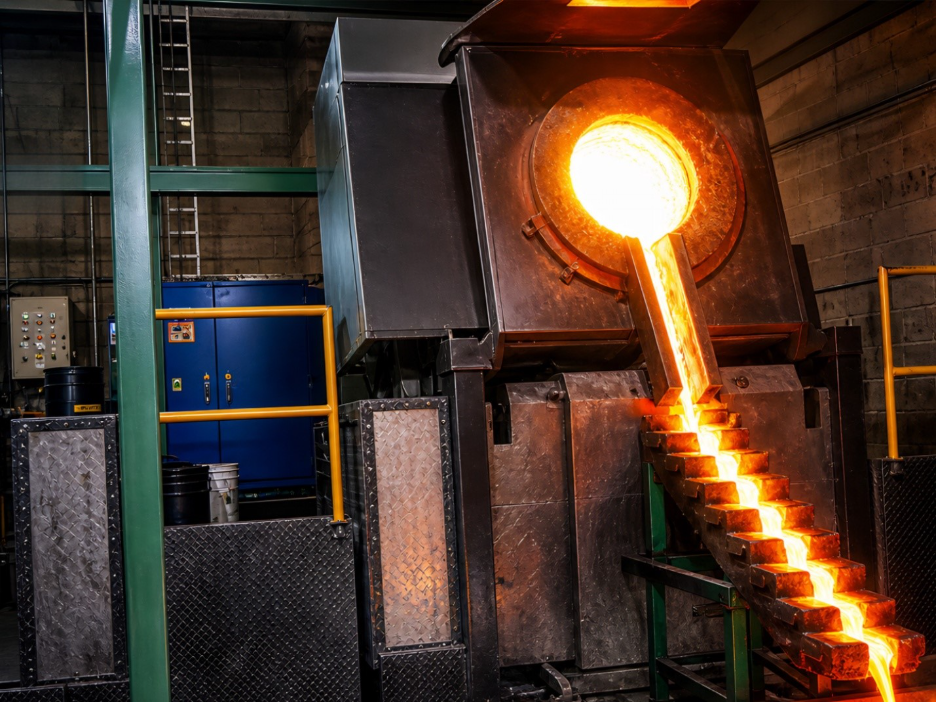
Gold producers and precious metal processors are increasingly focused on downstream refining as capacity, energy costs, environmental expectations and supply-chain risks affect project economics. Fully booked domestic refineries have delayed some North American projects, forcing reliance on overseas processing with higher transport and insurance costs. Regional electricity-price fluctuations have also affected facility profitability and melting technology decisions. Beyond exploration, permitting, production and capital markets, operators handling doré, bullion, precipitate, recycled metals and high-value concentrates recognize that melting performance affects costs, recovery, turnaround times and third-party reliance. Consequently, electric induction furnaces offer Western processors a cleaner, more precise alternative to combustion-based systems.
Refining capacity becomes part of the supply-chain discussion
The discussion about electric refining is not only a matter of equipment, but also a broader supply-chain consideration.
Western producers now view refining capacity as a key aspect of operational resilience. Factors such as treatment charges, transport distance, geopolitical risks, energy pricing and reliance on overseas processing all impact margins. While induction furnaces do not replace the full refining chain, they support controlled melting, remelting, sampling, alloying, bullion handling and other processing stages where consistency and discipline are essential.
Why electric induction is gaining attention
An induction furnace uses electricity to generate an electromagnetic field through a copper coil, heating metal by induced current rather than direct flame or combustion. Operators can rapidly adjust power to suit charge conditions, batch size, crucible behaviour, target temperature and tapping schedules. Eliminating direct flame reduces flame impingement, soot, fuel handling and some heat-stress sources, creating a cleaner, more controlled environment, although ventilation, refractory maintenance, training and safe handling remain essential. Modern platforms also integrate controls, alarms, interlocks, energy monitoring, water-cooling diagnostics and heat-history records, helping supervisors assess each melt without relying solely on memory or manual notes.
Electroheat’s role in the shift
Electroheat Induction’s furnaces range from 10 kW to 5,000 kW and from 10 kg to 10 tonnes. Applications identified include melting gold and silver precipitate, alongside other metals and uses spanning foundries, ingots, castings and laboratory testing.
In gold refining, the key advantage is the ability to tailor electric melting equipment to charge size, crucible selection, melt rate, available power, cooling needs and production workflow.
Control is now as important as heat in gold refining
In gold refining, consistency can be harder than generating heat. Uneven melting, excessive holding, delayed tapping, temperature drift, poor charge preparation and inadequate monitoring affect cycle time, flow, rework and batch consistency, particularly with high-value materials and tight margins. Many refiners underestimate how much stability influences daily production. Stable power delivery, process feedback and protection systems support consistent production, pouring and heat documentation. A manufacturer’s technical materials highlight HMI-based operation, graphical displays, data logging, interlock and trip navigation, production and heat reports and long-term storage, supporting troubleshooting, maintenance planning, accountability and process improvement.
Where induction fits in gold and precious metals
Electric induction melting is most applicable when processors require clean, repeatable and electrically controlled melting rather than uncontrolled heat input. In gold and precious metals, this includes the following:
- Bullion producers preparing controlled melts for casting or onward refining.
- Processors working with doré, gold precipitate, silver precipitate or selected concentrates.
- Precious metal recyclers who handle variable but high-value feedstock.
- Refineries upgrading from older fuel-fired melting lines.
- Jewelry and specialty refiners working with purity-sensitive batches.
- Mining-linked facilities looking to improve downstream handling discipline.
Bullion producers, precious metal recyclers and specialized craft or jewelry refiners are users who benefit from steadier melting, predictable melt times and improved temperature control. These advantages contribute to operational resilience rather than just equipment preference.
Electric versus combustion-based melting
The shift from fuel-fired to induction melting depends on site economics and operating requirements, including the following:
- Current and projected energy costs.
- Throughput and batch flexibility.
- Product consistency, purity and documentation.
- Plant layout and integration.
- Operator expertise and maintenance support.
- Environmental, safety and regulatory requirements.
- Downtime, reliability and process monitoring.
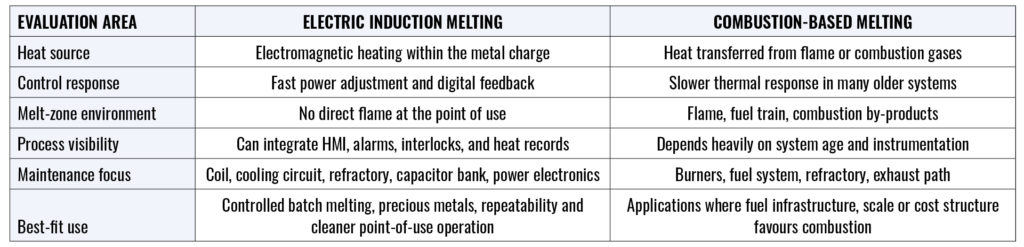
- The operating differences are clear (Table 1).
Induction is not always the lowest-cost option. Electricity tariffs, grid reliability, site capacity, charge preparation, crucible practices, lining condition and operator skill affect its competitiveness. Suitability therefore varies among small refiners, mine-linked doré facilities and industrial processors. Where conditions support it, induction can reduce combustion and improve melt repeatability and control over high-value batches.
Table 1. Operating differences.
Operating data adds another layer of value
A less visible advantage of modern induction systems is their ability to record and review furnace operations.
Induction furnace features include energy monitoring, heat reports, daily reports, alarm reports, water temperature monitoring and fault diagnosis data that can be exported for review. Technical material describes monitoring of input voltage, power, capacitor voltage, coil frequency, cooling water temperatures, heat numbers, energy consumption and alarm history.
In a gold-processing environment, those records can help answer the following practical questions:
- Was a delay caused by power fluctuation, charge condition or operator practice?
- Did a cooling issue appear before a trip occurred?
- Did one shift consume more energy per heat than another?
- Was the furnace held longer than necessary before tapping?
- Are recurring alarms pointing to a maintenance issue?
These questions are important because downtime and variation are costly in high-value metal processing. While better data does not eliminate operational issues, it provides managers with a clearer basis for corrective action.
Western refining resilience remains the bigger issue
The broader industry discussion extends beyond melt speed. It focuses on how Western producers and processors can develop more resilient, transparent and controllable refining processes.
Downstream processing is now a strategic consideration for mining companies. When refining capacity is limited, costly, distant or subject to geopolitical risk, producers face challenges beyond the mine site. As a result, processing infrastructure, energy systems and refinery modernization are increasingly important to investors and operators.
Gold refining is not only about heat, but it is also about control, repeatability, safety systems and the ability to understand what happened during each melt. That is where modern induction platforms are becoming more relevant for serious processors.
A practical shift, not a comprehensive solution
Electric induction cannot solve every downstream challenge. Refining capacity, commercial terms, permitting, transport, metallurgical complexity, labour skills and infrastructure remain important. Fuel-fired systems may better suit very large batches or continuous processing, while complex concentrates and materials requiring chemical pretreatment or specialized atmospheres may need other technologies. High electricity costs, limited power availability, contaminated materials and challenging slags can also affect economics, equipment requirements and flux compatibility. These limitations must be evaluated against each operation’s needs. However, induction can provide greater control, reduced combustion and improved operating data when melting high-value metals. As Western processors reassess refining resilience, the focus of gold producers and precious metal processors is shifting toward more consistent, cleaner and transparent melting processes.
Charlie Parsana is chief engineer at Electroheat Induction.
Related Posts
The trillion-dollar gold question:
September 16, 2026
The trillion-dollar gold question:
Electra releases preliminary battery recycling results
September 16, 2026
Electra releases preliminary battery recycling results
Kootenay Silver reports strong silver grades at Columba
September 16, 2026
Kootenay Silver reports strong silver grades at Columba
New Found Gold reaches commercial output at Hammerdown
September 16, 2026
New Found Gold reaches commercial output at Hammerdown
Comments