Keeping cool as mines go deeper
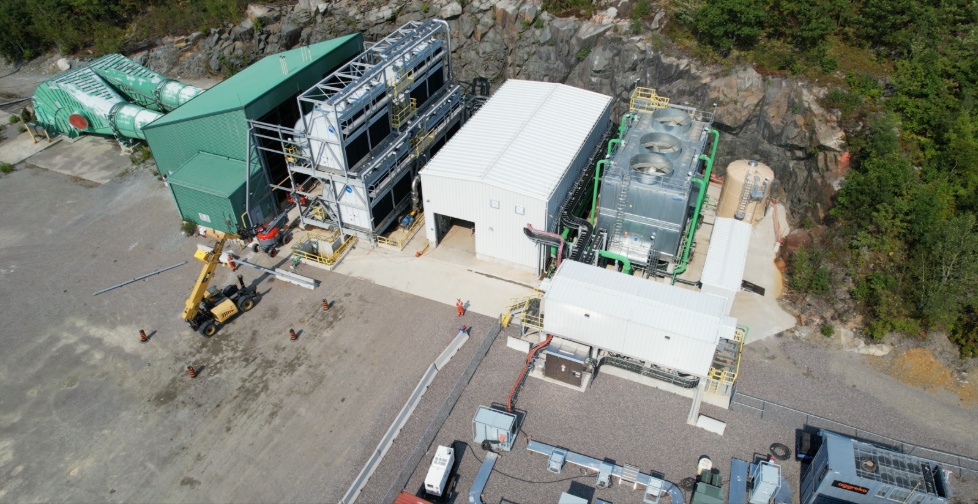
Keeping a deep mine cool takes more than an underground refrigeration plant. It takes space, power, water and a route to carry heat away from the people and equipment.
Those needs are easier to accommodate when cooling is part of the original mine plan, says Dr. Stephen Hardcastle, technical director of BBE Group Canada. Today’s shallow mine could end up going much deeper. An operation designed with future cooling capacity in mind can leave room for installations that may only become necessary years later.
That is an important consideration as Canadian mines go deeper. Warmer conditions affect how safely people can work, while machines and electrical equipment can also have temperature limits that influence their performance.
The opportunity for mine planners is to consider those needs together. Where cooling is installed, how air reaches the workplace and where the removed heat goes, all shape the system’s cost and effectiveness.
Where the heat comes from
To choose a cooling system, engineers first need to understand what is creating high temperatures in the mine.
In Canada, a major source is the ventilation air itself. As air travels down a shaft, the increasing pressure compresses and warms it. This is called autocompression, explains Agus Sasmito, an associate professor in McGill University’s mining and materials engineering department.
With little heat exchanged along the way, the temperature can rise by about 10°C for every kilometre of descent. Actual temperatures also depend on the weather at the surface and what equipment the air encounters underground.
Dr. Hardcastle says this makes planning for summer conditions one of the most important considerations. Air that is already warm at surface gains more heat as it descends, leaving less capacity to cool the workplace.
The surrounding rock at the workplace contributes too. Its natural temperature generally increases with depth, although the rate varies by location. Sasmito says newly exposed rock releases heat into the air then gradually cools as ventilation continues.
Equipment, fans, pumps and groundwater add other sources. Their contribution changes with the geology, the machinery in use and the amount of work taking place. “The main challenge is that several heat sources act simultaneously,” Sasmito says. The presence of water can also reduce the air’s cooling capacity. The cooling requirement therefore needs to be calculated for the individual mine and reviewed as it develops.
Making room for cooling
Refrigeration helps restore the air’s ability to cool the workplace, which can be employed on surface or underground. Dr. Hardcastle describes two ways to transfer heat between chilled water and air: passing air through a chamber of chilled water sprays or across cooling coils.
He compares these to a cold shower and a large radiator. Water also takes the heat from the refrigeration equipment with sprays transferring it to another airstream so cooling can continue. This is essentially a hot shower.
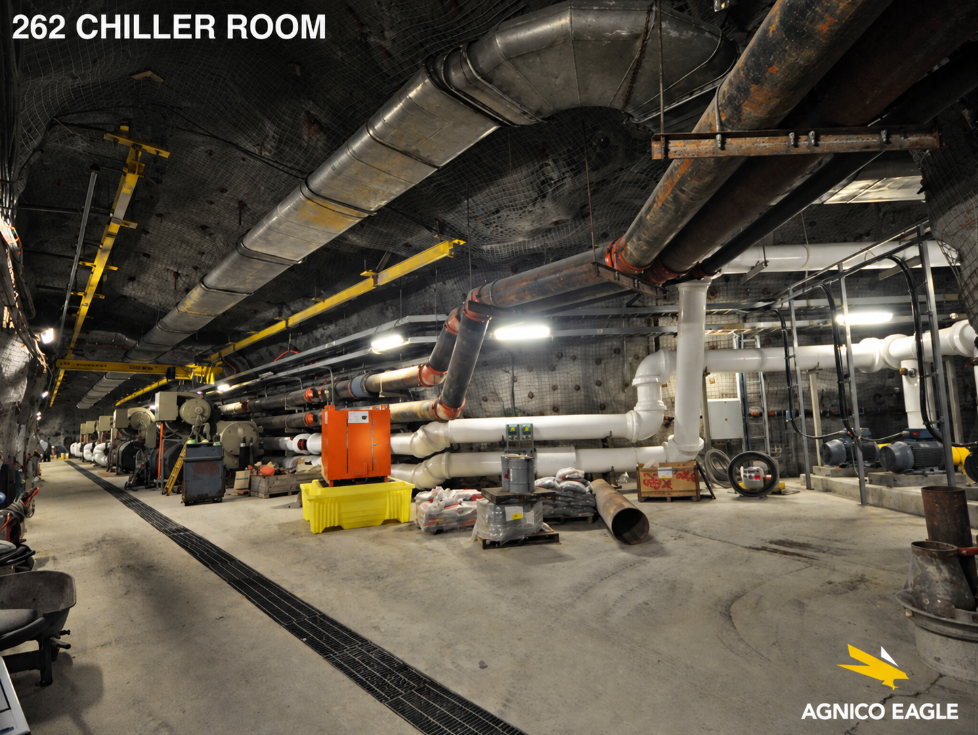
An underground installation needs three distinct spaces. The cooling chamber is where air is cooled. The plant room houses the refrigeration equipment and associated facilities. The heat-rejection chamber transfers the refrigeration plant-generated heat into air to be carried out of the mine.
Engineers must choose a route that can handle the warmer exhaust air without affecting another workplace. “For underground refrigeration plants, one of the biggest concerns is always where do you reject the heat without impacting mine operations; that air stream will be too hot and humid for both personnel and mobile equipment,” Dr. Hardcastle says.
These spaces need to be considered alongside the mine’s other infrastructure. Dr. Hardcastle gives an example of chambers measuring six metres by six metres by more than 50 metres as being required depending on the cooling needed. Allowing for excavations of that size early provides more flexibility in the choice of cooling and efficient placement over trying to find a solution and space after surrounding workings are established.
The installation will also need electricity, plus water supply and drainage infrastructure. Their availability needs to be considered. For construction, access matters: equipment may have to be transported down a shaft and must fit through the available openings; shaft availability and coordinating with other mining activity affect selection and schedules.
Time belongs to planning too. Dr. Hardcastle says a surface plant can take up to two years to build after approval with an underground installation potentially taking twice as long. Studies, detailed design and any new ventilation infrastructure extend the overall schedule.
His advice is to anticipate future cooling, even where it is not yet required. Leaving room in the layout and considering future power, water and airflow needs can give the mine more choices as it deepens.
Choosing where to cool
A surface plant generally offers easier construction and access to services. Underground cooling brings the installation closer to the people and equipment that need it.
Dr. Hardcastle estimates that installing a megawatt of cooling underground typically costs twice as much as installing the same capacity on surface. However, an underground system may need less capacity because it cools a smaller volume of air near the workplace.
The megawatt figures describe cooling capacity rather than the electricity the plant consumes to provide that cooling.
That makes the decision more involved than comparing plant prices. The mine must consider how much air needs cooling, how it will reach the working areas and where the heat can be discharged.
Vale’s Coleman mine in Sudbury illustrates that choice as it needed cooling during the summer. Dr. Hardcastle describes options ranging from 2 MW of cooling at a deep orebody to 6 MW midway through the mine or 10 MW on surface.
The main underground exhaust route also carried trucks. Using it to discharge hot, saturated air would have unacceptably affected trucking conditions and traction. Other concepts were considered but none were feasible with the existing mine infrastructure. For a timely solution, Coleman adopted surface cooling, showing how the existing mine layout can influence the preferred option.
At Agnico Eagle’s LaRonde mine, Dr. Hardcastle describes its cooling in stages. LaRonde is significantly deeper and needs cooling year-round. A surface plant cools intake air in summer, while a dedicated ventilation opening brings in cold air in winter. As that air warms during its descent, underground refrigeration plants re-cool that air again.
The two examples show why there is no single arrangement for every mine. Cooling must suit the depth, the air routes and the infrastructure already in place.
What electric equipment changes
Battery-electric equipment may offer a way to reduce the amount of cooling needed. Replacing diesel engines with electric motors limits heat production, and through removing combustion, reduces the airflow needed to dilute diesel contaminants.
“Electric machines still produce heat, but generally much less than comparable diesel equipment doing the same work,” Sasmito says. Motors, batteries and charging equipment must still be included when calculating the mine’s cooling needs.
The location of charging stations matters. Charging underground can add heat in an area that could impact workplaces, or that needs its own ventilation and cooling consideration. “However, electrification does not completely eliminate heat generation underground,” Sasmito says.
Heat from the mining process and rock plus the warming of descending air remain. Dr. Hardcastle also points out that ventilation must continue to clear dust and blasting fumes and help workers lose heat through the evaporation of sweat. As mines get deeper, the design drivers change.
The next step is to coordinate airflow and cooling with the work taking place. Sasmito advocates combining ventilation-on-demand with cooling-on-demand: supplying the air and refrigeration needed for current activity while avoiding unnecessary cooling of inactive areas. Options to store cold energy could also be applied.
To make those decisions, engineers use models that predict underground temperatures. Sasmito says predictions should be checked against measurements from different depths, seasons and operating conditions. Local hot spots and busy production periods matter as much as average conditions.
Protecting workers from heat
“Environmental sensors measure the space, not the person,” says Emily Tetzlaff, principal scientist, EHS at Wenco International Mining Systems and professor at Laurentian University.
Two people working in the same area can experience different levels of heat strain. The amount of physical effort required by a task, protective clothing, health and hydration all influence how well a person copes with the conditions.
Whether a worker can pause or reach a cooler rest area matters too. Tetzlaff says fatigue and reduced concentration can affect performance as heat strain develops, even before a worker recognises signs of illness.
Her research also points to under-reporting. In a survey of mining health and safety managers she describes, 71% believed heat-related illness was under-reported by their workforce. That reflects respondents’ assessments, rather than a measured national rate.
Some workers recover quickly on site. Others may not recognize their symptoms, or an injury may be recorded without identifying heat as a contributing factor.
Tetzlaff recommends measuring conditions close to where people work and considering those readings alongside the demands of the job. Wet-bulb globe temperature, a measure used to assess environmental heat stress, needs to be interpreted with workload and clothing in mind.
A reading from a community weather station cannot show what is happening beside a working face, near equipment or at a freshly blasted workface, she explains. Monitoring needs to reflect the conditions underground and how they change during the shift.
She gives priority to cooling at the source, cooled break areas and mechanical aids that reduce physical effort. Work-rest schedules and personal cooling garments can support these measures. “Heat management decisions should never rest on one indicator,” she says.
For Tetzlaff, evidence that cooling works includes fewer symptoms, reduced strain and workers being able to take protective action. Those outcomes give operators a way to assess what their investment delivers where it matters most.
The same attention should continue as production changes and workings deepen. Planning the space and services early, then checking performance underground, allows cooling to develop with the mine and support the people and equipment that keep it operating.
Salima Virani is a freelance mining writer.
Related Posts
Osisko selects new VP to oversee Cariboo construction
November 4, 2026
Osisko selects new VP to oversee Cariboo construction
Lockheed Martin, Teck Resources and 5N Plus join forces on germanium
November 3, 2026
Lockheed Martin, Teck Resources and 5N Plus join forces on germanium
International investment law and dispute resolution in the mining sector

PDAC unveils 2027 award recipients
November 3, 2026
PDAC unveils 2027 award recipients
Comments