Mining’s blind spot: Why tire management is still treated as an afterthought
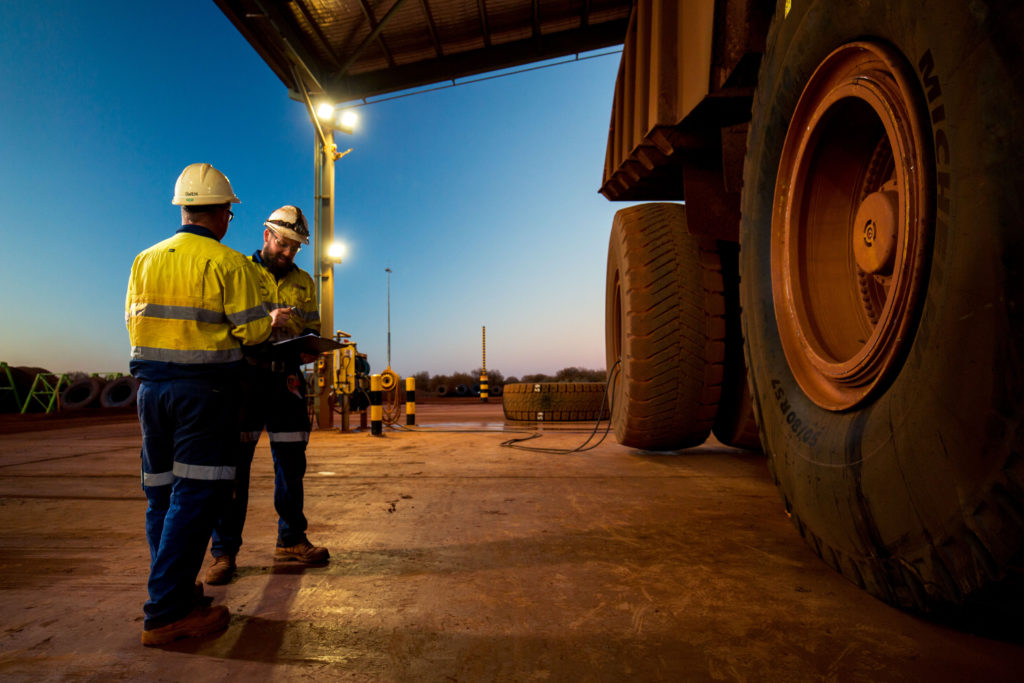
Credit: Kal Tire
For an industry built on precision engineering and large-scale innovation, mining has a persistent — and costly — blind spot. It is not in electrification, automation, or artificial intelligence. It is in something far more ordinary: tires.
A recent white paper from Kal Tire, developed with Michelin, makes a clear case that better tire management can reduce both operating costs and emissions. The conclusion is not surprising. What is notable is that the opportunity remains underutilized across many operations.
The white paper outlines practical, data-driven approaches to tire management that can help mines reduce Scope 1 and 3 emissions while lowering operating costs through longer tire life and improved fuel efficiency — without requiring major capital investment. Rather than introducing new technologies, it highlights a familiar industry pattern: the tendency to overlook operational fundamentals in favour of more visible, capital-intensive initiatives. This imbalance affects not only cost performance, but also how effectively mining companies meet their environmental targets.
If tire management is as impactful as the available data suggests, then its continued underperformance is more than an operational issue. It reflects a broader gap in how priorities are set and executed across mining operations.
A focus on the visible
Canadian mining companies, like their global peers, continue to invest heavily in transformation. Electrified fleets, autonomous haulage systems, and digital platforms now dominate boardroom discussions and industry conferences. These initiatives are significant and, in many cases, necessary. They are also complex, capital-intensive, and long-term.
Effective tire management, by contrast, yields results in a relatively shorter term. It does not require fleet replacement or large-scale infrastructure changes. In many cases, it involves improving how existing assets are monitored, maintained, and selected. Despite that, it is rarely treated with the same level of urgency.
Part of the explanation lies in visibility. Tire management does not carry the same profile as zero-emission haul trucks or automation programs. It is often viewed as a maintenance function rather than a strategic lever.
The Kal Tire/Michelin white paper challenges that perception. It positions tire management as an area where relatively modest operational improvements can deliver measurable gains across cost, productivity, and emissions.
According to Miles Rigney, senior vice-president of Kal Tire’s Mining Tire Group, “Tire performance is a leading indicator of mine management performance. Strong tire performance shows that maintenance teams follow best practices, operations use tires within their design limits, mine planning considers tires in haul cycle decisions, and management is actively engaged in tire performance. Conversely, poor tire performance is often linked to reduced chassis and component life and more production disruptions. Strong tire performance is an indication of a safe and profitable mining operation.”
The cost structure
In surface mining, loading and haulage typically account for a significant share of operating costs. After fuel, tires are one of the largest consumable expenses. A large operation can use hundreds of tires each year, representing millions of dollars in expenditure. The white paper suggests that a portion of this spend is avoidable.
Practices such as underinflation, incorrect tire selection, and inconsistent maintenance contribute to premature wear and failure. These issues do not occur in isolation. They affect fuel consumption, equipment performance, and downtime, creating a chain of inefficiencies that extends beyond the tire itself.
Rigney summarizes the point directly: “Smart tire management offers dual benefits: it lowers operational costs while advancing emissions and sustainability goals. Mines do not need to choose between the two — they can have both.”
The question is why more operations are not consistently achieving those outcomes.
Cost and emissions
Mining often treats sustainability as a cost centre. Reducing emissions is frequently associated with higher spending or lower productivity. Tire performance complicates that assumption.
The relationship between tire condition and fuel consumption is well-established. Underinflated or degraded tires increase rolling resistance, requiring more energy to move haul trucks. The result is higher fuel consumption and higher direct (Scope 1) emissions.
Even relatively small deviations can have measurable effects. Field data cited in the paper indicates that underinflation of less than 10% can increase fuel consumption per haul cycle. Across a fleet, this translates into significant additional diesel use over the course of a year. In practical terms, inefficiency is reflected in both fuel costs and emissions reporting. Despite this, many operations still overlook opportunities to drive improvements.
Scope 3 considerations
The environmental implications extend beyond fuel use. Tires also contribute to indirect (Scope 3) emissions through their production, transportation, and disposal. Every tire carries an embedded carbon cost. When tires are replaced earlier than necessary, that cost increases.
The paper highlights that a large share of a tire’s overall environmental impact occurs during its use phase, largely owing to fuel consumption. However, lifecycle emissions associated with manufacturing and disposal remain significant.
This creates a compounding effect. Poor tire management increases fuel use while also accelerating replacement cycles, amplifying both Scope 1 and Scope 3 emissions. As Canadian mining companies face increasing scrutiny over full lifecycle emissions, this becomes a material consideration rather than a secondary issue.
Available tools
One of the more notable aspects of the paper is that these opportunities do not rely on emerging or experimental technologies. Many of the tools required to improve tire performance are already in place.
Tire pressure monitoring systems (TPMS) provide continuous data on pressure and temperature. Thermal imaging and automated inspection systems can identify issues without interrupting operations. Haul road analytics and fleet diagnostics offer insights into how operating conditions affect tire wear and fuel use.
At one copper mining operation in Chile, for example, Kal Tire’s TireSight autonomous inspections have reduced inspection downtime (by 20%) by allowing trucks to be monitored without stopping, while improving maintenance accuracy.
Adam Murphy, senior vice-president of Michelin’s Mining Tire Business Line, points to the cumulative effect of these measures: “Ultimately, small operational changes — selecting the right tire compounds for site conditions, maintaining correct inflation pressure, and optimizing haul road designs — can translate into significant environmental and financial gains. Energy efficient rubber compounds can enable tires to run at a cooler temperature, decreasing their rolling resistance and increasing the truck’s fuel efficiency.” The tools exist. The remaining question is how consistently they are applied.
Prioritization
Mining companies are not short of technical capability. However, priorities are not always aligned across functions.
Fuel consumption is typically tracked at a high level and reported as a key performance metric. Emissions are increasingly subject to detailed disclosure requirements. Tire performance, by contrast, is often managed at the site level and may not receive the same level of attention. This presents an opportunity to better align strategic objectives with day-to-day tire management practices.
Where tire management is treated primarily as a maintenance issue, its broader impact on cost and emissions can be overlooked. Where it is integrated into performance management, the benefits become more visible.
Matching design to conditions
Another factor highlighted in the paper is the importance of selecting tires that match site conditions. Different operating environments require different tire characteristics. Heat-resistant compounds may be more suitable for long-distance hauls in high-temperature conditions. Cut-resistant compounds are better suited to abrasive, rocky environments. Other designs prioritize traction or energy efficiency. When tire selection does not align with operating conditions, performance can decline.
A recent technical analysis by Michelin cited in the paper describes a North American iron-ore mine that experienced a significant drop in productivity after switching to a different tire. Analysis identified mismatched specifications, reduced cycle speeds, and increased downtime. Adjustments to tire selection and maintenance practices resulted in measurable operational improvements. This suggests there is still an opportunity to strengthen decision-making processes to fully leverage the technologies already available.
Extending tire life
Extending tire life represents another area of opportunity. A significant proportion of mining tires do not reach their intended lifespan. Factors such as improper inflation, operational damage and inconsistent maintenance contribute to early replacement.
Repair and retreading programs offer a way to address this. By restoring damaged tires or extending their usable life, operations can reduce procurement costs and lower the demand for new tires. The environmental benefits are also clear. Fewer new tires mean lower upstream emissions and reduced waste.
These practices align with broader industry interest in circular economy principles. However, adoption remains uneven, reflecting operational and organizational factors rather than technical limitations.
Safety considerations
Improved tire management also has implications for safety. Better monitoring and maintenance reduce the likelihood of unexpected failures. Fewer failures mean fewer interventions, which can reduce exposure to high-risk activities.
In this context, tire management contributes not only to cost and environmental performance, but also to overall operational safety.
Leadership considerations
Ultimately, the effectiveness of tire management comes down to how it is prioritized. Senior leaders set targets for cost reduction, productivity, and emissions. Achieving those targets requires attention to both large-scale initiatives and incremental improvements.
Tire management falls into the latter category. It may not attract the same level of attention as major capital projects, but its impact is measurable and immediate. As Rigney notes, tire strategies represent “a high impact yet underutilized opportunity.” That observation reflects both the potential and the current gap.
Conclusion
The Kal Tire/Michelin white paper is measured in tone and grounded in operational data. Its message to mining operations is practical: existing tools and practices can deliver meaningful improvements in cost, emissions, and performance.
The broader implication is that progress in mining does not depend solely on new technologies. It also depends on how effectively existing systems are managed. Tires are not only consumables. They are part of a larger operational system that influences fuel use, equipment performance, and environmental impact. The opportunity to improve that system is clear. How widely it is acted upon remains to be seen. 
Link to the Kal Tire/Michelin white paper is here: www.kaltiremining.com/en/unlocking-hidden-synergies/
Related Posts
Troilus nails down US$850 million for gold-copper mine redevelopment
September 28, 2026
Troilus nails down US$850 million for gold-copper mine redevelopment
Ore sorting tests slice CAPEX for EDM’s Scotia lead-zinc mine by 57%
September 28, 2026
Ore sorting tests slice CAPEX for EDM’s Scotia lead-zinc mine by 57%

Sponsored video: Isometrix says shared data can flag mine risks early
September 28, 2026
Sponsored video: Isometrix says shared data can flag mine risks early

Team TS^2 wins AI4SafeMines student competition
September 28, 2026
Team TS^2 wins AI4SafeMines student competition
Hudbay lifts Snow Lake gold output estimate by 60%
September 28, 2026
Comments