The electric fleet is here: But the mine must change with it
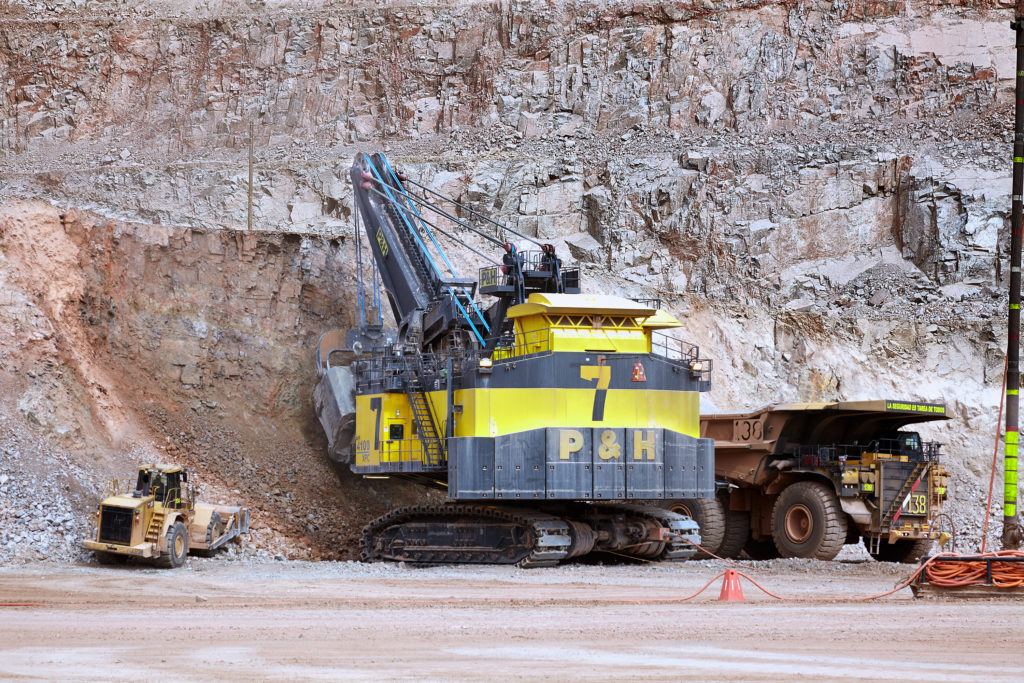
Battery electric vehicles (BEVs) are no longer a fringe technology in Canada’s mining sector, but the way we talk about them often misses the point. The most important question is not whether BEVs can haul and load; it is whether mine sites can absorb a new set of constraints — power, ventilation, dust compliance, charging logistics, maintenance models, and workforce readiness — without trading away reliability.
A recent mine electrification benchmarking snapshot, conducted by EY Canada, reflects this shift: companies were evenly distributed across “assess, plan, and deploy” stages of their electrification journey, suggesting this has become a practical operational topic rather than a distant ambition.
What is driving electrification (and what is not)
One of the most revealing benchmarking findings is what operators are not chasing. When asked why they prioritized specific equipment, tonnage was not selected at all (0%). Instead, respondents pointed to diesel consumption reduction (57%) and emissions/diesel particulate matter reduction (43%) as the primary rationale for electrification priorities. That should reframe the discussion: for many Canadian operators, electrification is fundamentally a risk and exposure strategy (reducing diesel dependency, improving underground environments, and meeting sustainability expectations) rather than a pure productivity play.
This also helps explain why haul trucks sit at the top of respondents’ electrification priority list (50%), ahead of loaders (25%) and drills (13%). Haulage is where diesel use is most visible and where emissions reductions can be most material (especially at scale). But it is also where electrification becomes most system dependent: the “vehicle decision” quickly turns into a “site power and operating model decision.” Our benchmarking results reinforce this reality in another way: only 40% of respondents report having an official electrification program, 40% do not, and 20% are still developing one. In other words, ambition is rising faster than governance and execution discipline.
Underground reality check: ventilation savings depend on dust, not hope
Ventilation is often presented as electrification’s cleanest financial win. In principle, removing diesel exhaust should reduce airflow requirements. But field evidence shows why this cannot be assumed.
A field study, conducted at a Canadian mid-tier gold operation, tested diesel and battery electric load-haul-dump vehicles (LHDs) to compare performance and understand environmental factors driving ventilation requirements. The results were strikingly practical: in the scenarios tested, the BEV and diesel LHDs moved equivalent amounts of material in a similar time under representative duty cycles: BEVs can do the work.
The more important finding, however, is what constrained ventilation reductions. In the production environment tested, respirable crystalline silica concentrations became the driver for determining airflow requirements for the batterypowered LHD. The study evaluated a scenario with approximately 50% reduced airflow versus the diesel baseline. While there was potential for reduction, contaminant levels exceeded limits under the reducedairflow scenario at that site, meaning achievable savings were materially less than 50%.
This is the key message for any operator building a BEV business case underground: electrification does not eliminate ventilation design risk. It shifts it. The limiting factor may become dust and silica rather than diesel particulate and exhaust gases. If dust suppression and material handling controls are not strong, electrification alone will not deliver the ventilation dividend many plans quietly assume.
The fleet of the future is an operating system: energy, uptime, and people
Importantly, BEVs change the “physics” of uptime. Diesel fleets are constrained by fuel logistics and mechanical maintenance; electric fleets add constraints around energy balance, charging strategy, and dutycycle planning. Results from the aforementioned gold operation field study make this tangible. Energy demand varied meaningfully by grade and duty cycle, and regenerative braking materially affected energy captured on downhill segments. To maintain availability, the site relied on battery swapping (charging one battery while the LHD operated on another) highlighting that infrastructure design is inseparable from equipment productivity.
At the industry level, operators already anticipate that people’s systems must adapt. EY Canada’s benchmarking respondents largely expect training effort for BEV operation and maintenance to be about the same (60%) or higher (40%) than current fleets, and maintenance cost to be about the same (80%) or higher (20%), in contrast to the sweeping reductions sometimes promised in simplified narratives. Open responses also reinforce uneven readiness: some sites have operator and maintenance teams trained by OEMs, while others report no specific workforce training plan yet.
This is where the future of electrified fleets will be won or lost. Not in the procurement cycle, but in the program layer: how companies standardize training, redesign maintenance routines, update emergency response for high voltage systems, and build the data capability to manage charging, downtime, and performance.
Execution will decide the electric mine
The future of electrified vehicle fleets in Canadian mining will not be determined by whether BEVs work in principle. They already do. It will be determined by whether mines can convert electrification into a reliable operating model: ventilation plans that reflect dust and silica realities, energy systems designed around real duty cycles, and workforce programs that make high voltage equipment safe and maintainable at scale.
The most successful operators will treat fleet electrification not as a vehicle swap but as a site transformation program, because that is what it is. 
Olga Makoyeva is the EY Americas Metals & Mining Center of Excellence lead, based in Toronto.
Karen D’Andrea is a manager with EY Canada’s Digital Supply Chain & Operations service line. She is a professional engineer, registered in Ontario and Saskatchewan.
Related Posts

Canadian Mining Hall of Fame announces 2027 inductees
October 1, 2026
Canadian Mining Hall of Fame announces 2027 inductees
EMP, Saltworks host lithium-demonstration-plant tour
October 1, 2026
EMP, Saltworks host lithium-demonstration-plant tour
Mayfair lines up $310M for Fenn-Gib gold project in Ontario
October 1, 2026
Mayfair lines up $310M for Fenn-Gib gold project in Ontario

TNM reveals latest bonus prize Treasure Hunt clue
September 30, 2026
TNM reveals latest bonus prize Treasure Hunt clue
Gold refining goes electric
September 30, 2026
Comments